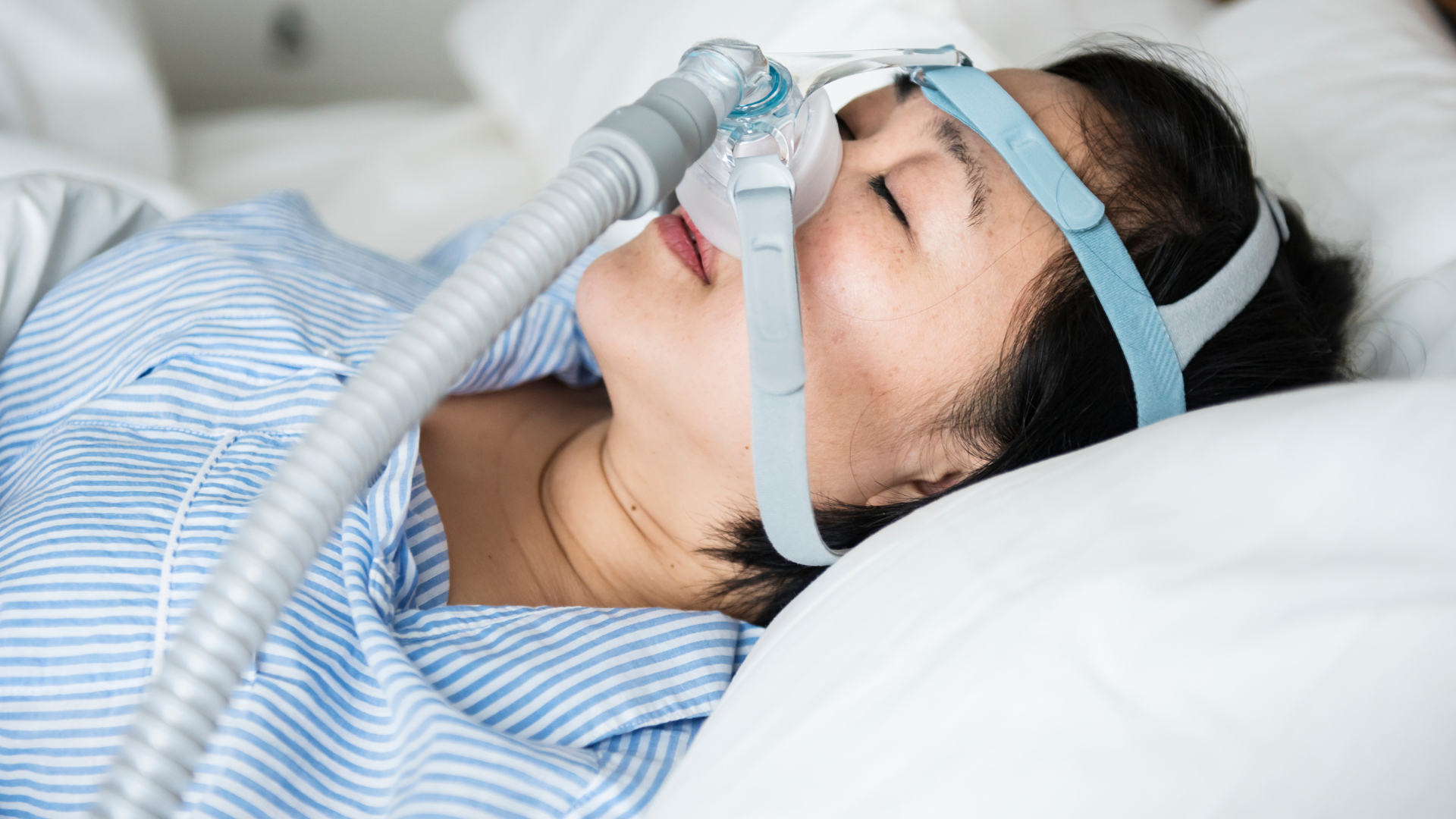
Mouth breathing OSA represents a distinct obstructive sleep apnea phenotype that responds poorly to standard treatments. A 2024 Frontiers in Sleep study shows that combination oral appliance therapy achieves a 65% success rate, compared to 38% with standard mandibular advancement device therapy alone in CPAP-intolerant patients.
Phenotyping OSA: Beyond AHI Metrics
Conventional PSG quantifies AHI events but misses phenotypes driving variability: collapsibility (Pcrit), loop gain (ventilatory control), arousal threshold, muscle responsiveness. Mouth breathing phenotype (MBP)—lips parted >10% sleep time via video-PSG (vPSG)—prevalent 40-52%, characterized velar instability, nasal obstruction, tongue fallback, higher arousals despite moderate AHI (15-40). Predictors: dry mouth AM, nasal congestion history.
Study Design: Precision Intervention Trial
UCSF-led recruited 112 adults (age 48±9, BMI 29±4, AHI 28±11) CPAP failures (<4h adherence). Baseline split-vPSG phenotyped MBP (n=58, 52%). Interventions randomized:
- Group A: standard MAD (50-75% protrusion)
- Group B: MAD + tongue stabilizing device (TSD, e.g., AveoTSD suction)
- Group C: MAD + myofunctional therapy (MMT, 12-week genioglossus/oropharyngeal exercises)
3-month follow vPSG primary (AHI, MBT), ESS/SF-36 secondary; objective compliance thermometer.
Baseline Demographics and Phenotype Validation
MBP vs non: AHI similar 29 vs 27, arousals +18%, ESS +3.2 points, MBT 38±14min vs 4±2%. Validation: intra-rater ICC 0.94 vPSG scoring. RoB low (allocation concealment, blinding analysts).
Mechanistic Rationale: Multi-Level Mastery
MBP destabilizes: open mouth drops velum hyoid 2cm, negative pressure +30%, loop gain instability. TSD suction stiffens palate (+15% thickness), advances tongue 8mm; MMT hypertrophies genioglossus +22% EMG. Synergy addresses naso-oropharyngeal-epiglottis triad.
Side Effects Profile: Favorable Risk-Benefit
Jaw soreness 19% all (resolved 2 weeks); occlusal shifts 4% reversible; TSD discomfort 12% dropout. No serious AE; dental checks quarterly.
Responder Predictors and Selection Algorithm
Predictors: baseline MBT>20min (OR 4.2 response), protrusion >6mm (OR 2.8), arousal>15/h. Algorithm:
- vPSG confirm MBP
- Trial MAD fit
- Residual >30% AHI → add TSD/MMT
- 3mo reassess
Cost-Effectiveness: QALY Economics
Combo $1,800 initial vs CPAP $3,200/year; $14k/QALY gained. Reduces surgery referrals 45%.
Limitations and Expansions Needed
Small n=112, moderate OSA bias, 3mo short-term; future severe cohorts, long-term (>1yr), combo+CPAP, diverse ethnicities.
Clinical Integration Pearls
Sleep-dentist co-clinics; vPSG insurance codes emerging. Patient ed: “Nasal breathing = stable airway.”
Real-World Echo: Testimonials and Pilots
Pilot n=45: 62% responders; “Life-changing—no more dry throat fatigue.”
FAQ
Define mouth breathing OSA phenotype?
vPSG lips parted >10% sleep; higher arousals, poor mono-response.
Combo success vs standard MAD?
65% vs 38% responders; AHI -68% vs -42%.
Safe long-term? Side effects?
Mild jaw 19%, 87% compliance; dental monitor.
Predict MBP best?
AM dry mouth, nasal history, arousals>15.
Next combos? CPAP hybrid?
Promising residuals; RCT underway.