Quick Answer
The main difference between snoring vs sleep apnea is that simple snoring is usually a noise caused by vibration in the throat, while sleep apnea involves repeated pauses or restrictions in breathing during sleep.
Snoring becomes more concerning when it is loud, frequent, interrupted by silence, followed by gasping or choking, or linked with daytime sleepiness, morning headaches, dry mouth, poor focus, or high blood pressure.
Check your risk in 2 minutes:
https://slumbersenseglobal.com/#self-check
Introduction
Snoring is common. Many people snore occasionally when they are tired, congested, sleeping on their back, or after alcohol use. In many homes, snoring is treated as a joke or a bedroom disturbance.
But sometimes, snoring is not just snoring.
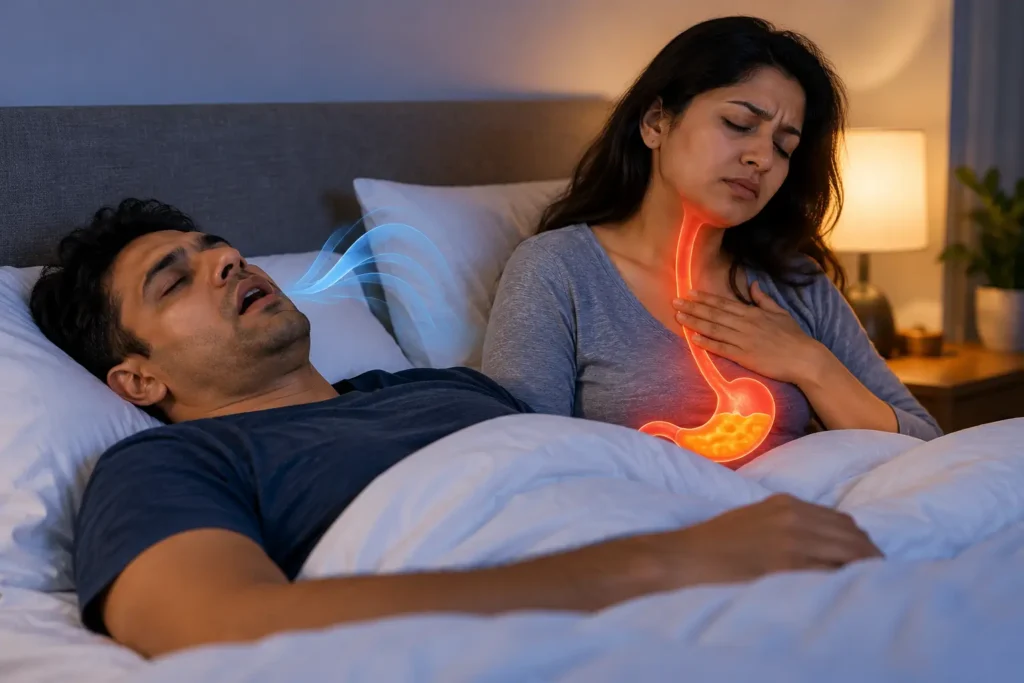
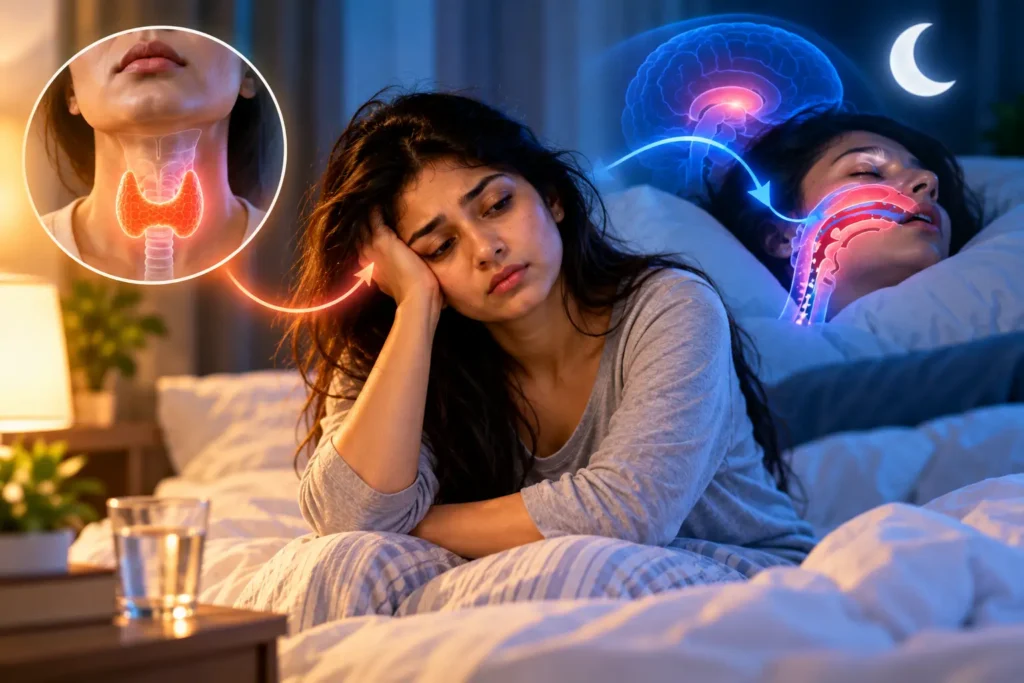
When loud snoring is followed by breathing pauses, choking sounds, gasping for air, morning headaches, dry mouth, or daytime tiredness, it may be a warning sign of sleep apnea.
Understanding snoring vs sleep apnea is important because both may sound similar, but the health meaning can be very different.
What Is Snoring?
Snoring is the sound that happens when air moves through relaxed tissues in the throat during sleep. These tissues vibrate and create the snoring sound.
Snoring may be mild, occasional, or positional. Some people snore only during a cold, allergy, nasal blockage, or when sleeping on their back.
Common reasons for snoring include:
- Sleeping on the back
- Nasal congestion
- Cold or allergies
- Alcohol before bedtime
- Smoking
- Being overweight
- Narrow airway or large tonsils
- Poor sleep schedule or exhaustion
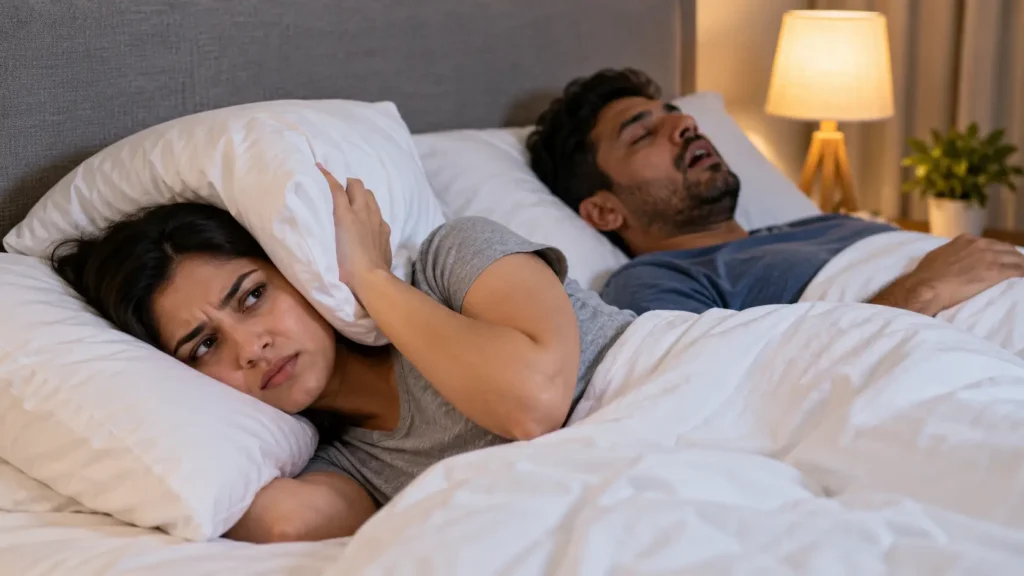
Simple snoring can disturb a partner’s sleep, but it does not always mean a serious medical condition. The concern starts when snoring comes with signs that breathing may be stopping or becoming restricted.
What Is Sleep Apnea?
Sleep apnea is a sleep-related breathing disorder where breathing repeatedly stops, pauses, or becomes shallow during sleep.
The most common type is obstructive sleep apnea, also called OSA. It happens when the upper airway becomes partly or fully blocked during sleep. When airflow is blocked, the body may briefly wake up to reopen the airway.
These awakenings may be so short that the person does not remember them. But they can happen many times during the night, making sleep less restful.
Sleep apnea may cause:
- Loud snoring
- Pauses in breathing
- Gasping or choking during sleep
- Restless sleep
- Morning headache
- Dry mouth
- Daytime sleepiness
- Poor focus
- Irritability
- High blood pressure or other health concerns
Sleep apnea should not be self-diagnosed. But if warning signs are present, it is important to take them seriously.
Snoring vs Sleep Apnea: Main Difference
The simple difference is:
Snoring is a sound. Sleep apnea is a breathing problem during sleep.
A person can snore without having sleep apnea. But many people with obstructive sleep apnea do snore, and the snoring pattern may be more concerning.
Simple snoring usually means:
- Breathing continues during sleep
- Snoring may be steady or occasional
- No choking or gasping is present
- The person may wake up refreshed
- Daytime sleepiness may not be a major issue
Sleep apnea-related snoring may mean:
- Breathing stops or becomes shallow
- Snoring is loud and irregular
- Silent pauses happen between snores
- Snoring is followed by choking, snorting, or gasping
- The person wakes up tired despite enough sleep
- Daytime sleepiness, morning headaches, or poor focus may be present
The pattern matters. It is not only about how loud the snoring is. It is about what happens around the snoring.
Comparison Table: Snoring vs Sleep Apnea
| Feature | Simple Snoring | Possible Sleep Apnea |
| Main issue | Noise from airway vibration | Repeated breathing disruption |
| Breathing pauses | Usually absent | May be present |
| Gasping or choking | Usually absent | May happen |
| Snoring pattern | Steady or occasional | Loud, irregular, with silent pauses |
| Morning tiredness | Not always present | Common |
| Daytime sleepiness | Less common | Common |
| Morning headache | Less common | Can happen |
| Dry mouth | May happen | Can happen |
| Health impact | Often mild | Can affect sleep quality and health |
| Next step | Lifestyle changes may help | Self-check and medical evaluation may be needed |
When Is Snoring Usually Less Concerning?
Snoring may be less concerning when it is occasional, mild, and not linked with breathing pauses or daytime symptoms.
Snoring may be temporary if it happens because of:
- Cold or blocked nose
- Seasonal allergies
- Sleeping on the back
- Alcohol before sleep
- Extreme tiredness
- Poor sleep posture
For example, someone may snore during a cold because the nose is blocked. Once congestion improves, the snoring may reduce.
However, snoring should be watched if it becomes louder, more frequent, or starts affecting sleep quality.
When Should You Worry About Snoring?
You should worry about snoring when it is not just noise, but part of a larger symptom pattern.
1. Snoring With Pauses in Breathing
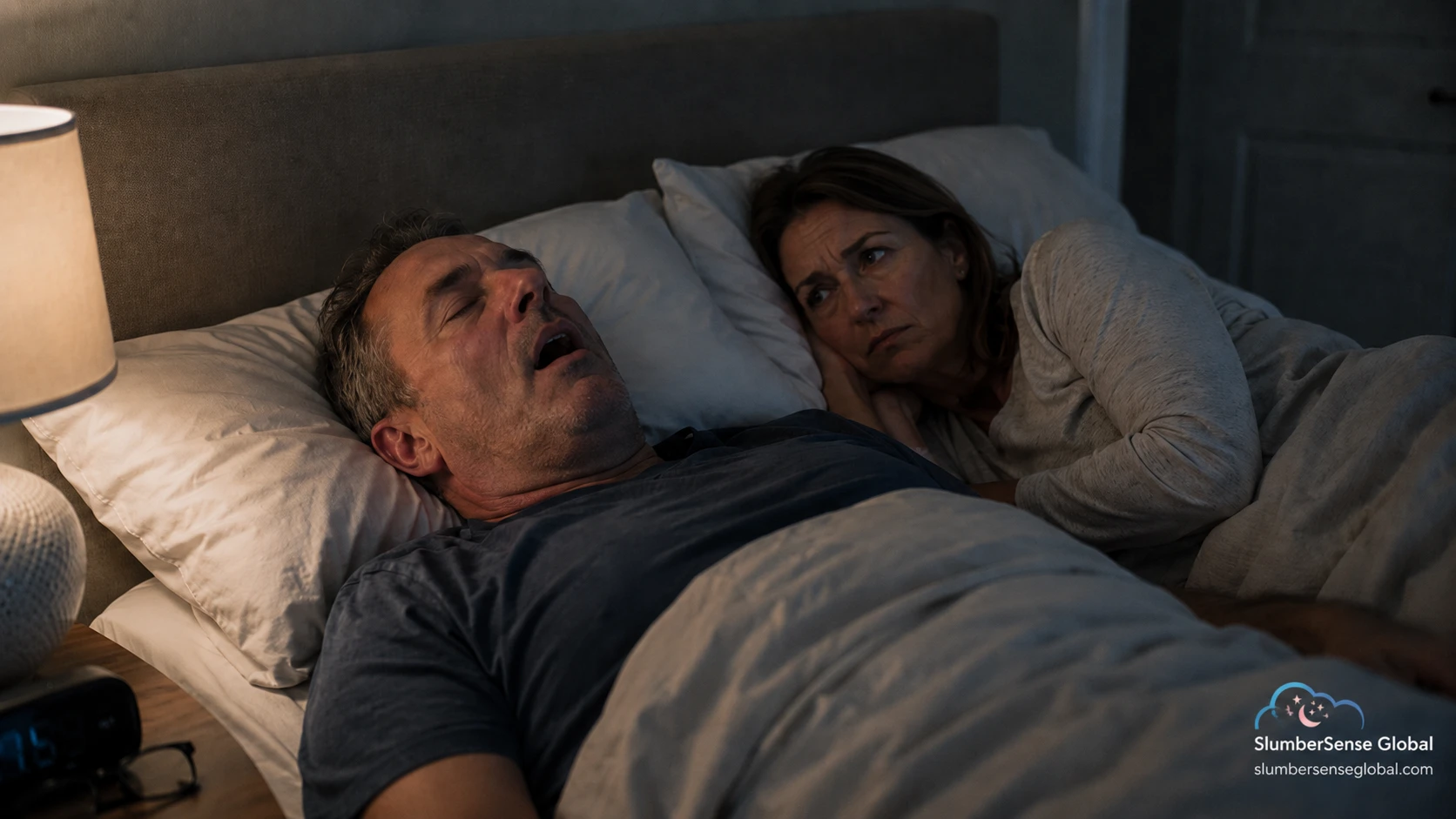
This is one of the strongest warning signs. If your partner or family member notices that your breathing stops during sleep, even for a few seconds, do not ignore it.
Watch for:
- Silent pauses between snores
- Breathing that stops and starts
- Partner says, “You stopped breathing”
- Restless movement after breathing pauses
- Snoring that sounds interrupted or irregular
Breathing pauses during sleep should be discussed with a healthcare provider.
2. Snoring Followed by Gasping or Choking
Snoring becomes more concerning when it is followed by choking, coughing, snorting, or gasping sounds.
Watch for:
- Waking up gasping for air
- Choking sounds during sleep
- Snorting after a silent pause
- Feeling breathless at night
- Waking suddenly without knowing why
Repeated gasping or choking should not be ignored.
3. Loud Snoring Almost Every Night
Occasional snoring may not be serious. But loud, frequent snoring that happens most nights can be a warning sign, especially if it disturbs others or becomes worse over time.
Watch for:
- Snoring every night or almost every night
- Snoring loud enough to disturb your partner
- Snoring heard outside the room
- Partner sleeping separately because of snoring
- Snoring that has become louder over time
Loud snoring alone does not confirm sleep apnea, but it should be checked if other symptoms are present.
4. Waking Up Tired Despite Enough Sleep
One confusing sign of sleep apnea is feeling tired even after sleeping for 7 or 8 hours.
This may happen because sleep apnea repeatedly interrupts sleep. You may not remember waking up, but your body may be pulled out of deep sleep many times.
Watch for:
- Waking up unrefreshed
- Feeling heavy or tired in the morning
- Needing caffeine to function
- Feeling sleepy after a full night in bed
- Low energy throughout the day
If you sleep enough but still wake up tired often, your sleep quality may be poor.
5. Excessive Daytime Sleepiness
Daytime sleepiness may feel like you cannot stay alert, especially during quiet activities.
Watch for:
- Dozing while watching TV
- Falling asleep while reading
- Sleepiness during meetings
- Needing frequent naps
- Drowsiness while driving
Drowsiness while driving is especially serious and should be addressed immediately.
6. Morning Headaches or Dry Mouth
Morning headaches and dry mouth can happen for many reasons, including dehydration, sinus issues, stress, alcohol, mouth breathing, or medications.
But when they happen with loud snoring, gasping, choking, or daytime sleepiness, sleep apnea may be one possible cause.
Watch for:
- Dull headache after waking
- Heavy head in the morning
- Headache with dry mouth
- Sore throat in the morning
- Waking up thirsty at night
These symptoms are more important when they appear together with disturbed breathing during sleep.
7. Poor Focus, Brain Fog, or Mood Changes
When sleep is repeatedly interrupted, the brain may not get enough restorative rest. This can affect focus, memory, reaction time, and mood.
Watch for:
- Difficulty concentrating
- Forgetting simple tasks
- Brain fog in the morning
- Reduced productivity
- Irritability or short temper
- Low motivation or mood swings
Many people blame stress or workload, but sleep quality may also be part of the problem.
8. High Blood Pressure With Snoring or Poor Sleep
Sleep apnea can place stress on the body and may be associated with high blood pressure and other health concerns.
Watch for:
- High blood pressure with loud snoring
- Diabetes with poor sleep
- Weight gain with daytime tiredness
- Heart-related concerns and disturbed sleep
- Ongoing fatigue despite treatment for other issues
If you already have a medical condition and also snore loudly or sleep poorly, discuss sleep symptoms with a healthcare provider.
The Snoring Pattern That Needs Attention
Not all snoring sounds the same. Sleep apnea-related snoring may be irregular.
A concerning pattern may sound like this:
Loud snoring → silence → breathing pause → choking/snorting/gasping → movement → snoring again
This cycle may happen many times during the night. The person may not remember it in the morning, but the body may still feel tired because sleep was repeatedly disturbed.
Can You Have Sleep Apnea Without Loud Snoring?
Yes, it is possible.
Loud snoring is common in obstructive sleep apnea, but not every person with sleep apnea snores loudly. Some people mainly experience daytime sleepiness, morning headaches, poor focus, restless sleep, or breathing pauses noticed by someone else.
Sleep apnea may also present differently in women. Some women may report fatigue, insomnia-like sleep, headaches, mood changes, or poor concentration rather than obvious loud snoring.
Can Snoring Alone Be Treated at Home?
Some lifestyle changes may help reduce simple snoring, especially when snoring is mild or positional.
Helpful steps may include:
- Sleeping on your side
- Avoiding alcohol before bedtime
- Maintaining a healthy weight
- Treating nasal congestion
- Keeping a regular sleep schedule
- Avoiding smoking
- Elevating the head slightly
- Staying hydrated
However, these steps should not replace medical evaluation if there are signs of sleep apnea. If you have breathing pauses, gasping, choking, severe daytime sleepiness, or high blood pressure, do not rely only on home remedies.
How to Know If Your Snoring Needs a Self-Check
A self-check is not a diagnosis, but it can help you understand whether your symptoms may need further attention.
Consider a self-check if you answer “yes” to any of these:
- Do you snore loudly?
- Has anyone noticed you stop breathing during sleep?
- Do you wake up gasping or choking?
- Do you wake up with dry mouth?
- Do you often have morning headaches?
- Do you feel sleepy during the day?
- Do you wake up tired after enough sleep?
- Do you have poor focus or brain fog?
- Do you have high blood pressure with poor sleep?
Check your risk in 2 minutes:
https://slumbersenseglobal.com/#self-check
What Happens After a Self-Check?
If your self-check suggests possible risk, the next step may be to speak with a healthcare provider or sleep specialist.
They may ask about your symptoms, medical history, sleep schedule, snoring pattern, daytime sleepiness, and risk factors. Depending on your case, they may recommend a sleep test.
A sleep test may help evaluate:
- Breathing patterns
- Oxygen levels
- Breathing pauses
- Sleep interruptions
- Heart rate changes
- Severity of possible sleep apnea
A sleep test is often needed to confirm whether sleep apnea is present and how severe it may be.
Simple Rule to Remember
If snoring is only sound, it may be simple snoring.
If snoring comes with breathing pauses, gasping, choking, tiredness, or health concerns, it may be sleep apnea.
Do not panic, but do not ignore the signs either.
Final Takeaway
Snoring is common, but it should not always be ignored. The key difference between snoring vs sleep apnea is whether breathing is being disrupted during sleep.
Simple snoring may be occasional and harmless. But loud snoring with breathing pauses, choking, gasping, morning headaches, dry mouth, daytime sleepiness, poor focus, mood changes, or high blood pressure may be a warning sign of sleep apnea.
You do not need to guess. Start with a simple self-check.
Check your risk in 2 minutes:
https://slumbersenseglobal.com/#self-check
FAQs
1. What is the difference between snoring and sleep apnea?
Snoring is a sound caused by vibration of relaxed throat tissues during sleep. Sleep apnea is a breathing disorder where breathing repeatedly stops or becomes shallow during sleep. Snoring may happen in sleep apnea, but not all snoring means sleep apnea.
2. When should I worry about snoring?
You should worry about snoring if it is loud, frequent, interrupted by silence, followed by gasping or choking, or linked with daytime sleepiness, morning headaches, dry mouth, poor focus, or high blood pressure.
3. Does loud snoring always mean sleep apnea?
No. Loud snoring does not always mean sleep apnea. However, loud snoring with breathing pauses, gasping, choking, or daytime tiredness should be checked.
4. Can I have sleep apnea without snoring?
Yes. Some people with sleep apnea may not snore loudly. They may mainly experience daytime sleepiness, morning headaches, restless sleep, poor focus, mood changes, or breathing pauses noticed by a partner.
5. What does sleep apnea snoring sound like?
Sleep apnea-related snoring may sound loud and irregular. It may include pauses, silence, choking, snorting, or gasping sounds before breathing restarts.
6. Can snoring be treated without CPAP?
Simple snoring may improve with lifestyle changes such as side sleeping, reducing alcohol before bed, treating nasal congestion, and maintaining a healthy weight. But if sleep apnea is present, treatment should be guided by a healthcare provider.
7. Is a sleep apnea self-check a diagnosis?
No. A self-check is not a diagnosis. It is an awareness tool that can help you understand whether your symptoms may need professional evaluation.
8. Where can I check my sleep apnea risk?
You can start with the SlumberSense Sleep Apnea Self-Check.
Check your risk in 2 minutes:
https://slumbersenseglobal.com/#self-check
Medical Disclaimer
This article is for educational purposes only and does not replace medical advice, diagnosis, or treatment. If you have loud snoring, breathing pauses during sleep, severe daytime sleepiness, chest pain, or any urgent health concern, please consult a qualified healthcare professional.