Quick Answer
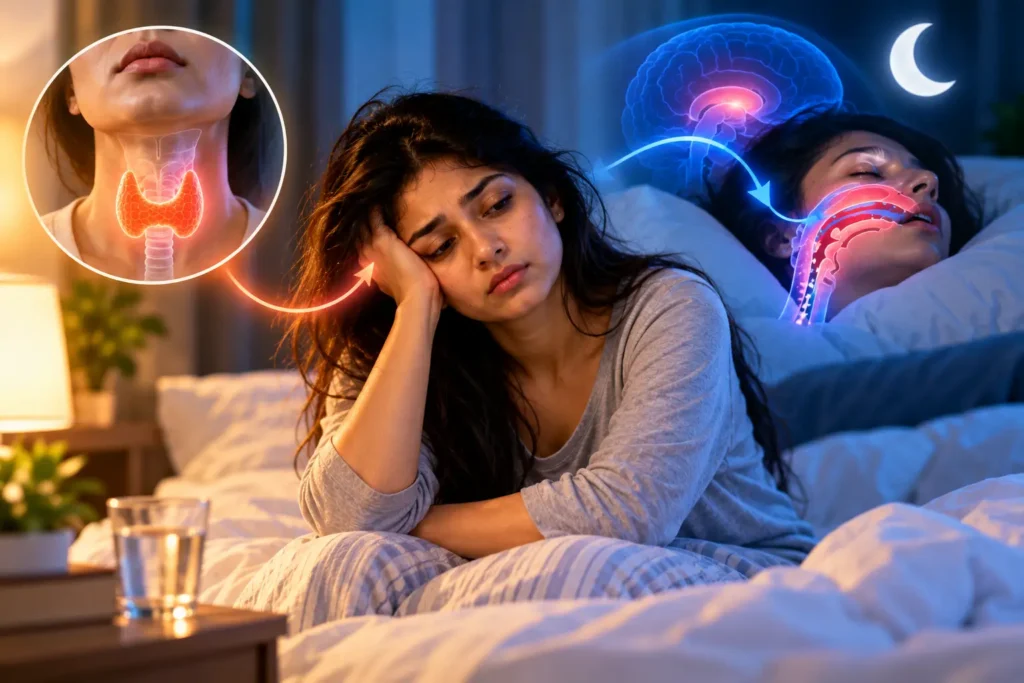
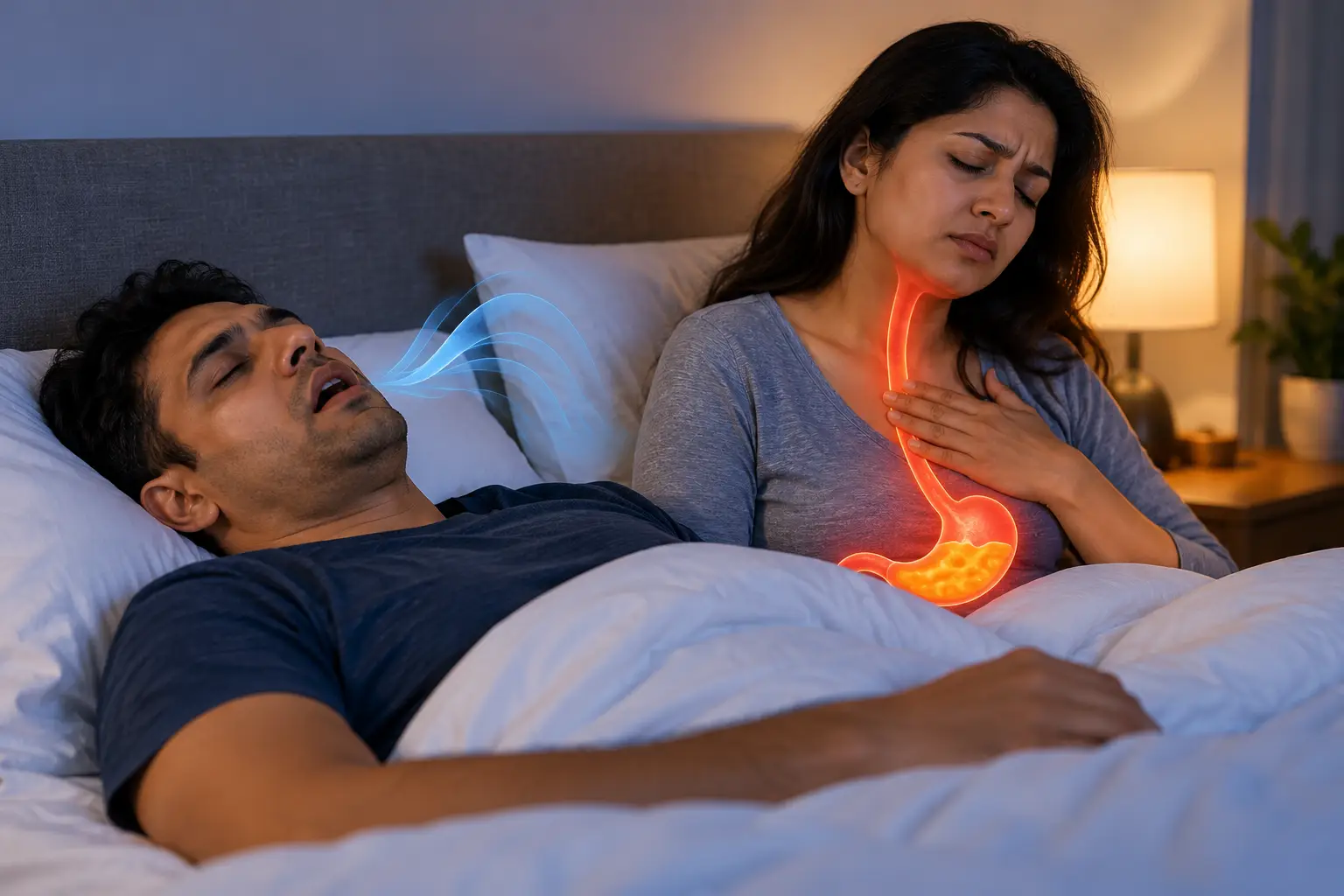
Sleep apnea and acid reflux can occur together and disrupt restful sleep. Gastroesophageal reflux disease (GERD) allows stomach contents to flow backward into the food pipe, causing heartburn, regurgitation, or throat discomfort. Obstructive sleep apnea repeatedly interrupts breathing. Both conditions can cause nighttime awakenings, although one does not always cause the other.
If you wake with a sour taste, chest burning, coughing, or choking, acid reflux may be involved. However, loud snoring, breathing pauses, morning headaches, and excessive daytime sleepiness may suggest sleep apnea.
Recognising these differences helps you seek the right evaluation instead of blaming every nighttime symptom on acidity.
Introduction
Have you ever woken in the middle of the night with a burning sensation in your chest or a sour taste in your mouth?
Perhaps you also snore loudly, wake gasping, or feel exhausted despite sleeping for seven or eight hours.
You may assume these problems are unrelated. However, sleep apnea and acid reflux can coexist, and both may affect nighttime comfort.
In India, late dinners, spicy meals, irregular work schedules, and lying down shortly after eating can make reflux symptoms more noticeable for some people.
Meanwhile, undiagnosed obstructive sleep apnea may repeatedly interrupt breathing without the person realising it.
Understanding the difference between these conditions can help you identify when digestive care, sleep evaluation, or both may be needed.
What Is GERD and Why Does It Get Worse at Night?
GERD stands for Gastroesophageal Reflux Disease.
It occurs when stomach contents repeatedly flow backward into the oesophagus, also called the food pipe, causing troublesome symptoms or complications.
A muscular valve known as the lower oesophageal sphincter normally helps prevent stomach contents from moving upward.
When this barrier does not work effectively, reflux may occur.
Common GERD symptoms include:
- Burning sensation in the chest
- Sour or bitter taste
- Regurgitation of food or liquid
- Discomfort after meals
- Symptoms when lying down
- Nighttime coughing
- Throat irritation
- Disturbed sleep
Reflux can become more noticeable at night because lying flat reduces the assistance of gravity in keeping stomach contents down.
In addition, swallowing and oesophageal clearance decrease during sleep.
Therefore, reflux episodes may last longer and interrupt rest.
Not every person with reflux has GERD. Occasional heartburn can happen without a chronic reflux disorder.
How Sleep Apnea and Acid Reflux Are Connected
The relationship between sleep apnea and acid reflux is more complex than simply saying one condition causes the other.
Research has found that obstructive sleep apnea and GERD occur together more frequently than expected in some populations.
Several mechanisms may help explain this overlap.
1. Changes in Chest Pressure During Obstructed Breathing
During an obstructive sleep apnea event, the upper airway becomes narrowed or blocked.
The person continues trying to breathe against the obstruction.
This produces pressure changes inside the chest.
Researchers have suggested that these pressure changes may influence reflux in susceptible individuals.
However, the mechanism is not fully established, and not every breathing interruption produces an acid reflux episode.
2. Repeated Nighttime Awakenings
Sleep apnea can cause brief awakenings as the body reopens the airway.
Separately, reflux may interrupt sleep through burning, coughing, or regurgitation.
When both conditions occur together, a person may experience frequent awakenings for different reasons.
Consequently, it becomes difficult to know whether breathing problems, reflux, or another sleep disorder is responsible without proper evaluation.
3. Shared Risk Factors
Sleep apnea and GERD share several associated factors.
For example, excess body weight can increase the likelihood of both upper airway obstruction and reflux symptoms.
Other factors, such as age, individual anatomy, and lifestyle habits, may also contribute.
However, both conditions can occur in people who are not overweight.
4. Sleep Disruption and Symptom Awareness
Poor sleep can make nighttime discomfort more noticeable.
People with reflux may also experience increased symptoms while lying down, leading to more awakenings.
Therefore, both conditions can negatively affect sleep quality even when there is no direct causal relationship between them.
Important: Having GERD does not mean you have sleep apnea, and having sleep apnea does not mean you will develop GERD.
7 Warning Signs That GERD May Be Affecting Your Sleep
Nighttime acid reflux can produce several symptoms.
The following signs may suggest reflux-related sleep disruption.
1. Burning in the Chest After Lying Down
Heartburn is a typical reflux symptom.
It may become more noticeable after a large dinner or when you lie down shortly after eating.
However, chest pain should never automatically be assumed to be acidity. New, severe, or unexplained chest pain requires urgent medical assessment.
2. Sour or Bitter Taste After Waking
Stomach contents may travel upward into the throat or mouth.
Consequently, you may wake with an unpleasant sour or bitter taste.
This is called regurgitation.
3. Nighttime Coughing
Some people with reflux experience coughing during the night.
However, nighttime coughing can also result from asthma, respiratory infections, medications, or other conditions.
A persistent cough deserves medical assessment.
4. Throat Irritation in the Morning
Repeated reflux may contribute to throat discomfort in some individuals.
You may notice irritation, frequent throat clearing, or hoarseness.
However, these symptoms are not specific to GERD.
5. Sleep Disruption After Heavy Meals
A large meal close to bedtime may increase reflux symptoms.
For example, some people experience discomfort after late-night biryani, fried snacks, spicy curries, or rich desserts.
However, food triggers vary between individuals.
6. Waking with a Choking Sensation
Reflux may occasionally cause an uncomfortable choking sensation.
Sleep apnea can also cause gasping or choking during sleep.
Because the symptoms overlap, recurrent episodes should not be self-diagnosed.
7. Feeling Tired After a Disturbed Night
Repeated nighttime symptoms may reduce sleep continuity.
As a result, you may feel tired, irritable, or less focused the following day.
However, persistent daytime sleepiness should also prompt consideration of other sleep disorders, including obstructive sleep apnea.
Comparison Table: Nighttime GERD vs Obstructive Sleep Apnea
| Factor | Nighttime GERD | Obstructive Sleep Apnea |
|---|---|---|
| Main problem | Stomach contents flow back into the oesophagus | Upper airway repeatedly narrows or closes |
| Typical symptoms | Heartburn, sour taste, regurgitation | Snoring, breathing pauses, gasping |
| Nighttime waking | May occur because of reflux discomfort | May occur because of breathing interruptions |
| Chest or throat symptoms | Burning, irritation, coughing | Dry mouth or choking sensations may occur |
| Morning symptoms | Sour taste, throat discomfort | Headache, fatigue, unrefreshing sleep |
| Common risk factors | Late meals, individual food triggers, excess weight | Airway anatomy, age, excess weight, other factors |
| Diagnosis | Clinical assessment; sometimes endoscopy or reflux monitoring | Sleep assessment and appropriate sleep testing |
| Treatment | Lifestyle measures and medically guided reflux treatment | CPAP or other sleep apnea treatment when indicated |
Key takeaway: GERD and sleep apnea can share symptoms, but they are different conditions requiring different evaluations.
Can Acid Reflux Cause Snoring or Sleep Apnea?
Acid reflux may contribute to throat discomfort, coughing, or sleep disturbance.
However, GERD is not an established direct cause of obstructive sleep apnea.
Likewise, snoring does not necessarily indicate acid reflux.
If you have loud snoring, breathing pauses, and nighttime choking, sleep apnea should be considered even when GERD is already diagnosed.
Treating reflux may improve digestive discomfort, but it does not reliably correct upper airway obstruction.
Therefore, persistent breathing symptoms require separate evaluation.
Can CPAP Therapy Improve Acid Reflux at Night?
CPAP, or Continuous Positive Airway Pressure, is commonly used to treat obstructive sleep apnea.
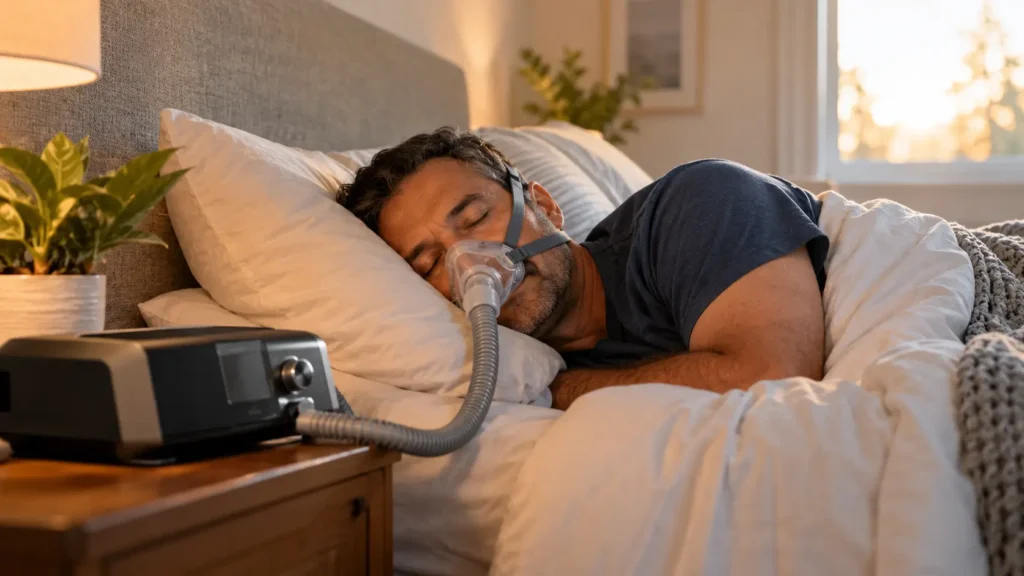
A CPAP machine delivers pressurised air through a mask to help keep the upper airway open while sleeping.
Research suggests that some patients with both sleep apnea and GERD experience fewer nighttime reflux symptoms after consistent CPAP treatment.
Possible explanations include more stable breathing, fewer pressure fluctuations, and improved sleep continuity.
However, CPAP is not a primary treatment for GERD.
It also does not guarantee reflux relief for everyone.
Some CPAP users may experience aerophagia, meaning swallowed air that causes bloating, belching, or abdominal discomfort.
If this happens, discuss mask fit and treatment comfort with your sleep therapy provider.
Do not independently change CPAP pressure or stop prescribed treatment because of reflux symptoms.
Does Sleeping Position Matter for GERD and Sleep Apnea?
Sleeping position can influence both conditions.
Left-Side Sleeping and Acid Reflux
For some people with nighttime GERD, sleeping on the left side may reduce reflux exposure.
This position can help limit the movement of stomach contents toward the oesophagus.
However, individual responses vary.
Back Sleeping and Sleep Apnea
Some people experience more upper airway obstruction when sleeping on their back.
Their breathing may improve when sleeping on their side.
However, side sleeping is not a replacement for prescribed sleep apnea treatment.
Raising the Head of the Bed
For nighttime reflux, raising the head of the bed or using an appropriate wedge pillow may reduce symptoms.
Ordinary extra pillows are not always effective because they may bend the neck without adequately elevating the upper body.
If you also use CPAP, make sure your sleeping position and pillow arrangement do not disturb mask fit or tubing.
Late Dinner, Acidity, and Poor Sleep in Indian Adults
Dinner timing deserves attention when nighttime reflux is frequent.
Many Indian households eat dinner late because of working hours, commuting, or family schedules.
Common meals may include rice, roti, dal, sabzi, curries, fried foods, or spicy preparations.
However, no single Indian food causes GERD in everyone.
Instead, meal size, timing, preparation methods, and personal triggers often matter more.
For example:
- Large oily meals may worsen reflux for some people.
- Spicy foods can trigger symptoms in susceptible individuals.
- Strong tea or coffee may aggravate reflux in certain people.
- Lying down immediately after dinner can increase nighttime discomfort.
- Late-night snacks may extend the period of reflux symptoms.
A practical approach is to finish heavier meals around two to three hours before bedtime whenever possible.
If you need to eat late, consider a smaller, balanced meal rather than a large, rich dinner.
Practical Steps to Improve Sleep with GERD
Improving nighttime symptoms often requires addressing reflux triggers while checking for possible sleep apnea.
1. Avoid Lying Down Immediately After Dinner
Try to remain upright for around two to three hours after eating.
This may reduce reflux symptoms during sleep.
2. Identify Your Personal Food Triggers
Keep a simple record of meals and symptoms.
Common triggers include fried foods, spicy meals, acidic foods, chocolate, coffee, or carbonated drinks.
However, avoid eliminating entire food groups unnecessarily if they do not affect you.
3. Try Left-Side Sleeping
If nighttime reflux is frequent, left-side sleeping may help reduce symptoms.
However, people with diagnosed sleep apnea should continue their prescribed therapy.
4. Elevate Your Upper Body When Appropriate
An appropriate wedge pillow or head-of-bed elevation may improve nighttime reflux.
Use a setup that supports the upper body comfortably without straining the neck.
5. Review Weight and Lifestyle Factors
When medically appropriate, weight management can help improve GERD and obstructive sleep apnea risk.
However, both conditions can occur at a normal body weight.
6. Reduce Late Caffeine
Tea, coffee, and energy drinks may affect sleep quality and trigger reflux in some individuals.
If symptoms are present, consider reducing late-day caffeine and monitor the difference.
7. Ask About GERD Treatment
Frequent heartburn, regurgitation, or nighttime reflux may require medical assessment.
A healthcare provider may recommend appropriate medicines or further investigation.
Do not rely on long-term self-medication without professional guidance.
8. Watch for Sleep Apnea Symptoms
If you also snore loudly, wake gasping, experience breathing pauses, or feel excessively sleepy during the day, ask whether sleep apnea testing is appropriate.
Related Reading: What Is Sleep Apnea? Symptoms, Causes and Treatment
When Should You Seek Medical Attention?
GERD symptoms should not always be managed through lifestyle changes alone.
Seek medical evaluation if you experience:
- Frequent or persistent heartburn
- Difficulty or pain when swallowing
- Unexplained weight loss
- Recurrent vomiting
- Persistent nighttime coughing
- Blood in vomit
- Black or tarry stools
Seek emergency care for severe or unexplained chest pain, particularly when associated with breathlessness, sweating, faintness, or pain spreading to the arm or jaw.
These symptoms may indicate a serious medical condition rather than reflux.
When Should You Contact SlumberSense Global?
You can contact SlumberSense Global for sleep-related guidance if:
- You have reflux symptoms alongside loud snoring
- You wake gasping or choking at night
- Your partner notices breathing pauses
- You wake tired despite sufficient sleep
- You experience morning headaches or dry mouth
- You have persistent daytime sleepiness
- You suspect obstructive sleep apnea
- You need guidance about sleep testing
- You want help understanding a sleep study report
- You use CPAP and experience sleep-related discomfort
Get Sleep Health Guidance:
Sleep apnea and acid reflux can overlap, but they are not the same condition.
GERD may disturb sleep through heartburn, regurgitation, coughing, and throat irritation.
Meanwhile, obstructive sleep apnea interrupts breathing and can cause repeated awakenings, oxygen reductions, and daytime fatigue.
Research shows an association between these conditions, although it does not establish that one always causes the other.
Practical measures such as earlier dinners, identifying reflux triggers, left-side sleeping, and appropriate medical treatment may improve nighttime comfort.
However, if loud snoring, gasping, breathing pauses, or excessive daytime sleepiness are present, do not assume acidity explains everything.
A proper sleep evaluation may help identify whether obstructive sleep apnea is also affecting your rest.
Frequently Asked Questions
1. Are sleep apnea and acid reflux connected?
Yes. Research has found an association between obstructive sleep apnea and GERD. Both can cause nighttime sleep disruption, although one does not necessarily cause the other.
2. Can GERD cause choking during sleep?
GERD can sometimes cause nighttime regurgitation, coughing, or choking sensations. However, sleep apnea and other conditions can also cause similar symptoms, so repeated episodes require evaluation.
3. Does sleep apnea make acid reflux worse?
Some studies suggest that obstructive sleep apnea may contribute to reflux symptoms through breathing-related pressure changes and sleep disruption. However, the exact relationship is not fully understood.
4. Can CPAP reduce nighttime acid reflux?
Some people with obstructive sleep apnea and GERD report improved nighttime reflux symptoms with consistent CPAP treatment. However, results vary, and CPAP is not a substitute for appropriate GERD care.
5. Which sleeping position is better for acid reflux?
Left-side sleeping and raising the head of the bed may reduce nighttime reflux symptoms in some people. Patients with sleep apnea should also follow their prescribed breathing treatment.
6. Should I get a sleep test if I have GERD?
GERD alone does not mean a sleep test is necessary. However, if reflux occurs alongside loud snoring, breathing pauses, gasping, or excessive daytime sleepiness, discuss sleep apnea evaluation with a qualified healthcare professional.
Medical Disclaimer
This article is for educational purposes only and does not replace professional medical advice, diagnosis, or treatment. If you have persistent reflux, chest pain, swallowing difficulties, loud snoring, breathing pauses, or suspected sleep apnea, consult an appropriately qualified healthcare provider or sleep specialist.