Quick Answer
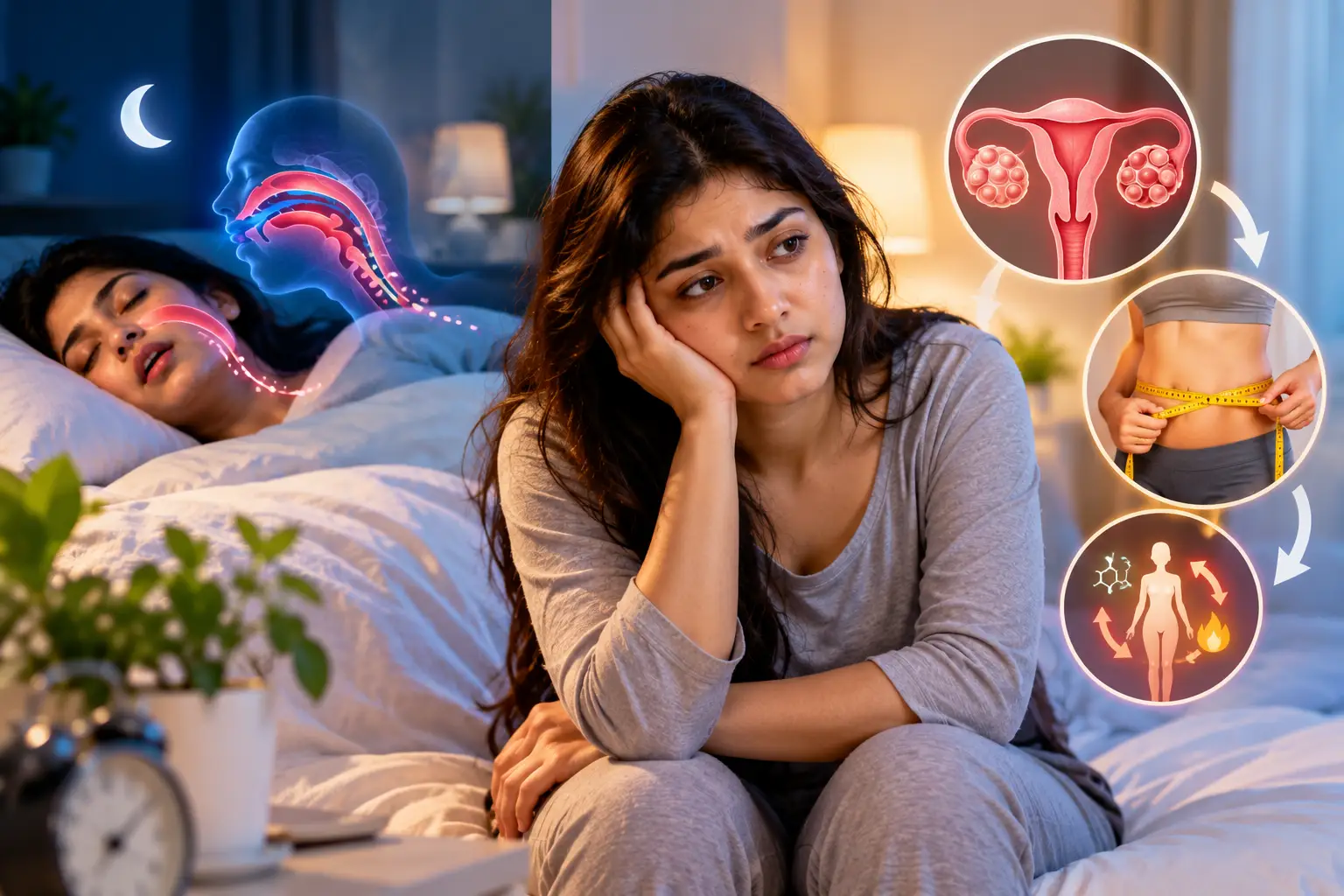
PCOS sleep apnea and slow metabolism are connected because polycystic ovary syndrome (PCOS) can involve insulin resistance, hormonal changes, weight gain, and poor sleep quality. Women with PCOS have a higher risk of obstructive sleep apnea, which can cause repeated breathing interruptions, oxygen drops, fatigue, and additional metabolic challenges.
Women with PCOS often focus on irregular periods, acne, excessive hair growth, fertility, or weight. However, sleep quality also matters. If you have PCOS and regularly snore, wake tired, experience morning headaches, or feel sleepy during the day, consider discussing sleep apnea screening with a healthcare professional.
The 2023 International Evidence-based Guideline for the Assessment and Management of Polycystic Ovary Syndrome reports a significantly higher prevalence of obstructive sleep apnea among women with PCOS, independent of BMI.
Introduction
Many women with PCOS experience weight gain, sugar cravings, low energy, irregular periods, and difficulty managing weight. However, one important health concern may go unnoticed: obstructive sleep apnea.
The connection between PCOS sleep apnea and slow metabolism matters because PCOS and sleep-disordered breathing can affect overlapping areas of health, including insulin sensitivity, energy, and weight management.
This does not mean every woman with PCOS has sleep apnea. Nevertheless, persistent snoring, unrefreshing sleep, morning headaches, and daytime sleepiness deserve attention.
Understanding how PCOS and sleep apnea interact can help women identify possible causes of fatigue and seek appropriate support.
What Is PCOS?
PCOS stands for Polycystic Ovary Syndrome. It is a hormonal and metabolic condition that can affect menstrual cycles, ovulation, skin, hair growth, fertility, and long-term health.
Common PCOS features include:
- Irregular or missed periods
- Acne
- Excessive facial or body hair
- Scalp hair thinning
- Weight gain or difficulty managing weight
- Increased abdominal fat
- Insulin resistance
- Fertility difficulties
- Mood changes
- Increased risk of type 2 diabetes
Not every woman experiences all these symptoms. In addition, PCOS can occur at any body weight.
Insulin resistance is an important underlying feature of PCOS, although its severity varies between individuals.
Therefore, PCOS should not be viewed only as a menstrual or fertility condition. Sleep quality and metabolic health also deserve attention.
Why PCOS Increases the Risk of Sleep Apnea
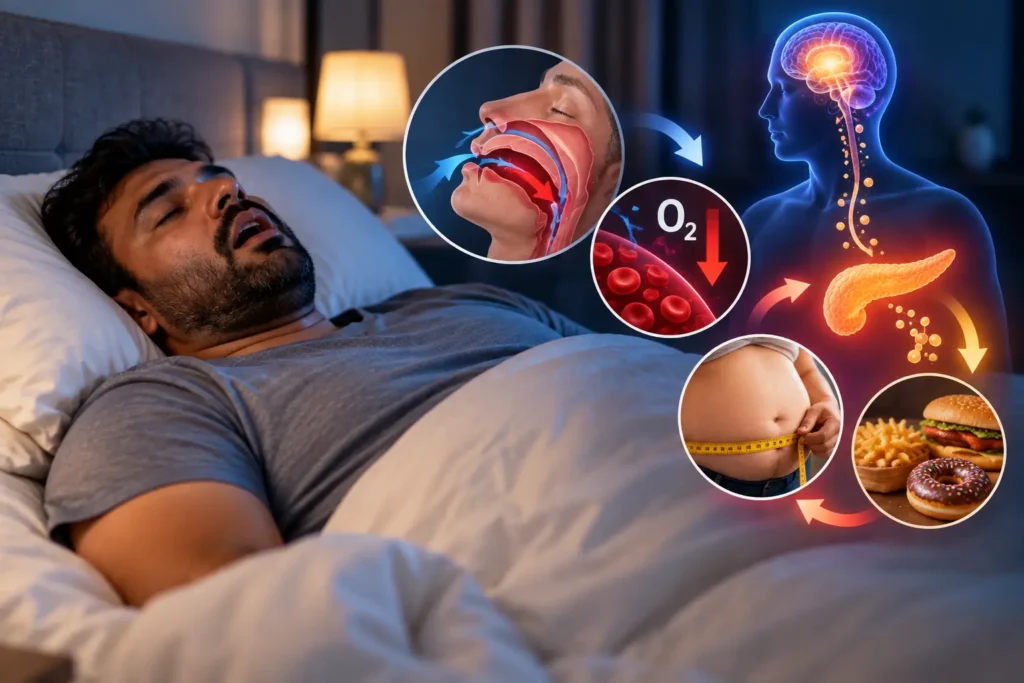
Obstructive sleep apnea occurs when the upper airway repeatedly narrows or closes during sleep. These interruptions may reduce oxygen levels and trigger brief awakenings.
Women with PCOS have a higher prevalence of obstructive sleep apnea than women without PCOS. Researchers continue to investigate why this association exists.
Several factors may contribute.
1. Insulin Resistance
Insulin helps glucose enter cells for energy. With insulin resistance, the body becomes less responsive to insulin, making blood sugar regulation more difficult.
Insulin resistance frequently occurs in PCOS and is also associated with obstructive sleep apnea.
However, researchers have not established that insulin resistance alone causes sleep apnea. Instead, it may form part of a broader pattern of overlapping metabolic risk.
2. Weight Gain Around the Neck and Abdomen
Some women with PCOS experience weight gain, particularly around the abdomen.
Additional tissue around the upper airway can increase the likelihood of airway narrowing during sleep. Abdominal weight may also influence breathing mechanics.
As a result, excess weight can contribute to sleep apnea risk.
However, women with PCOS can develop sleep apnea even without obesity. Therefore, body weight alone should not determine whether someone needs screening.
3. Higher Androgen Levels
PCOS commonly involves increased androgen activity. Androgens are hormones present in both women and men.
Researchers are investigating whether androgen patterns contribute to differences in airway function, fat distribution, or sleep apnea susceptibility among women with PCOS.
Although this may help explain the association, the exact mechanisms remain under investigation.
4. Poor Sleep Quality and Fatigue
Women with PCOS may experience sleep difficulties alongside stress, mood changes, or metabolic concerns.
When obstructive sleep apnea is also present, repeated breathing interruptions can fragment sleep.
Consequently, a woman may sleep for several hours but still wake exhausted.
This fatigue can affect exercise, concentration, meal planning, and everyday activities.
Comparison Table: PCOS-Related Fatigue vs Sleep Apnea-Related Fatigue
| Factor | PCOS-Related Fatigue | Sleep Apnea-Related Fatigue |
|---|---|---|
| Main concern | Low energy that may accompany hormonal, metabolic, or other health problems | Unrefreshing sleep caused by repeated breathing interruptions |
| Common signs | Irregular periods, acne, hair changes, metabolic concerns | Snoring, gasping, breathing pauses, morning headaches |
| Sleep pattern | Sleep difficulties may occur for several reasons | Repeated awakenings may interrupt restorative sleep |
| Morning symptoms | Tiredness or reduced motivation | Dry mouth, headache, brain fog, persistent tiredness |
| Metabolic connection | Insulin resistance may be present | Sleep fragmentation and oxygen drops may affect glucose regulation |
| What to check | PCOS management, metabolic health, and other fatigue causes | Sleep symptoms, breathing events, oxygen levels, and AHI or REI |
| Important point | PCOS does not automatically explain persistent fatigue | Sleep apnea can occur even when sleep duration appears normal |
Important: Fatigue alone cannot distinguish PCOS from sleep apnea. Both conditions may coexist, and other causes such as anaemia, thyroid disorders, depression, or medication effects may also need evaluation.
How Sleep Apnea Affects Metabolism in Women with PCOS
The connection between PCOS sleep apnea and slow metabolism becomes important when breathing interruptions repeatedly disturb sleep.
During an obstructive breathing event, oxygen levels may decrease. The brain briefly activates the body to reopen the airway, sometimes without a noticeable awakening.
Repeated episodes can affect:
- Sleep quality and recovery
- Sympathetic nervous system activity
- Blood pressure regulation
- Glucose metabolism
- Insulin sensitivity
- Daytime alertness
- Physical activity
- Appetite and eating patterns
Consequently, sleep apnea may create additional challenges for women already managing PCOS-related metabolic concerns.
Studies have also found associations between obstructive sleep apnea in PCOS and less favourable metabolic measurements, including insulin resistance and cardiovascular risk factors.
However, an association does not mean every woman with both conditions will experience these problems.
Likewise, sleep apnea does not necessarily lower the body’s basal metabolic rate. Instead, fragmented sleep, reduced energy, and appetite changes may make weight management harder.
PCOS, Insulin Resistance, and Sleep Apnea
Insulin resistance is one of the most important metabolic connections between PCOS and obstructive sleep apnea.
When cells respond less effectively to insulin, the body may need to produce more insulin to manage blood sugar.
Sleep disruption and intermittent oxygen reductions can further affect glucose regulation in some individuals.
Women with PCOS and insulin resistance may experience:
- Increased abdominal fat
- Difficulty managing weight
- Changes in appetite
- Fatigue
- Higher blood glucose
- Increased type 2 diabetes risk
However, symptoms alone cannot confirm insulin resistance.
A healthcare professional may recommend appropriate blood glucose testing, including an oral glucose tolerance test when indicated.
The National Heart, Lung, and Blood Institute also explains that sleep deficiency can affect insulin response and increase metabolic health risks.
Therefore, managing PCOS should include attention to sleep quality alongside nutrition, movement, and appropriate medical monitoring.
Why Women with PCOS Wake Up Tired
Some women with PCOS report sleeping for seven or eight hours but still waking exhausted.
One possible explanation is that sleep becomes fragmented rather than restorative.
Obstructive sleep apnea can cause:
- Repeated breathing interruptions
- Oxygen level reductions
- Snoring
- Gasping or choking
- Brief awakenings
- Dry mouth
- Morning headaches
- Persistent daytime tiredness
Because these awakenings are often brief, a woman may not remember them.
As a result, she may believe she slept normally even though her breathing was repeatedly interrupted.
Persistent tiredness can also affect daily habits. Walking, exercising, preparing balanced meals, and maintaining a consistent routine may become more difficult.
However, fatigue in PCOS can have several causes. Therefore, a proper assessment is more useful than assuming sleep apnea is always responsible.
Signs of Sleep Apnea in Women with PCOS
Sleep apnea symptoms in women are sometimes less obvious than the typical image of loud snoring and gasping.
Some women report insomnia-like symptoms, poor concentration, fatigue, mood changes, or morning headaches.
The National Heart, Lung, and Blood Institute identifies PCOS as a condition associated with increased sleep apnea risk.
Consider discussing sleep apnea screening if you have PCOS and experience:
- Loud or frequent snoring
- Breathing pauses noticed by someone else
- Gasping or choking during sleep
- Morning headaches
- Dry mouth after waking
- Daytime sleepiness
- Waking tired despite adequate sleep
- Difficulty concentrating
- Restless or fragmented sleep
- High blood pressure
These symptoms do not confirm a diagnosis. However, they provide important information for your healthcare professional.
Additionally, women should not dismiss possible sleep apnea simply because they are young or have a healthy BMI.
Why Weight Management Can Be Harder with PCOS and Poor Sleep
Weight management can be challenging for some women with PCOS because of insulin resistance, hormonal factors, appetite changes, and other individual circumstances.
Poor sleep may add another difficulty.
Short or fragmented sleep can affect hunger, satiety, food preferences, energy, and everyday activity.
For example, you may notice:
- Stronger evening cravings
- More frequent snacking
- Difficulty feeling satisfied after meals
- Lower motivation to exercise
- Reduced workout recovery
- Increased stress
- Daytime fatigue
Over time, these behaviours can influence overall energy balance.
A possible cycle develops:
- PCOS creates metabolic and hormonal challenges.
- Sleep apnea, when present, fragments nighttime sleep.
- Poor sleep increases tiredness and may affect appetite.
- Maintaining healthy habits becomes more difficult.
- Weight gain may increase the severity of obstructive sleep apnea.
- Sleep disruption continues unless the underlying problem receives appropriate care.
However, not every woman experiences this cycle.
Moreover, treating sleep apnea does not automatically cause weight loss. Sustainable weight management typically requires broader support, including nutrition, activity, PCOS treatment, and individual medical guidance.
Practical Steps for Women with PCOS
Improving PCOS sleep apnea and slow metabolism concerns begins with identifying possible sleep problems and addressing metabolic health consistently.
1. Track Sleep Symptoms
Monitor your sleep and morning symptoms for 7–14 days.
Record:
- Bedtime and wake-up time
- Snoring or breathing concerns
- Morning headaches
- Dry mouth
- Daytime sleepiness
- Nighttime awakenings
- Energy levels
- Appetite changes
You may also record menstrual cycle changes and other PCOS symptoms.
This information can help your healthcare professional identify patterns.
2. Ask About Sleep Apnea Screening
If you have PCOS alongside snoring, unrefreshing sleep, or excessive daytime sleepiness, ask whether further sleep evaluation is appropriate.
A healthcare professional may recommend a home sleep apnea test or an attended sleep study, depending on your symptoms and medical history.
Testing can help identify breathing interruptions, oxygen changes, and sleep apnea severity.
3. Support Blood Sugar Balance
Balanced meals can support metabolic health and help manage hunger.
Useful habits include:
- Include protein in regular meals
- Eat vegetables and fibre-rich foods
- Limit sugar-sweetened drinks
- Choose appropriate portions
- Reduce frequent late-night snacking
- Maintain consistent meal timing where practical
- Discuss diabetes screening with your doctor
For Indian diets, meals may include dal, sabzi, roti, eggs, paneer, curd, pulses, tofu, fish, or chicken according to personal preferences.
There is no single compulsory PCOS diet. A sustainable eating pattern matters more than restrictive rules.
4. Move Regularly
Physical activity can improve insulin sensitivity, cardiovascular health, mood, and sleep quality.
Choose activities you can maintain, such as:
- Brisk walking
- Strength training
- Yoga
- Cycling
- Swimming
- Home workouts
Start at a comfortable level and gradually increase activity.
Consistency matters more than exhausting workouts.
5. Improve Your Sleep Routine
A regular sleep schedule supports the body’s circadian rhythm.
Helpful habits include:
- Keep a consistent wake-up time
- Aim for 7–9 hours of sleep as an adult
- Get natural light in the morning
- Reduce caffeine later in the day
- Avoid heavy meals close to bedtime
- Dim bright lights before sleeping
- Keep the bedroom dark, quiet, and comfortable
- Create a calming wind-down routine
These habits can improve sleep opportunities. However, they do not replace treatment for diagnosed obstructive sleep apnea.
6. Follow Appropriate Medical Treatment
PCOS and sleep apnea require individual assessment.
Depending on your condition, medical care may involve PCOS management, metabolic monitoring, CPAP therapy, oral appliance treatment, weight management, or other approaches.
Do not stop prescribed medication or sleep apnea treatment without speaking to your healthcare provider.
Related Reading: What Is Sleep Apnea? Symptoms, Causes and Treatment
When Should You Contact SlumberSense Global?
You can contact SlumberSense Global for sleep health guidance if you have PCOS and:
- Snore loudly or frequently
- Wake tired despite adequate sleep
- Experience morning headaches or dry mouth
- Feel excessively sleepy during the day
- Have breathing pauses noticed by a family member
- Suspect obstructive sleep apnea
- Have metabolic concerns alongside sleep symptoms
- Need information about sleep testing
- Want help understanding a sleep study report
- Need guidance on CPAP or other sleep therapy options
Get Sleep Apnea Guidance:
https://slumbersenseglobal.com/contact-us/
Final Takeaway
PCOS sleep apnea and slow metabolism describe a combination of concerns that may affect sleep quality, glucose regulation, energy, and weight management.
Women with PCOS have a higher risk of obstructive sleep apnea, even after accounting for BMI. Therefore, sleep symptoms deserve attention regardless of body size.
When sleep apnea is present, repeated breathing interruptions can cause fragmented sleep, oxygen reductions, and persistent daytime fatigue.
However, PCOS does not always cause a slow metabolic rate, and sleep apnea is not the only explanation for weight difficulty.
A complete approach includes PCOS management, appropriate metabolic testing, healthy daily habits, and sleep apnea assessment when symptoms suggest a problem.
If you have PCOS and regularly wake tired, snore, or experience excessive daytime sleepiness, discussing sleep health with a qualified professional may help identify the next step.
Frequently Asked Questions
1. Can PCOS increase sleep apnea risk?
Yes. Women with PCOS have a higher prevalence of obstructive sleep apnea than women without PCOS. Weight, hormonal patterns, metabolic factors, and airway characteristics may contribute to this increased risk.
2. Can sleep apnea make PCOS symptoms worse?
Sleep apnea may add to fatigue and metabolic difficulties in women with PCOS. Repeated sleep interruptions and oxygen reductions can affect glucose regulation, daytime energy, and overall sleep quality.
3. Why do women with PCOS wake up tired?
Women with PCOS may wake tired because of sleep disruption, obstructive sleep apnea, mood problems, or other health conditions. Snoring, breathing pauses, morning headaches, and excessive sleepiness should prompt further assessment.
4. Can treating sleep apnea improve metabolism in PCOS?
Sleep apnea treatment can improve breathing during sleep and may improve daytime symptoms. However, improvements in insulin resistance or body weight are not guaranteed. Continued PCOS and metabolic care remains important.
5. Should women with PCOS get a sleep test?
Not every woman with PCOS needs a sleep test. However, women who snore regularly, experience unrefreshing sleep, have breathing pauses, or report excessive daytime sleepiness should discuss screening and possible testing with a healthcare professional.
6. Is weight gain the only reason women with PCOS develop sleep apnea?
No. Obesity is an important risk factor, but women with PCOS can develop sleep apnea at different body weights. Researchers are also studying hormonal, metabolic, and anatomical factors that may contribute.
Medical Disclaimer
This article is for educational purposes only and does not replace professional medical advice, diagnosis, or treatment. If you have PCOS, persistent fatigue, loud snoring, breathing pauses, diabetes concerns, or other health symptoms, consult a qualified healthcare provider or sleep specialist.