Quick Answer
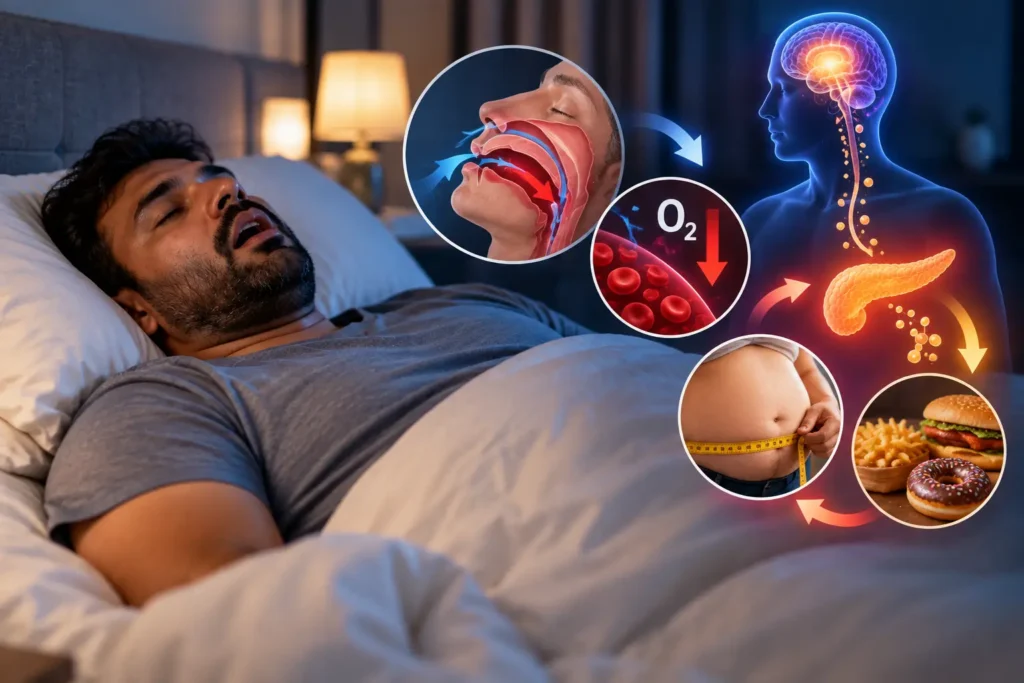
Melatonin and insulin are connected because melatonin helps signal nighttime sleep timing, while insulin helps control blood glucose after food. When sleep timing is irregular, meals happen late, or light exposure delays melatonin rhythm, the body may handle glucose less efficiently, which may increase pre-diabetes risk over time.
Poor sleep timing does not mean one late night will cause pre-diabetes. However, repeated late nights, late dinners, poor sleep quality, shift work, and untreated sleep apnea may disturb the body clock, blood sugar control, hunger hormones, and insulin response.
Therefore, people with belly fat, sugar cravings, family history of diabetes, PCOS, snoring, or daytime sleepiness should take sleep timing seriously.
Introduction
The connection between melatonin and insulin is important for anyone worried about blood sugar, weight gain, cravings, poor sleep, or pre-diabetes.
Most people think diabetes risk is only about sugar intake, exercise, and body weight. These are important. However, sleep timing also plays a major role.
Your body follows a daily rhythm called the circadian rhythm. This rhythm helps decide when you feel awake, when you feel sleepy, when digestion works best, and how hormones behave.
Melatonin rises at night and tells the body that it is time to prepare for sleep. Insulin works after meals to help move glucose from the blood into cells.
When you eat late, sleep late, wake irregularly, or expose yourself to bright screens at night, this natural rhythm may become confused. As a result, blood sugar control may become harder.
What Is Melatonin?
Melatonin is a hormone linked with your body clock. It rises in the evening as darkness increases and helps signal that sleep time is approaching.
NHLBI explains that melatonin signals the body that it is time to prepare for sleep and helps you feel sleepy.
Melatonin does not “knock you out” like a sedative. Instead, it helps coordinate sleep timing with darkness and your internal clock.
Melatonin rhythm can be affected by:
- Bright light at night
- Late-night phone use
- Irregular sleep schedule
- Night shift work
- Jet lag
- Late caffeine
- Stress
- Delayed bedtime
- Sleeping very late on weekends
When melatonin timing shifts later, your sleep may also shift later. Consequently, meal timing, hunger, digestion, and insulin rhythm may also change.
What Is Insulin?
Insulin is a hormone that helps control blood glucose, also called blood sugar. After you eat, carbohydrates break down into glucose. Insulin helps move that glucose from the blood into body cells for energy.
When insulin works well, blood sugar stays more stable. When the body becomes less responsive to insulin, more insulin may be needed to control the same amount of glucose.
This condition is called insulin resistance. It can increase the risk of pre-diabetes and type 2 diabetes.
NHLBI notes that sleep affects how the body reacts to insulin, the hormone that controls blood glucose.
This is why melatonin and insulin should not be viewed as separate topics. One helps guide sleep timing. The other helps manage glucose after meals. Both follow daily body rhythms.
Melatonin and Insulin: Why Timing Matters
The link between melatonin and insulin becomes especially important at night.
During daytime, the body is usually more prepared for eating, digestion, movement, and glucose use. At night, the body should shift toward rest, repair, and fasting.
When you eat late at night, your body may need to release insulin while melatonin is also rising. This mismatch may not be ideal for glucose control in some people.
In simple words, your body may be receiving two different messages:
- Melatonin says: “Prepare for sleep.”
- Late food says: “Digest and manage glucose.”
This does not mean everyone must stop eating very early. However, it does mean heavy late meals, sweets, and late-night snacking can create more metabolic pressure.
Research on sleep manipulation shows that sleep duration, quality, and timing are important for metabolic function and type 2 diabetes risk. Circadian misalignment can negatively affect insulin sensitivity.
Therefore, poor sleep timing can become a hidden risk factor for people already vulnerable to pre-diabetes.
Can Poor Sleep Timing Lead to Pre-Diabetes?
Poor sleep timing may increase pre-diabetes risk indirectly and, in some people, directly through circadian disruption.
Pre-diabetes happens when blood sugar is higher than normal but not high enough to be classified as diabetes. It often involves insulin resistance.
Poor sleep timing may contribute through:
- Late dinners
- Late-night sugar cravings
- Short sleep duration
- Irregular wake time
- Reduced physical activity
- Higher stress hormones
- Poor appetite control
- Circadian misalignment
- Sleep apnea-related oxygen drops
A single late night will not automatically cause pre-diabetes. However, repeated disruption can push the body toward poor glucose control, especially when combined with weight gain, family history, PCOS, inactivity, or high-calorie late-night eating.
NHLBI also links sleep deficiency with higher risk of obesity, diabetes, high blood pressure, and stroke.
So, sleep timing should be part of a complete diabetes prevention plan.
Comparison Table: Healthy Sleep Timing vs Poor Sleep Timing
| Factor | Healthy Sleep Timing | Poor Sleep Timing |
|---|---|---|
| Melatonin Rhythm | Rises naturally in the evening and supports sleep readiness | May be delayed by bright screens, late work, or irregular routine |
| Insulin Response | Meals usually happen when the body is more prepared to digest | Late meals may increase nighttime glucose and insulin demand |
| Blood Sugar | Better chance of stable overnight glucose | Higher chance of glucose swings after late eating |
| Cravings | Better appetite control the next day | More sugar cravings after short or broken sleep |
| Deep Sleep | More consistent recovery window | Sleep may feel lighter or fragmented |
| Morning Energy | Better chance of waking fresh | Tired, heavy, foggy, or caffeine-dependent morning |
| Pre-Diabetes Risk | Supports better metabolic routine | May increase risk when combined with other factors |
| Best Practice | Eat earlier, reduce light at night, and keep fixed sleep timing | Avoid making late meals and irregular sleep a daily habit |
Why Late-Night Screens Can Affect Blood Sugar
Late-night screens affect more than sleepiness. Bright light from phones, laptops, and TVs can delay the body’s sleep signal and keep the brain alert.
If screen time pushes bedtime later, it may also increase late-night snacking. Many people do not eat at night because they are physically hungry. They eat because they are awake, bored, stressed, or scrolling.
This can create a cycle:
- Screen time delays sleep.
- Melatonin rhythm shifts later.
- Hunger and cravings increase.
- Late snacking raises glucose.
- Sleep becomes shorter or lighter.
- The next day, insulin response and appetite control may suffer.
NHLBI advises that staying up late and sleeping in late on weekends can disrupt the body clock’s sleep-wake rhythm.
Therefore, reducing late-night screens is not only a sleep tip. It is also a metabolic health habit.
How Late Dinners Disrupt Melatonin and Insulin
Dinner timing is one of the easiest ways to support melatonin and insulin balance.
A heavy meal close to bedtime may keep digestion active when the body should be winding down. This can cause reflux, bloating, thirst, disturbed sleep, or morning heaviness.
Late meals often include:
- Rice-heavy meals
- Fried snacks
- Sweets
- Biscuits
- Bakery foods
- Sugary tea or coffee
- Carbonated drinks
- Fast food
- Late-night delivery meals
These foods may increase glucose load and insulin demand at a time when the body is preparing for sleep.
For better balance, try to finish dinner 2–3 hours before bedtime when possible. If work forces late dinner, keep it lighter and easier to digest.
Better dinner options may include:
- Dal and vegetables
- Khichdi with curd
- Roti with sabzi and dal
- Paneer or tofu with vegetables
- Eggs with salad
- Soup with protein
- Fish or chicken with vegetables
- Sprouts or chana in controlled portions
The goal is not strict dieting. The goal is to reduce nighttime metabolic pressure.
Sleep Apnea, Oxygen Drops, and Diabetes Risk
Sleep timing matters, but sleep quality matters too.
Some people sleep for 7–8 hours but still wake tired because breathing is repeatedly disturbed during sleep. This can happen in obstructive sleep apnea.
Sleep apnea may cause:
- Loud snoring
- Breathing pauses
- Gasping or choking
- Oxygen drops
- Morning headaches
- Dry mouth
- Daytime sleepiness
- Poor concentration
- High blood pressure
Sleep apnea can fragment sleep and may affect insulin response, appetite, stress hormones, and weight control.
This is especially important for people with belly fat, PCOS, thyroid concerns, pre-diabetes, or family history of diabetes.
If you snore loudly and struggle with blood sugar or weight, do not ignore sleep apnea symptoms.
Internal Link Placeholder:
Learn more here: [Sleep Apnea Guidance —https://slumbersenseglobal.com/what-is-sleep-apnea/]
Signs Melatonin and Insulin Rhythms Are Affecting Blood Sugar
You may need to review sleep timing if you notice:
- Sleeping after midnight regularly
- Waking at different times daily
- Late-night food cravings
- Sweet cravings after poor sleep
- Caffeine dependence
- Afternoon energy crash
- Weight gain around the waist
- Morning heaviness
- Poor sleep after late dinner
- Daytime sleepiness
- High fasting sugar
- Pre-diabetes report
- PCOS with poor sleep
- Snoring or dry mouth after waking
These signs do not confirm pre-diabetes. However, they show that sleep, meals, and metabolism may need attention.
Practical Steps to Support Melatonin and Insulin Balance
Improving melatonin and insulin rhythm starts with small changes.
1. Keep a Fixed Wake-Up Time
Wake up at nearly the same time every day. This helps reset your body clock and supports better hormone timing.
2. Get Morning Light
Open curtains or step outside soon after waking. Morning light helps the brain understand when the day starts.
3. Reduce Bright Screens Before Bed
Keep a 30-minute screen-light cut-off before sleep. Dim lights and avoid stressful scrolling.
4. Finish Dinner Earlier
Try to finish dinner 2–3 hours before bedtime. If dinner is late, keep it light and avoid heavy sweets, fried foods, and large portions.
5. Add Protein and Fibre
Protein and fibre help reduce cravings and support better blood sugar control. Add dal, curd, eggs, paneer, tofu, sprouts, vegetables, fish, or chicken depending on your diet.
6. Avoid Late Caffeine
Tea, coffee, energy drinks, and pre-workout drinks can delay sleep. If sleep is poor, stop caffeine after 2–3 p.m.
7. Move After Meals
A gentle walk after dinner can support digestion and glucose control. Avoid intense workouts very close to bedtime if they disturb sleep.
8. Track Sleep and Sugar Patterns
For 7–14 days, track bedtime, wake time, dinner timing, cravings, sleep quality, snoring, and morning energy. If you monitor glucose, also note fasting sugar trends.
9. Ask for Sleep Guidance
If snoring, waking tired, morning headaches, dry mouth, or daytime sleepiness are present, a sleep evaluation may help identify whether sleep apnea is affecting metabolic health.
When Should You Contact SlumberSense Global?
You can contact SlumberSense Global if:
- You wake tired despite enough sleep
- You snore loudly
- You have morning headaches
- You wake with dry mouth
- You feel sleepy during the day
- You have pre-diabetes risk
- You have PCOS, thyroid concerns, or belly fat
- You struggle with late-night cravings
- You suspect sleep apnea
- You need guidance on sleep testing or therapy options
Get sleep health guidance:
https://slumbersenseglobal.com/contact-us/
Final Takeaway
Melatonin and insulin work best when your body clock, sleep timing, meal timing, and daily routine stay consistent.
Poor sleep timing may not cause pre-diabetes overnight. However, repeated late nights, late meals, bright screens, short sleep, and untreated sleep apnea can affect blood sugar control and insulin response over time.
The best approach is practical: sleep and wake at regular times, reduce late-night screens, finish dinner earlier, move daily, and check for sleep apnea symptoms if sleep never feels refreshing.
If you are already at risk for pre-diabetes, improving sleep timing may be one of the most useful lifestyle steps you can take.
Frequently Asked Questions
1. Can poor sleep timing lead to pre-diabetes?
Poor sleep timing may increase pre-diabetes risk when it repeatedly affects insulin response, cravings, meal timing, weight, and daily activity. It is usually one part of a larger risk pattern.
2. How are melatonin and insulin connected?
Melatonin helps signal nighttime sleep timing, while insulin helps control blood glucose after meals. When sleep timing and meal timing are poorly aligned, glucose control may become harder.
3. Is eating late bad for blood sugar?
Eating late, especially heavy meals, sweets, or refined carbohydrates, may raise nighttime glucose and insulin demand. This matters more for people with pre-diabetes, diabetes risk, PCOS, or belly fat.
4. Can reducing screens improve melatonin?
Yes. Reducing bright screens and strong light before bed may support a healthier melatonin rhythm and make it easier to sleep on time.
5. Can sleep apnea affect insulin resistance?
Yes. Sleep apnea can fragment sleep and cause oxygen drops. This may affect stress hormones, appetite control, insulin response, and weight management.
6. Should I take melatonin for blood sugar?
Do not take melatonin only for blood sugar without medical advice. Melatonin supplements may not be suitable for everyone, and timing, dose, medication use, and health conditions matter.
Medical Disclaimer
This article is for educational purposes only and does not replace medical advice, diagnosis, or treatment. If you have pre-diabetes, diabetes, severe fatigue, loud snoring, breathing pauses, medication use, or sleep problems, consult a qualified healthcare provider or sleep specialist.