Quick Answer
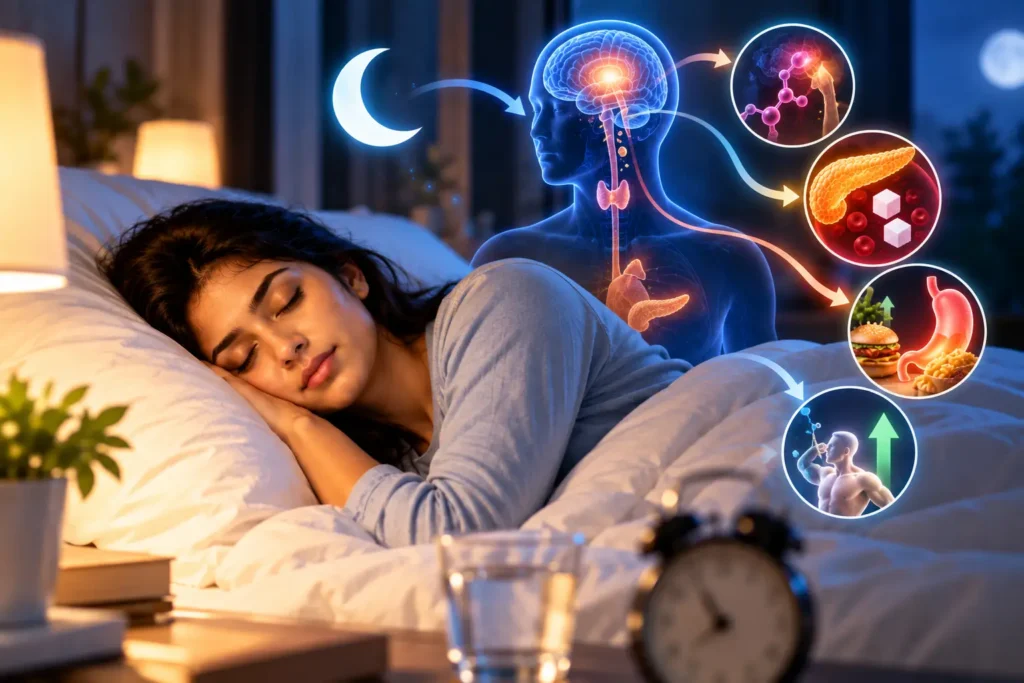
Sleep and hormonal health means the way your sleep quality, sleep timing, and sleep duration influence key hormones such as cortisol, insulin, growth hormone, ghrelin, leptin, and melatonin. Healthy sleep supports stress control, blood sugar balance, appetite regulation, tissue repair, metabolism, immunity, mood, and daily energy.
Poor sleep can disturb these hormone signals. As a result, you may feel tired, hungry, stressed, foggy, and poorly recovered even after spending enough hours in bed.
Therefore, sleep is not only rest for the brain. It is a nightly reset for the body’s hormone, metabolism, and recovery systems.
Introduction
The connection between sleep and hormonal health is one of the most important parts of daily wellness. Many people check diet, exercise, supplements, thyroid reports, sugar levels, and weight, but they do not check sleep quality.
However, hormones do not work separately from sleep. Your body follows a daily rhythm. Cortisol should help you wake up in the morning. Melatonin should rise at night. Insulin should help control blood sugar after meals. Growth hormone should support repair during deep sleep.
When sleep becomes short, irregular, or repeatedly disturbed, this rhythm may become unstable.
This article explains how sleep and hormonal health are connected, how cortisol, insulin, and growth hormone are affected, and what daily steps may help.
Why Sleep and Hormonal Health Are Closely Connected
Hormones are chemical messengers. They tell the body when to wake up, when to feel hungry, when to feel full, how to use glucose, how to respond to stress, and when to repair tissues.
Sleep supports this system every night. During sleep, breathing, heart rate, body temperature, muscle activity, hormone release, and brain activity change across sleep cycles. These changes help the body recover and prepare for the next day.
Good sleep supports:
- Better stress control
- Healthier blood sugar response
- Appetite balance
- Tissue repair
- Muscle recovery
- Immune function
- Mood stability
- Mental focus
- Weight management
In contrast, poor sleep may increase hunger, reduce fullness signals, affect insulin response, and weaken recovery. NHLBI (National Heart, Lung and Blood Institute, USA) notes that lack of sleep can raise ghrelin, lower leptin, and affect how the body reacts to insulin.
This is why sleep and hormonal health should be part of any plan for weight, diabetes prevention, energy, mood, and long-term health.
Cortisol, Sleep and Hormonal Health: The Stress Rhythm
Cortisol is commonly called the stress hormone. However, cortisol is not always harmful. Your body needs it to wake up, stay alert, maintain blood pressure, and respond to stress.
In a healthy rhythm, cortisol usually rises in the morning and lowers later in the day. NHLBI explains that the body releases cortisol as the sun rises to help prepare you to wake up.
The problem starts when stress, late-night work, phone scrolling, irregular sleep, pain, anxiety, or sleep deprivation keeps the body alert at night.
Poor cortisol rhythm may show up as:
- Feeling wired at night
- Difficulty falling asleep
- Waking tired but anxious
- Strong caffeine need
- Afternoon energy crashes
- Irritability
- Poor focus
- Stronger cravings
This can create a difficult cycle. Poor sleep increases stress, and stress makes sleep harder.
To support sleep and hormonal health, your evening routine should help the body shift from alert mode to rest mode.
Helpful steps include:
- Stop work calls close to bedtime
- Dim lights 30–60 minutes before sleep
- Avoid stressful scrolling
- Reduce caffeine after afternoon
- Keep a fixed wake-up time
- Get morning sunlight
- Practice slow breathing before bed
These steps are simple, but they help your body understand when the day is ending.
Insulin: How Poor Sleep Affects Blood Sugar Balance
Insulin is the hormone that helps move glucose from the blood into the cells. When insulin works well, blood sugar stays more stable. When the body responds poorly to insulin, blood sugar may rise more easily.
Sleep and hormonal health are strongly connected to insulin because sleep affects how the body handles glucose. NHLBI explains that sleep affects how the body reacts to insulin, the hormone that controls blood glucose.
Poor sleep may affect insulin balance through:
- Higher stress response
- More late-night eating
- Increased cravings
- Lower physical activity
- Irregular meal timing
- Poor recovery
- Sleep apnea-related oxygen drops
This matters more for people with:
- Prediabetes
- Type 2 diabetes risk
- Belly fat
- PCOS
- Fatty liver risk
- High blood pressure
- Family history of diabetes
- Strong sugar cravings
After poor sleep, many people also choose quick-energy foods. For example, they may drink sweet tea, eat biscuits, order late-night snacks, or skip exercise.
As a result, blood sugar and weight management may become harder.
Growth Hormone: Deep Sleep, Repair, and Recovery
Growth hormone supports growth in children and teens. In adults, it also supports tissue repair, muscle maintenance, metabolism, and recovery.
Deep sleep plays an important role in growth hormone release. NHLBI notes that deep sleep triggers the body to release growth hormone, and Sleep Foundation explains that deep sleep supports restoration, recovery, and growth.
This is why sleep and hormonal health matter for people who exercise, recover from illness, manage weight, or feel constantly tired.
When deep sleep is poor, you may notice:
- Slower recovery after exercise
- Morning fatigue
- Body heaviness
- Poor workout performance
- More muscle soreness
- Low motivation
- Brain fog
- Increased cravings
You may spend 7–8 hours in bed but still not get restorative sleep if your sleep is fragmented.
Common reasons include:
- Snoring
- Sleep apnea
- Frequent waking
- Alcohol close to bedtime
- Late heavy meals
- Stress
- Pain
- Reflux
- Screen use
- Irregular sleep timing
For people with loud snoring, gasping, choking, dry mouth, morning headaches, or daytime sleepiness, sleep apnea should be considered.
Comparison Table: Healthy Sleep vs Poor Sleep for Hormones
| Hormone/System | Healthy Sleep Support | Poor Sleep Impact |
|---|---|---|
| Cortisol | Better morning alertness and lower nighttime stress | Wired at night, tired in the morning, stress cycle |
| Insulin | Supports healthier glucose response | May worsen blood sugar control and cravings |
| Growth Hormone | Supports deep sleep repair and recovery | Poor recovery, body heaviness, low energy |
| Ghrelin | Helps keep hunger more stable | Hunger may increase after short sleep |
| Leptin | Supports fullness signals | Fullness signals may become weaker |
| Melatonin | Helps guide sleep timing | Late screens and irregular sleep may delay rhythm |
| Metabolism | Better energy use and daily routine | Weight control may feel harder |
| Mood | Better emotional stability | Irritability, brain fog, low motivation |
This table is a simple guide. Hormonal symptoms can have many causes, so persistent symptoms should be reviewed with a qualified healthcare provider.
Hunger Hormones: Ghrelin and Leptin
Cortisol, insulin, and growth hormone are important, but appetite hormones also play a major role in sleep and hormonal health.
Ghrelin increases hunger. Leptin helps signal fullness. When sleep is short or poor, ghrelin may rise and leptin may drop, making you feel hungrier than usual. NHLBI explains this hormone shift in its sleep deprivation guidance.
This is why poor sleep can make dieting feel harder.
You may notice:
- More hunger after waking
- Stronger sugar cravings
- Less satisfaction after meals
- Evening snacking
- Larger portions
- More tea or coffee with sugar
- More desire for fried or sweet foods
This does not always mean weak discipline. Sometimes your body is under-rested and pushing appetite higher.
Better sleep can make healthy food choices easier and more sustainable.
Melatonin: The Timing Hormone for Sleep
Melatonin is a hormone linked with darkness and sleep timing. As it gets dark, the body releases melatonin to prepare for sleep. NHLBI explains that melatonin signals the body that it is time to prepare for sleep.
Late-night light can disturb this signal. Bright screens, work messages, TV, and phone scrolling may delay sleep readiness.
When melatonin rhythm shifts late, sleep timing may shift late too. Then dinner timing, hunger, caffeine use, and morning energy may also suffer.
To support melatonin rhythm:
- Get morning sunlight
- Dim lights at night
- Avoid phone scrolling in bed
- Keep a fixed sleep-wake schedule
- Reduce late caffeine
- Keep the bedroom dark and calm
Good melatonin timing supports better sleep and hormonal health because the body knows when to rest.
Sleep Apnea and Hormonal Imbalance
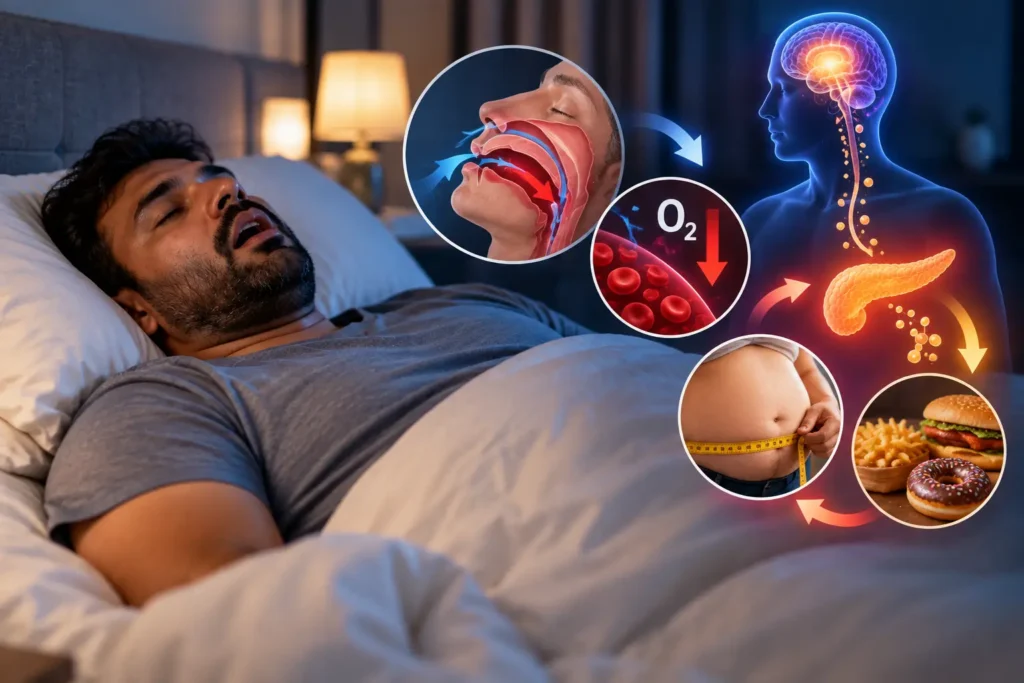
Sleep apnea can disturb sleep and hormonal health because it repeatedly interrupts breathing during sleep.
In obstructive sleep apnea, the airway narrows or closes again and again. Oxygen levels may drop, and the brain briefly wakes the body to restart breathing. Many people do not remember these awakenings, but sleep quality becomes poor.
Sleep apnea may affect:
- Cortisol and stress response
- Insulin and blood sugar control
- Hunger and fullness signals
- Deep sleep recovery
- Morning energy
- Blood pressure
- Weight management
Common signs include:
- Loud snoring
- Gasping or choking
- Morning headaches
- Dry mouth after waking
- Daytime sleepiness
- Waking tired after full sleep
- Poor concentration
If these symptoms are present, bedtime habits alone may not solve the problem.
Internal Link Placeholder:
Learn more here: [Sleep Apnea Guidance — Internal Link Placeholder]
Signs Poor Sleep May Be Affecting Your Hormones
Poor sleep does not always look like insomnia. Some people fall asleep quickly but still wake up tired because sleep quality is poor.
Watch for:
- Waking tired after 7–8 hours
- Loud snoring
- Morning headaches
- Dry mouth after waking
- Daytime sleepiness
- Sugar cravings
- Weight gain despite effort
- Low energy
- Brain fog
- Mood swings
- High BP with poor sleep
- Irregular appetite
- Poor workout recovery
- Frequent night waking
These symptoms do not confirm a hormone disorder. However, they show that sleep quality needs attention.
Practical Steps to Support Sleep and Hormonal Health
Improving sleep and hormonal health starts with daily habits. You do not need an extreme routine. You need consistency.
1. Keep a Fixed Wake-Up Time
Wake up at a similar time every day. This helps your body clock stay stable and supports better hormone timing.
2. Get Morning Sunlight
Morning light helps regulate your sleep-wake cycle. Step outside, open curtains, or sit near natural light soon after waking.
3. Reduce Caffeine After Afternoon
Tea, coffee, energy drinks, and pre-workout drinks can delay sleep. If sleep is disturbed, avoid caffeine after 2–3 p.m. for two weeks and observe the difference.
4. Eat Dinner Earlier
Heavy meals close to bedtime may disturb digestion, reflux, sleep quality, and breathing comfort. Try to finish dinner 2–3 hours before sleep when possible.
5. Create a 30-Minute Wind-Down Routine
A simple routine can lower mental alertness.
Try:
- Dim lights
- Keep phone away
- Avoid work messages
- Take a warm shower
- Practice slow breathing
- Read something light
6. Exercise Regularly
Walking, yoga, cycling, swimming, and strength training can support insulin response, stress control, weight management, and sleep quality.
However, intense exercise too late at night may disturb sleep for some people.
7. Check for Sleep Apnea Symptoms
If you snore loudly, gasp during sleep, wake with dry mouth, or feel sleepy during the day, bedtime habits alone may not solve the issue.
A sleep evaluation can help identify whether breathing interruptions are affecting sleep quality and hormone rhythm.
Speak to SlumberSense Global for sleep health guidance:
https://slumbersenseglobal.com/contact-us/
Final Takeaway
Sleep and hormonal health are deeply connected. Healthy sleep supports cortisol rhythm, insulin response, appetite control, growth hormone release, melatonin timing, recovery, metabolism, and daily energy.
Poor sleep can disturb this balance. It may make you feel hungrier, more stressed, less active, poorly recovered, and more likely to struggle with blood sugar or weight control.
Improving sleep is not a luxury. It is a foundation for hormonal wellness.
If you sleep enough but still wake tired, snore loudly, or feel sleepy during the day, speak with a sleep health professional. An underlying sleep disorder may be affecting your hormones and overall health.
Frequently Asked Questions
1. How does sleep affect hormones?
Sleep affects hormone timing and balance. It supports cortisol rhythm, insulin response, growth hormone release, appetite hormones, melatonin rhythm, recovery, and metabolism.
2. Can poor sleep increase cortisol?
Yes. Poor sleep, stress, irregular sleep timing, and late-night stimulation may disturb cortisol rhythm. This can make you feel alert at night and tired in the morning.
3. Does sleep affect insulin resistance?
Yes. Poor sleep may affect how the body responds to insulin. This can disturb blood sugar control and may increase metabolic risk over time.
4. When is growth hormone released during sleep?
Growth hormone release is strongly linked with deep sleep. Deep sleep supports tissue repair, muscle recovery, growth, and metabolic health.
5. Can sleep apnea affect hormonal health?
Yes. Sleep apnea can fragment sleep and reduce oxygen levels during the night. This may affect stress response, blood sugar control, appetite regulation, and daytime energy.
6. How can I improve sleep and hormonal health naturally?
Start with a fixed wake time, morning sunlight, regular exercise, earlier dinner, reduced caffeine, less screen use before bed, and sleep apnea evaluation if symptoms are present.
Medical Disclaimer
This article is for educational purposes only and does not replace medical advice, diagnosis, or treatment. If you have symptoms such as loud snoring, breathing pauses, diabetes, high blood pressure, severe fatigue, or suspected hormonal imbalance, consult a qualified healthcare provider or sleep specialist.