Quick Answer
When evaluating IQoro vs CPAP, both therapies support breathing and airway health in different ways.
CPAP provides direct nighttime support by using gentle air pressure through a mask to help keep the airway open during sleep. In addition, doctors commonly recommend CPAP for obstructive sleep apnea, especially when sleep apnea is moderate or severe.
IQoro is an oral neuromuscular training device. Specifically, patients use it during the day as a short exercise routine to support muscles involved in breathing, swallowing, snoring, reflux, and airway function. Consequently, clinicians may consider it for snoring, selected mild-to-moderate cases, CPAP intolerance, or as a complementary support option.
The right choice depends on your diagnosis, AHI score, oxygen levels, symptoms, medical history, comfort, and professional guidance.
Introduction
Many patients exploring IQoro vs CPAP for snoring or sleep apnea want to know whether one option is better than the other.
In fact, this is an important question because snoring and sleep apnea are not the same for everyone. Some people only have mild airway vibration. Others have repeated breathing pauses, oxygen drops, daytime sleepiness, high blood pressure, or other health risks.
However, CPAP and IQoro are not direct replacements for each other in every case.
This guide explains the core differences in IQoro vs CPAP therapy in a simple, patient-friendly way.
What Is CPAP Therapy?
CPAP stands for Continuous Positive Airway Pressure.
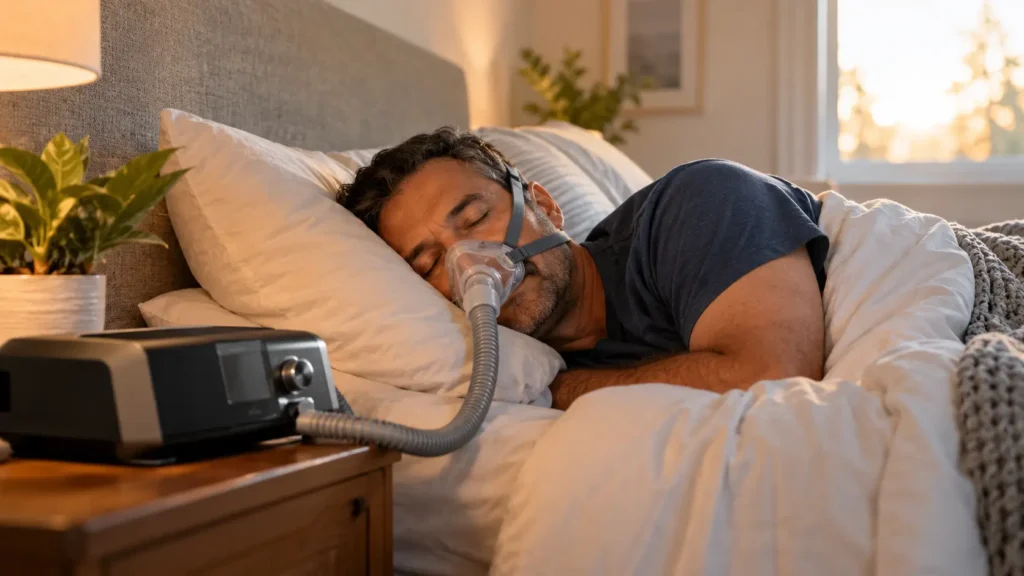
A CPAP machine sends pressurized air through a mask while you sleep. This airflow helps keep the upper airway open and reduces breathing interruptions caused by obstructive sleep apnea.
A CPAP setup usually includes:
- CPAP machine
- Mask
- Tubing
- Humidifier, depending on the model
- Filters and replacement parts
Patients usually use CPAP every night for the full sleep duration, following advice from a healthcare provider.
What Is IQoro?
IQoro is a non-invasive oral neuromuscular training device. Furthermore, patients place the device in the mouth for short resistance exercises during the day.
The idea behind IQoro training is to activate and strengthen muscles involved in:
- Lip seal
- Tongue control
- Swallowing coordination
- Throat muscle function
- Upper airway tone
- Diaphragm-related muscle pathways
Unlike CPAP, IQoro is not worn during sleep. Instead, people follow it as a daily daytime training routine.
IQoro vs CPAP: The Main Difference
The simplest difference is this:
- CPAP supports the airway during sleep.
- IQoro trains the muscles during the day.
CPAP works like a mechanical airway support system. It helps keep the airway open while the machine is being used.
IQoro works as an exercise-based approach. It aims to improve muscle tone over time through repeated training.
Therefore, both may have a role, but the right choice depends on the severity and cause of the sleep-related breathing problem.
Detailed Comparison: IQoro vs CPAP
| Feature | CPAP Therapy | IQoro Training |
|---|---|---|
| Main purpose | Keeps airway open during sleep | Supports muscle training and airway tone |
| When used | During sleep | During the day |
| How it works | Air pressure through a mask | Oral resistance training |
| Speed of effect | Can help from the first night when used correctly | Works gradually with consistent use |
| Best suited for | Moderate to severe sleep apnea, depending on medical advice | Snoring, selected mild-to-moderate cases, or complementary support |
| Comfort concerns | Mask leak, dryness, pressure discomfort, claustrophobia | Mild lip or facial fatigue in some users |
| Travel | Requires machine, mask, tubing, and power | Small and portable |
| Maintenance | Regular mask, tubing, humidifier, and filter care | Rinse and clean as instructed |
| Medical supervision | Important | Important, especially with diagnosed sleep apnea |
When Is CPAP Therapy Usually the Better Choice?
CPAP therapy may be the better or necessary option when sleep apnea is more serious.
1. Moderate to Severe Sleep Apnea
If your AHI score is high or your oxygen levels drop during sleep, CPAP may be recommended to reduce breathing interruptions and support safer sleep.
Patients should not manage severe sleep apnea through self-treatment.
2. Strong Daytime Symptoms
CPAP may be important if you have:
- Severe daytime sleepiness
- Morning headaches
- Poor concentration
- Drowsy driving risk
- Repeated gasping or choking at night
- Loud snoring with breathing pauses
These signs may indicate that sleep apnea is affecting your daily function and safety.
3. Heart, BP, or Metabolic Risk
Sleep apnea may be more concerning when linked with:
- High blood pressure
- Heart rhythm concerns
- Diabetes
- Obesity
- Previous stroke
- Cardiovascular risk
In these cases, treatment decisions should be made with a qualified healthcare provider.
4. Doctor-Prescribed PAP Therapy
If a sleep specialist has prescribed CPAP or Auto CPAP, do not stop it suddenly or replace it without medical review.
CPAP pressure, mask type, humidification, and comfort settings can often be adjusted to improve tolerance.
When May IQoro Be Considered?
IQoro may be considered in selected situations, especially when the main concern is snoring, muscle weakness, swallowing function, or mild airway support.
1. Chronic Snoring
Specifically, some people snore because the soft tissues of the throat relax and vibrate during sleep. Oral neuromuscular training may help support better tone in the mouth, tongue, and throat muscles.
However, loud or frequent snoring should first be checked for sleep apnea.
2. Selected Mild-to-Moderate Sleep Apnea Cases
For some users with mild-to-moderate obstructive sleep apnea, IQoro may be discussed as part of a broader plan that can include:
- Weight management
- Sleep position improvement
- Nasal breathing support
- Oral appliance review
- CPAP or Auto CPAP where needed
- Follow-up sleep testing
Suitability should depend on diagnosis and clinical guidance.
3. CPAP Intolerance
Some patients struggle with CPAP due to:
- Mask leak
- Dry mouth
- Nasal dryness
- Pressure discomfort
- Claustrophobia
- Skin marks
- Travel inconvenience
IQoro may be discussed as a supportive or alternative pathway in selected cases. However, people with moderate or severe sleep apnea should not stop CPAP without professional advice.
4. Swallowing or Reflux-Related Concerns
IQoro is also discussed in the context of swallowing training and reflux-related muscle support. People with choking, swallowing difficulty, persistent reflux, or throat symptoms should be assessed by a qualified clinician.
Can IQoro Replace CPAP?
IQoro should not automatically be treated as a CPAP replacement.
For mild snoring or selected mild cases, patients may consider it as part of a non-invasive management plan. But for moderate-to-severe sleep apnea, CPAP or another medically guided therapy may still be necessary.
You should not replace CPAP with IQoro on your own if:
- Your AHI is moderate or severe
- You have oxygen drops at night
- You have heart or BP concerns
- You feel sleepy while driving
- Your doctor prescribed CPAP
- Your symptoms are severe
- You have not had a recent sleep study
Patients may need a follow-up sleep study before changing therapy.
Can You Use IQoro and CPAP Together?
Yes, in some cases, IQoro may be used alongside CPAP as complementary support.
This may be considered when a patient wants to:
- Improve airway muscle tone over time
- Support swallowing function
- Work on snoring-related muscle weakness
- Continue CPAP while exploring muscle training
- Improve long-term airway health habits
- Reduce dependence on guesswork by tracking symptoms and reports
However, users should not change CPAP settings without professional review.
Comfort and Compliance: CPAP vs IQoro
Comfort and Compliance: IQoro vs CPAP
Some CPAP users experience:
- Mask leak
- Dry mouth
- Dry nose
- Skin irritation
- Pressure discomfort
- Difficulty breathing out
- Claustrophobia
- Cleaning burden
- Travel inconvenience
Many of these problems can be improved with the right mask, humidification, ramp settings, pressure relief, cleaning routine, and provider support.
IQoro Comfort Considerations
IQoro does not require a mask during sleep, tubing, electricity, or humidifier water. It is small and simple to carry.
However, it requires consistency. Results depend on correct daily practice over several weeks.
Some users may experience mild lip or facial tiredness at first, especially while learning the technique.
Which One Is Better for Travel?
IQoro is easier to carry because it is small and does not need electricity.
CPAP requires more planning. You may need:
- Machine
- Mask
- Tubing
- Power adapter
- Travel case
- Water guidance if using humidifier
- Cleaning supplies
However, if CPAP is medically required, travel inconvenience should not be the reason to stop therapy. Portable CPAP options may also be discussed with your provider.
Which One Works Faster?
CPAP can work from the first night when the machine, mask, and pressure are correctly set and used properly.
In contrast, IQoro works gradually because it is a training-based approach. Muscle tone and neuromuscular coordination may take weeks of consistent practice.
So, CPAP is usually the faster option for immediate airway support. IQoro is more of a progressive training option.
How to Decide Between IQoro and CPAP
Step 1: Get a Sleep Evaluation
Do not judge sleep apnea severity by snoring sound alone.
Ask about a sleep test if you have:
- Loud snoring
- Breathing pauses
- Gasping or choking
- Morning headaches
- Dry mouth
- Daytime sleepiness
- Waking tired after full sleep
- High blood pressure with poor sleep
A sleep study can help identify AHI, oxygen drops, breathing patterns, and severity.
Step 2: Understand Your AHI and Symptoms
Your treatment choice may depend on:
- AHI score
- Oxygen level drops
- Daytime sleepiness
- Snoring severity
- Weight and neck size
- Nose blockage
- Sleeping position
- Heart or BP risk
- Mask tolerance
- Reflux or swallowing symptoms
Two people with the same AHI may still need different treatment plans.
Step 3: Choose the Right Primary Therapy
A general approach may look like this:
| Situation | Possible Direction |
|---|---|
| Simple snoring without sleep apnea | Lifestyle changes, positional therapy, oral muscle training discussion |
| Mild sleep apnea | Medical review, lifestyle changes, possible oral therapy, CPAP or other options |
| Moderate sleep apnea | CPAP/Auto CPAP commonly discussed, with supportive options |
| Severe sleep apnea | Medical treatment should be prioritized; CPAP often remains important |
| CPAP intolerance | Mask refit, humidification, comfort settings, alternative PAP or supportive therapy review |
This is not a substitute for medical advice. A qualified provider should guide the final decision.
Important Safety Note
Above all, do not stop CPAP therapy without speaking to your sleep specialist or healthcare provider.
Stopping CPAP suddenly may allow sleep apnea symptoms to return, including snoring, oxygen drops, daytime sleepiness, and breathing pauses.
If you want to try IQoro, discuss whether it should be used:
- As a primary option
- As a complementary option
- Alongside CPAP
- After follow-up testing
- As part of a broader sleep health plan
When Should You Contact SlumberSense Global?
You can ask for guidance if:
- You snore loudly
- You are unsure whether snoring is sleep apnea
- You already have a sleep study report
- You want to understand your AHI score
- CPAP feels uncomfortable
- You are considering IQoro
- You want to compare treatment options
- You need help choosing the right therapy pathway
Get sleep apnea therapy guidance:
https://slumbersenseglobal.com/contact-us/
Final Takeaway
CPAP and IQoro are different tools for different needs.
CPAP provides direct airway support during sleep, and sleep specialists commonly recommend it for obstructive sleep apnea, especially moderate-to-severe cases.
IQoro is a daytime oral neuromuscular training device that may support muscle tone involved in snoring, swallowing, reflux, and selected mild-to-moderate airway concerns.
For many patients, the decision is not simply “IQoro or CPAP.” The better question is:
What does your sleep study show, what symptoms do you have, and which option is safest and most practical for your condition?
A qualified sleep professional can help you choose the right path.
FAQs
1. Is IQoro better than CPAP?
Not always. CPAP and IQoro work differently. CPAP gives direct airway support during sleep, while IQoro is daytime muscle training. The better option depends on sleep apnea severity, symptoms, comfort, and medical guidance.
2. Can IQoro help with snoring?
IQoro may help support muscles involved in snoring and airway tone. However, loud or frequent snoring should be checked because it may be a sign of sleep apnea.
3. Can I use IQoro if I already use CPAP?
In some cases, IQoro may be used alongside CPAP as complementary muscle training. Do not change CPAP pressure or stop CPAP without professional review.
4. Can IQoro replace CPAP for severe sleep apnea?
No. Severe sleep apnea should be managed under medical supervision. CPAP or another medically guided therapy may still be necessary.
5. Which is easier for travel, IQoro or CPAP?
IQoro is easier to carry because it is small and does not need electricity. However, if CPAP is prescribed, travel inconvenience should not be a reason to stop therapy without medical advice.
6. How long does IQoro take to work?
IQoro is a training-based approach, so results may take consistent daily use over several weeks. Individual results can vary.
7. Why do some people struggle with CPAP?
Common CPAP challenges include mask leak, dry mouth, nasal dryness, pressure discomfort, skin marks, claustrophobia, and cleaning burden. Many of these issues can be improved with support.
8. Should I get a sleep test before choosing IQoro or CPAP?
Yes. A sleep test helps identify whether you have sleep apnea, how severe it is, and what treatment pathway may be safest.
Medical Disclaimer
This article is for educational purposes only and does not replace medical advice, diagnosis, or treatment. Sleep apnea diagnosis, CPAP therapy, IQoro use, pressure settings, device selection, and treatment changes should be guided by a qualified healthcare provider or trained sleep therapy professional.