Quick Answer
There are three main types of CPAP masks:
- Full Face Mask
- Nasal Mask
- Nasal Pillow Mask
The best mask depends on your breathing style, comfort preference, and sleep habits.
Introduction
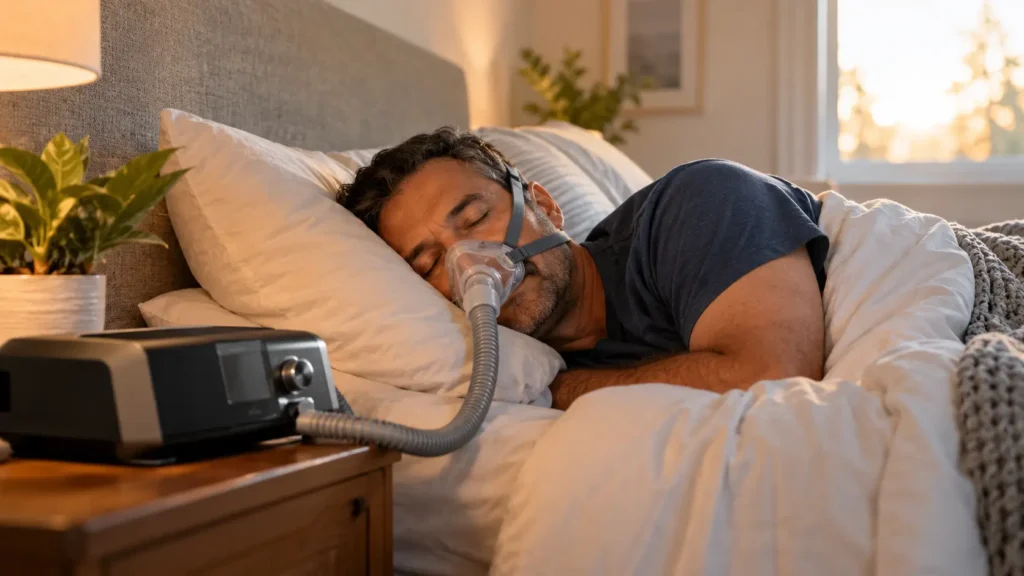
Choosing the right CPAP mask is just as important as selecting the CPAP machine itself. Even the most advanced machine won’t be effective if your mask is uncomfortable or doesn’t fit properly.
Many CPAP users struggle in the beginning — not because of the machine, but because of the wrong mask choice. The right mask can make your therapy smooth, comfortable, and effective, while the wrong one can lead to leaks, irritation, and poor sleep.
In this guide, we’ll break down the different types of CPAP masks, their pros and cons, and how to choose the best one for your needs.
Related:
Best CPAP Machines in India → /cpap-machines/best-cpap-machine-india/

Why Choosing the Right CPAP Mask Matters
Your mask directly affects:
- Comfort during sleep
- Air pressure delivery
- Leak prevention
- Overall therapy success
A well-fitted mask ensures consistent airflow and better treatment results.
Types of CPAP Masks
Let’s explore the three main types of CPAP masks:
1. Full Face Mask
A full face mask covers both your nose and mouth, making it ideal for users who breathe through their mouth while sleeping.
Key Features:
- Covers nose and mouth
- Provides stable airflow
- Suitable for higher pressure settings
Pros:
- Ideal for mouth breathers
- Works well even with nasal congestion
- Effective for severe sleep apnea
Cons:
- Bulkier design
- May feel less comfortable for some users
Best for: Mouth breathers and users requiring higher pressure
2. Nasal Mask
A nasal mask covers only the nose and is one of the most commonly used CPAP masks.
Key Features:
- Covers the nose only
- Balanced design
- Suitable for moderate pressure levels
Pros:
- Comfortable and less bulky than full face masks
- Good seal and stability
- Widely available
Cons:
- Not suitable for mouth breathers
- May cause issues if you have nasal blockage
Best for: Regular users who breathe through their nose
3. Nasal Pillow Mask
A nasal pillow mask is the smallest and most lightweight option. It uses soft cushions that sit at the entrance of your nostrils.
Key Features:
- Minimal design
- Lightweight and compact
- Direct airflow into nostrils
Pros:
- Maximum comfort and freedom
- Ideal for side sleepers
- Less facial contact
Cons:
- May not be suitable for high pressure
- Can cause slight nasal irritation initially
Best for: Users looking for comfort and minimal design
Which CPAP Mask is Best for You?
Choosing the right mask depends on your personal needs and sleeping habits:
Choose Full Face Mask if:
- You breathe through your mouth
- You have frequent nasal congestion
- You require higher pressure settings
Choose Nasal Mask if:
- You breathe through your nose
- You want a balance of comfort and performance
Choose Nasal Pillow Mask if:
- You want a lightweight, minimal mask
- You are a side sleeper
- You prioritize comfort
Factors to Consider Before Choosing a Mask
1. Comfort
Your mask should feel comfortable enough to wear for 6–8 hours every night.
2. Fit and Seal
A proper fit prevents air leaks and ensures effective therapy.
3. Sleeping Position
- Side sleepers → Nasal pillow
- Back sleepers → Full face or nasal mask
4. Pressure Level
Higher pressure settings may require a more secure mask like a full face mask.
5. Skin Sensitivity
Choose masks with soft cushions if you have sensitive skin.
Common Mistakes to Avoid
❌ Choosing a mask without trying it
❌ Ignoring fit and size
❌ Prioritizing price over comfort
❌ Not replacing worn-out masks
A wrong mask can reduce the effectiveness of your therapy.
Tips for Better Mask Comfort
- Adjust straps properly (not too tight)
- Clean your mask regularly
- Replace cushions when worn out
- Try different styles if needed
Also read:
CPAP Side Effects (And How to Fix Them) → /cpap/cpap-side-effects/
Internal Resources
- Best CPAP Machines in India → /cpap-machines/best-cpap-machine-india/
- How to Use a CPAP Machine → /cpap/how-to-use-cpap-machine/
- CPAP Side Effects → /cpap/cpap-side-effects/
Frequently Asked Questions (FAQs)
Comfort varies from person to person. However, nasal pillow masks are generally considered the most comfortable due to their lightweight design.
Yes, you can switch masks if your current one is uncomfortable or not effective.
Most masks should be replaced every 3–6 months, depending on usage and wear.
Check the fit, adjust the straps, or consider trying a different mask size or type.
Final Thoughts
Choosing the right CPAP mask is essential for successful sleep apnea treatment.
The perfect mask is one that fits well, feels comfortable, and suits your breathing style.
Take the time to find the right one — it can make a huge difference in your therapy experience and overall sleep quality.
Not sure which CPAP mask is right for you?
Explore different options and choose a mask that ensures comfort, proper fit, and effective therapy.