Quick Answer
Common sleep apnea symptoms include loud snoring, pauses in breathing during sleep, gasping or choking at night, morning headaches, dry mouth, daytime sleepiness, poor concentration, mood changes, restless sleep, and high blood pressure. These signs do not always mean you have sleep apnea, but they should not be ignored, especially if they happen often.
Take the SlumberSense Sleep Apnea Self-Check:
https://slumbersenseglobal.com/#self-check
Introduction
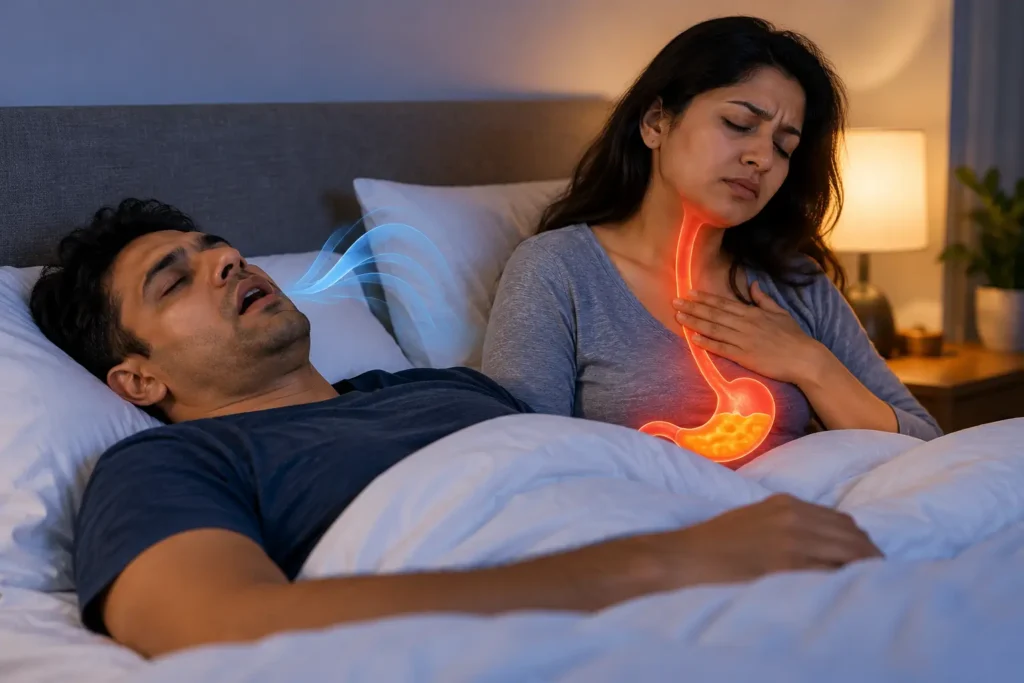
Snoring is often treated like a harmless habit, but sometimes it can be a warning sign of something more serious. When loud snoring happens with choking, gasping, breathing pauses, morning headaches, dry mouth, or daytime tiredness, it may point toward sleep apnea.
Sleep apnea is a sleep-related breathing disorder where breathing repeatedly stops or becomes shallow during sleep. These interruptions can affect sleep quality, oxygen levels, energy, focus, mood, and long-term health.
Many symptoms happen while you are asleep, so you may not notice them yourself. A spouse, family member, or roommate often sees the first signs.
Here are 10 warning signs of sleep apnea you should not ignore.
What Is Sleep Apnea?
Sleep apnea is a condition where breathing repeatedly pauses or becomes restricted during sleep. The most common type is obstructive sleep apnea, which happens when the upper airway becomes partly or fully blocked while sleeping.
When breathing is interrupted, the brain briefly wakes the body to restart normal breathing. These awakenings can be so short that you may not remember them in the morning. However, they can happen many times during the night and leave you feeling tired, foggy, and unrefreshed.
Sleep apnea is not only about snoring. It can affect daytime alertness, blood pressure, heart health, blood sugar control, and overall well-being.
10 Warning Signs of Sleep Apnea
1. Loud, Frequent Snoring
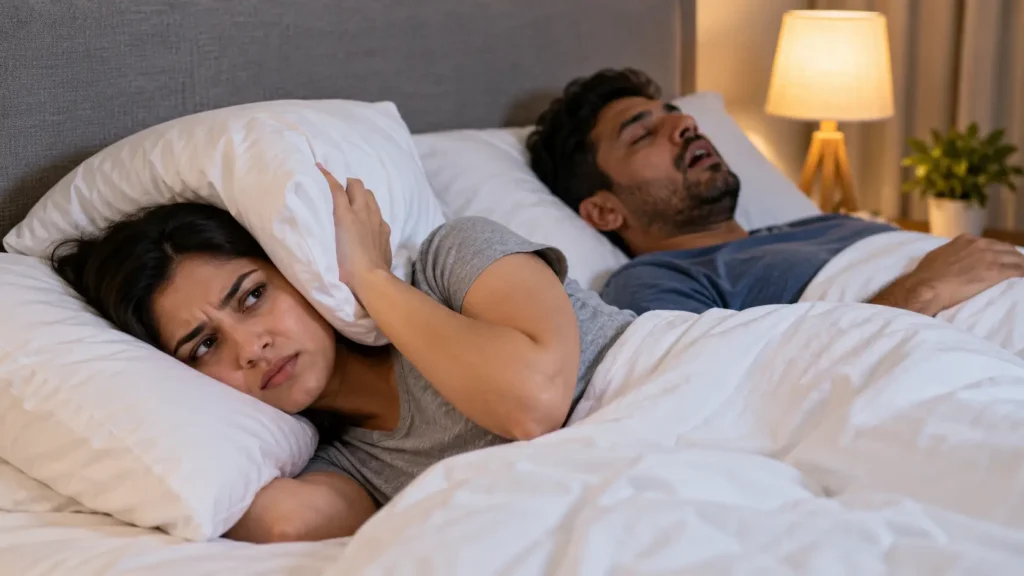
Loud snoring is one of the most common warning signs of sleep apnea. This type of snoring is usually heavy, frequent, and disruptive. It may disturb your partner or even people in another room.
Not everyone who snores has sleep apnea. Snoring can also happen due to nasal congestion, sleeping position, alcohol, weight, or throat structure. But snoring becomes more concerning when it happens with gasping, choking, breathing pauses, or daytime sleepiness.
Watch for:
- Snoring almost every night
- Very loud or disruptive snoring
- Snoring followed by silence and gasping
- Snoring with daytime tiredness
- Snoring that has become worse over time
If your snoring is loud and frequent, it is worth checking your sleep apnea risk.
2. Pauses in Breathing During Sleep
One of the strongest warning signs is when someone notices that you stop breathing during sleep. These pauses may last a few seconds or longer and may happen repeatedly during the night.
Many people do not know this is happening because they are asleep. A partner may notice long silent pauses between snores or irregular breathing.
Watch for:
- Someone says you stop breathing while asleep
- Silent pauses between loud snores
- Breathing that stops and restarts suddenly
- Irregular breathing at night
- Restless movement after breathing pauses
Breathing pauses during sleep should not be ignored. They should be discussed with a healthcare provider.
3. Gasping, Choking, or Waking Up Short of Breath
Waking up suddenly with a choking, gasping, or suffocating feeling can be a sign that your body is struggling to breathe during sleep.
Some people remember these episodes clearly. Others only wake up feeling restless, anxious, or uncomfortable without knowing why.
Watch for:
- Waking up gasping for air
- Choking sounds during sleep
- Sudden awakenings with breathlessness
- Feeling like your throat closed
- Panic-like waking at night
Repeated gasping or choking should be taken seriously, especially if it happens with loud snoring or daytime sleepiness.
4. Morning Headaches
Morning headaches can be linked with poor sleep quality and breathing interruptions during sleep. They may feel like dull pressure, heaviness, or discomfort soon after waking.
Morning headaches do not always mean sleep apnea. They can also be caused by dehydration, stress, migraine, sinus problems, alcohol, poor sleep posture, or high blood pressure. But if they happen with loud snoring, dry mouth, or daytime tiredness, sleep apnea may be one possible cause.
Watch for:
- Headache soon after waking
- Dull pressure-like morning headache
- Morning headache with snoring
- Headache with dry mouth
- Headache with tiredness despite full sleep
Frequent or severe headaches should always be discussed with a healthcare professional.
5. Dry Mouth or Sore Throat in the Morning
Waking up with dry mouth, sticky mouth, or sore throat may happen because of mouth breathing during sleep. People who snore or have sleep apnea may breathe through the mouth, especially if the nose is blocked or the airway is restricted.
Dry mouth can also happen due to dehydration, medicines, nasal congestion, diabetes, smoking, or sleeping in a dry room. But when it happens with loud snoring or choking sounds, it may be connected to sleep-related breathing issues.
Watch for:
- Dry mouth every morning
- Sore throat after waking
- Bad breath linked to dryness
- Needing water at night
- Dry mouth with loud snoring
If dry mouth happens along with other sleep apnea symptoms, a self-check may help you decide whether further evaluation is needed.
6. Excessive Daytime Sleepiness
Feeling sleepy during the day is one of the most common signs of poor sleep quality. Many people blame work stress, screen time, or age, but sleep apnea may be one possible reason.
Even if you sleep for 7–8 hours, repeated breathing interruptions can prevent deep, restful sleep.
Watch for:
- Feeling sleepy during work
- Needing naps often
- Dozing while reading or watching TV
- Sleepiness during meetings
- Drowsiness while driving
Daytime sleepiness can affect safety, work, mood, and quality of life. Drowsy driving is especially serious and should never be ignored.
7. Poor Focus, Brain Fog, or Memory Problems
Poor sleep can affect how clearly you think. People with sleep apnea symptoms may feel mentally slow, forgetful, or unable to concentrate during the day.
This can affect work, study, driving, and daily conversations.
Watch for:
- Trouble concentrating
- Forgetting small tasks
- Brain fog in the morning
- Difficulty making decisions
- Reduced productivity
- Poor attention during the day
Brain fog alone does not confirm sleep apnea. But if it happens with snoring, morning headaches, dry mouth, or daytime sleepiness, sleep health should be checked.
8. Mood Changes or Irritability
Sleep quality and emotional health are closely connected. Poor sleep can make people more irritable, anxious, emotionally sensitive, or low in mood.
Some people feel frustrated because they are always tired but do not know why. Others may notice mood swings, low patience, or reduced motivation.
Watch for:
- Irritability during the day
- Anxiety after poor sleep
- Low mood or low motivation
- Short temper
- Feeling emotionally drained
Mood changes can have many causes, but when they appear with snoring, tiredness, and poor sleep, sleep apnea should be considered as one possible factor.
9. Restless Sleep and Frequent Night Wakings
Sleep apnea does not always feel like choking or gasping. Sometimes it shows up as restless sleep. You may toss and turn, wake up many times, or feel like your sleep was broken.
Some people also wake up to use the bathroom multiple times at night.
Watch for:
- Waking up repeatedly
- Tossing and turning
- Restless sleep noticed by a partner
- Night sweats
- Frequent bathroom trips
- Feeling like you slept lightly all night
If you wake often and also snore, gasp, or feel sleepy during the day, sleep apnea may be worth checking.
10. High Blood Pressure or Other Health Concerns With Poor Sleep
Sleep apnea can place stress on the body. Over time, untreated sleep apnea may be linked with high blood pressure, heart-related concerns, blood sugar issues, and ongoing fatigue.
This does not mean sleep apnea is the cause of every health problem. But if you have high blood pressure, diabetes, heart risk, obesity, or ongoing fatigue along with loud snoring or poor sleep, it is important to pay attention.
Watch for:
- High blood pressure with loud snoring
- Diabetes with poor sleep quality
- Ongoing fatigue despite enough sleep
- Weight gain with daytime tiredness
- Family members noticing breathing pauses
Sleep is part of overall health. If you already have a medical condition, discussing sleep symptoms with your doctor can be an important step.
Sleep Apnea Symptoms Checklist
You may be at risk if you often experience two or more of these signs:
- Loud snoring
- Breathing pauses during sleep
- Gasping or choking at night
- Morning headaches
- Dry mouth or sore throat after waking
- Excessive daytime sleepiness
- Brain fog or poor concentration
- Mood changes or irritability
- Restless sleep or frequent waking
- High blood pressure with poor sleep
This checklist is not a diagnosis. It is only a starting point for awareness.
Take the SlumberSense Sleep Apnea Self-Check:
https://slumbersenseglobal.com/#self-check
When Should You Take Sleep Apnea Symptoms Seriously?
You should not ignore sleep apnea symptoms if:
- Your partner has noticed breathing pauses
- You wake up choking or gasping
- You feel sleepy while driving
- You wake with headaches often
- You feel tired even after enough sleep
- Your snoring is loud and frequent
- You have high blood pressure with poor sleep
- Your sleep problems affect work, mood, or relationships
If these signs sound familiar, a self-check can help you understand whether your symptoms may need further attention.
Is Snoring Always a Sign of Sleep Apnea?
No. Not everyone who snores has sleep apnea. Snoring can happen due to nasal blockage, allergies, alcohol, sleeping on the back, or throat structure.
But snoring becomes more concerning when it is loud, frequent, interrupted by silence, followed by gasping, or linked with daytime tiredness.
The key is to look at the full symptom pattern, not just one sign.
Can Sleep Apnea Symptoms Be Different in Women?
Yes. Sleep apnea in women may sometimes look different. While loud snoring and breathing pauses can happen, some women may mainly report fatigue, insomnia-like sleep, morning headaches, mood changes, anxiety, poor concentration, or low energy.
Because these symptoms can overlap with stress, workload, hormones, or mood concerns, sleep apnea may be missed or diagnosed late.
What Should You Do If You Notice These Signs?
Start with simple steps:
- Ask your partner or family member if they notice snoring, gasping, choking, or breathing pauses.
- Track your symptoms for a few days, including morning headaches, dry mouth, tiredness, and daytime sleepiness.
- Take a self-check to understand your risk.
- Speak with a healthcare provider if symptoms are frequent or concerning.
- Consider a sleep test if advised by a professional.
Take the SlumberSense Sleep Apnea Self-Check:
https://slumbersenseglobal.com/#self-check
Final Takeaway
Sleep apnea symptoms can be easy to miss because many of them happen while you are asleep. Loud snoring, breathing pauses, gasping, choking, morning headaches, dry mouth, daytime sleepiness, poor focus, mood changes, restless sleep, and high blood pressure with poor sleep should not be ignored.
These signs do not automatically mean you have sleep apnea, but they are important enough to check.
Start with a simple self-check today.
Take the SlumberSense Sleep Apnea Self-Check:
https://slumbersenseglobal.com/#self-check
FAQs
1. What are the most common sleep apnea symptoms?
Common sleep apnea symptoms include loud snoring, breathing pauses during sleep, gasping or choking at night, morning headaches, dry mouth, daytime sleepiness, poor focus, irritability, and restless sleep.
2. Is loud snoring always sleep apnea?
No. Loud snoring does not always mean sleep apnea. However, snoring becomes more concerning when it happens with breathing pauses, gasping, choking, morning headaches, or daytime sleepiness.
3. Can sleep apnea cause morning headaches?
Yes, morning headaches can be one possible symptom of sleep apnea, especially when they happen with snoring, dry mouth, poor sleep, or daytime tiredness. However, headaches can have many causes, so medical advice is important.
4. Can sleep apnea make you tired during the day?
Yes. Sleep apnea can repeatedly interrupt sleep, which may cause excessive daytime sleepiness, fatigue, low energy, poor focus, and reduced alertness.
5. Can I have sleep apnea without knowing it?
Yes. Many people do not know because breathing pauses happen during sleep. A partner or family member may notice the symptoms first.
6. Is a self-check the same as a diagnosis?
No. A self-check is not a diagnosis. It is an awareness tool that can help you understand whether your symptoms may need professional evaluation.
7. What should I do if I think I have sleep apnea?
Start by taking a self-check, tracking your symptoms, and speaking with a healthcare provider. If needed, your provider may recommend a sleep test.
Medical Disclaimer
This article is for educational purposes only and does not replace medical advice, diagnosis, or treatment. If you have symptoms of sleep apnea, breathing pauses during sleep, severe daytime sleepiness, chest pain, or any urgent health concern, please consult a qualified healthcare professional.