
Quick Answer
During a sleep study, sensors record what happens in your body while you sleep. Depending on the test type, it may measure breathing, oxygen levels, heart rate, snoring, sleep position, brain activity, eye movement, muscle activity, and leg movement. Sleep studies help doctors evaluate sleep disorders such as sleep apnea. Sleep studies are painless tests that measure how well you sleep and how your body responds to sleep problems.
Introduction
Many patients feel nervous before a sleep study because they do not know what will happen. Some worry about wires, sensors, sleeping in a lab, or whether the test will be painful.
The good news is that a sleep study is usually simple and painless. The purpose is to understand what happens while you sleep, especially if you have symptoms such as loud snoring, breathing pauses, gasping, choking, morning headaches, dry mouth, daytime sleepiness, or waking up tired.
What Is a Sleep Study?
A sleep study is a test that records your body activity during sleep. It may be done at home or in a sleep lab.
It helps evaluate:
- Sleep apnea
- Breathing pauses
- Low oxygen during sleep
- Restless sleep
- Snoring patterns
- Daytime sleepiness
- Other sleep disorders
Before the Sleep Study
Before your sleep study, the sleep team or healthcare provider may ask about:
- Your sleep timing
- Snoring
- Breathing pauses
- Daytime sleepiness
- Morning headaches
- Dry mouth
- Medical conditions
- Current medicines
- Alcohol or smoking habits
- Diabetes, BP, heart risk, or obesity
This helps them decide whether you need a home sleep test or lab sleep study.
What Happens During a Lab Sleep Study?
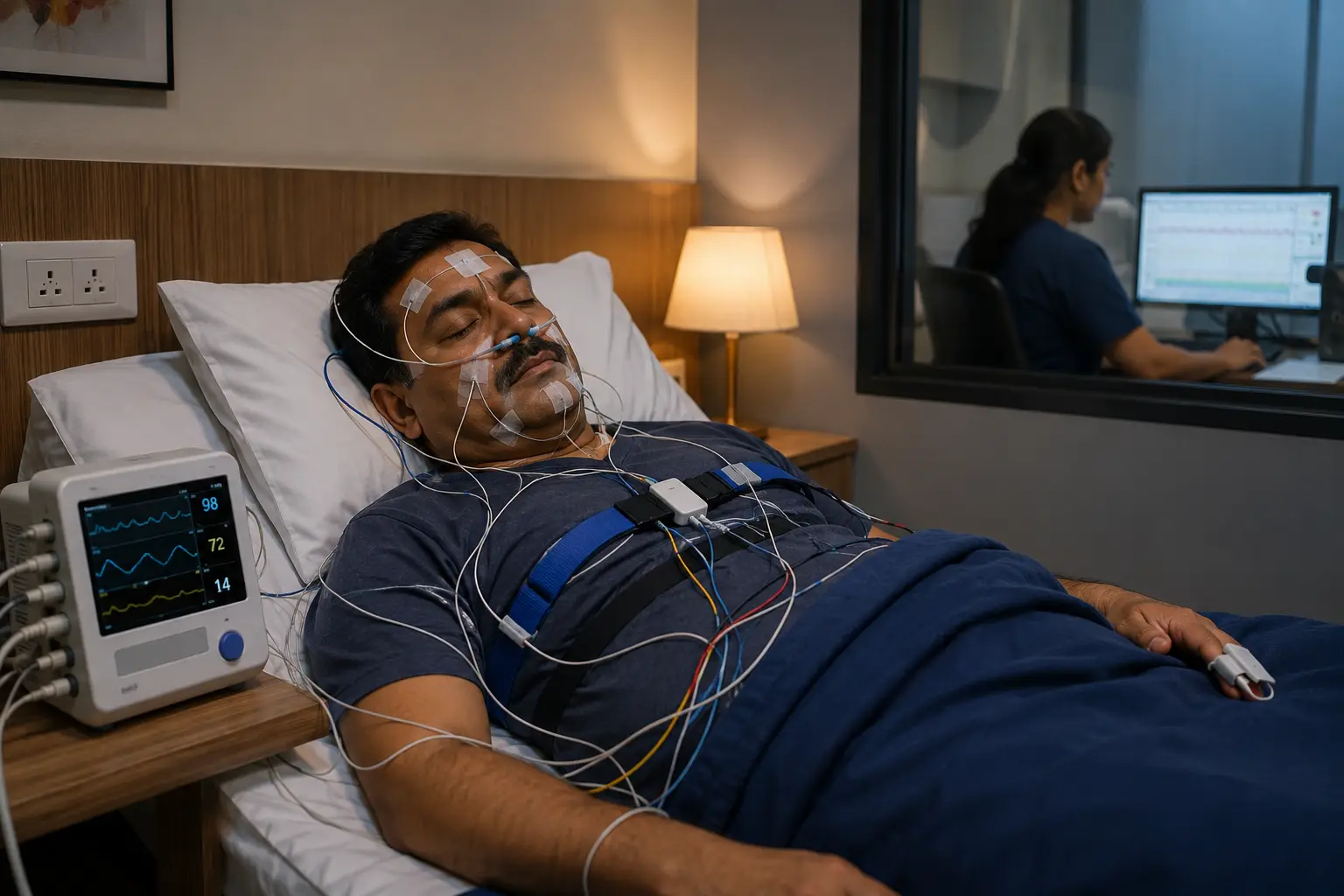
In a lab sleep study, you usually arrive at the sleep center in the evening. A technician places small sensors on your scalp, face, chest, legs, and finger.
These sensors may record:
- Brain waves
- Eye movement
- Chin and leg muscle movement
- Breathing pattern
- Airflow
- Oxygen levels
- Heart rate
- Snoring
- Sleep position
The sensors may feel unusual, but they do not cause pain. You sleep overnight while the equipment records your sleep data.
What Happens During a Home Sleep Test?
In a home sleep test, you receive a portable device and instructions. You wear the sensors before sleeping in your own bed.
You may use:
- Nasal airflow sensor
- Chest or abdomen belt
- Finger oxygen sensor
- Small recording device
The next day, the device is returned or the data is uploaded for review.
Is a Sleep Study Painful?
No. A sleep study is not painful. Sensors only record body signals. They do not give shocks or cause harm.
Some people may sleep lighter than usual because of the equipment or new environment. This is normal. Sleep teams understand this and usually still collect useful information.
What Does a Sleep Study Measure?
| Measurement | Why It Matters |
| Breathing | Checks pauses or shallow breathing |
| Oxygen levels | Shows if oxygen drops during sleep |
| Heart rate | Tracks body response to breathing events |
| Snoring | Helps assess airway vibration |
| Sleep position | Shows if symptoms worsen on the back |
| Brain waves | Helps measure sleep stages in lab tests |
| Leg movement | Detects movement-related sleep disruption |
A lab sleep study records more detailed signals than most home sleep apnea tests.
After the Sleep Study
After the test, the data is reviewed by a trained professional. The report may include:
- AHI or REI score
- Oxygen drops
- Snoring pattern
- Breathing pauses
- Sleep stages
- Heart rate changes
- Body position effects
Your healthcare provider may explain whether sleep apnea is present and what next steps are needed.
When Should You Enquire About a Sleep Study?
You should enquire if you have:
- Loud snoring
- Breathing pauses
- Gasping or choking
- Morning headaches
- Dry mouth
- Daytime sleepiness
- Waking tired after full sleep
- Brain fog
- High blood pressure with poor sleep
FAQs
1. How long does a sleep study take?
Usually one night of sleep is recorded.
2. Will someone watch me sleep?
In a lab test, technicians monitor signals from another room. In a home test, you sleep privately.
3. Can I sleep normally with sensors?
Most people sleep enough for useful data, even if the night feels different.
4. What if I cannot sleep?
Tell your provider. If data is insufficient, another test may be suggested.
Medical Disclaimer
This article is educational and does not replace medical advice. A qualified healthcare provider should recommend and interpret sleep testing.
