Quick Answer
To understand how to clean CPAP mask, tubing and humidifier parts safely, disconnect the components, wash them gently with warm water and mild soap, rinse well, and allow them to air-dry completely before use. The mask cushion may need daily cleaning because skin oil can affect the seal. Tubing, headgear and humidifier parts are commonly cleaned weekly, but you should always follow the user guide for your specific CPAP machine and mask.
Introduction
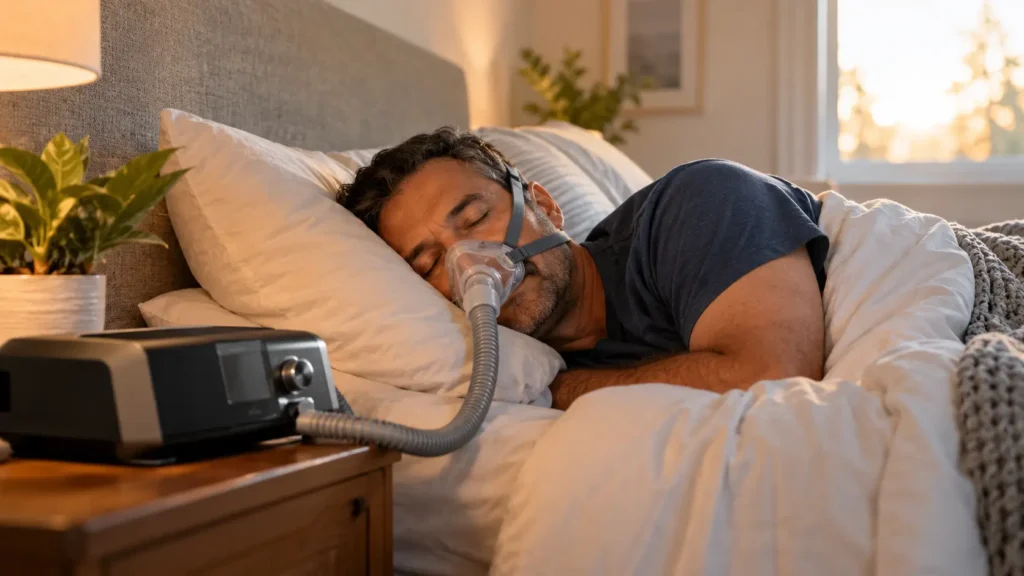
CPAP therapy works best when the mask fits well, the tubing is clean, and the humidifier chamber is maintained properly. But many users are unsure how often to clean CPAP parts or what cleaning method is safe.
However, some people clean too little and face odour, residue, skin irritation, or mask leak. Others use strong chemicals that may damage the equipment.
The goal is simple: keep your CPAP setup clean, dry, comfortable, and safe to use.
This guide explains how to clean CPAP mask, tubing, and humidifier parts in a practical way.
Why CPAP Cleaning Matters
CPAP equipment is used close to your nose, mouth, and airway for several hours every night. During use, the mask can collect:
- Skin oil
- Sweat
- Moisture
- Dust
- Saliva
- Mineral residue
- Germs from handling
- Humidifier water deposits
If these build up, they may affect comfort and hygiene.
Poor cleaning may contribute to:
- Mask leak
- Bad smell
- Skin irritation
- Dry mouth
- Nasal discomfort
- Reduced mask seal
- Moisture buildup
- Uncomfortable therapy
However, some people clean too little and face odour, residue, skin irritation, or mask leak, support hygiene, and make CPAP therapy more comfortable.
CPAP Parts You Need to Clean
Your CPAP setup may include:
| CPAP Part | Why It Needs Cleaning |
|---|---|
| Mask cushion | Touches skin and collects oil |
| Mask frame | Holds cushion and headgear |
| Headgear straps | Collect sweat and dust |
| Tubing | Carries airflow from machine to mask |
| Humidifier chamber | Holds water and may collect mineral deposits |
| Filters | Help reduce dust entering the machine |
The CPAP machine body itself should not be washed or submerged. It is usually wiped externally according to the device instructions.
Daily CPAP Cleaning Routine
A simple daily routine on how to clean CPAP mask cushions and components may take only a few minutes.
1. Clean the Mask Cushion
The mask cushion touches your face directly. Specifically, skin oil can reduce the seal and cause leaks.
Daily steps:
- Disconnect the mask from the tubing.
- Remove the cushion if your mask design allows it.
- Wash the cushion gently with warm water and mild soap.
- Rinse well.
- Place it on a clean towel to air-dry.
Avoid oily soaps, moisturising soaps, perfumes, and harsh cleaners.
2. Empty the Humidifier Chamber
Additionally, if your CPAP has a humidifier, empty leftover water daily.
Steps:
- Turn off and unplug the machine.
- Remove the humidifier chamber.
- Empty leftover water.
- Rinse if advised by your device guide.
- Let it dry before refilling.
Do not leave old water sitting in the chamber for days.
3. Check for Moisture or Odour
Before using your CPAP again, check:
- Does the mask smell clean?
- Is the tubing dry?
- Is there visible water inside the tube?
- Is the humidifier chamber clean?
- Is the mask cushion soft and clear?
If anything smells bad or looks dirty, clean it before use.
Weekly CPAP Cleaning Routine
Once a week, clean the larger parts more thoroughly.
1. Clean the CPAP Tubing
CPAP tubing carries air all night. Therefore, moisture inside the tube can make it feel uncomfortable.
Weekly steps:
- Disconnect tubing from the CPAP machine and mask.
- Wash inside the tube with warm water and mild soap.
- Rinse thoroughly until no soap remains.
- Hang the tube in a clean place to air-dry.
- Make sure it is completely dry before bedtime.
A shower rod, towel rack, or clean hook can help the tube dry properly.
2. Clean the Mask Frame and Headgear
In addition, the mask frame and straps can collect sweat and dust.
Steps:
- Separate the parts as per your mask guide.
- Wash the frame and headgear gently.
- Rinse well.
- Squeeze out excess water gently.
- Air-dry away from direct sunlight.
Do not use a hair dryer or high heat to dry CPAP parts.
3. Clean the Humidifier Chamber
Furthermore, the humidifier chamber may collect mineral deposits, especially if water quality is poor.
Weekly steps:
- Remove the water chamber.
- Wash with warm water and mild soap.
- Rinse thoroughly.
- Allow it to air-dry fully.
Some manufacturers may allow occasional vinegar cleaning for mineral buildup, but you should follow your specific device manual before doing this.
4. Wipe the CPAP Machine Exterior
Do not put water into the machine.
You can usually:
- Unplug the machine.
- Wipe the outside with a clean, slightly damp cloth.
- Keep the machine away from dust.
- Make sure the air inlet area is not blocked.
Never submerge the machine in water.
What Cleaning Products Should You Use?
Usually safe options include:
- Warm water
- Mild soap
- Gentle unscented soap if advised
- Clean towel for drying
- Manufacturer-approved CPAP wipes if suitable
Avoid:
- Bleach
- Alcohol
- Strong detergent
- Perfumed cleaners
- Moisturising soaps
- Harsh disinfectants
- Essential oils
- Dishwasher cleaning unless allowed
- Boiling water unless allowed
- Ozone or UV cleaners unless approved by your device manufacturer
Strong cleaning products may damage CPAP parts or leave residue that can irritate your airway.
How to Dry CPAP Parts Properly
In fact, drying is just as important as washing.
After cleaning:
- Place parts on a clean towel.
- Keep them in a dust-free area.
- Let them air-dry fully.
- Keep tubing hanging so water drains out.
- Avoid direct sunlight.
- Avoid heat dryers.
Do not reconnect wet parts immediately unless your device instructions allow it. Moisture inside tubing can cause uncomfortable airflow or water droplets.
How Often Should You Clean CPAP Equipment?
Here is a simple routine many users can follow, unless their device guide says differently:
| Frequency | What to Clean |
|---|---|
| Daily | Mask cushion, humidifier water chamber emptying |
| Weekly | Tubing, mask frame, headgear, humidifier chamber |
| As needed | Machine exterior, visible dust, water marks |
| As advised | Filters, cushions, tubing, and replacement parts |
Your exact cleaning schedule may depend on your machine model, mask type, local water quality, humidifier use, and manufacturer instructions.
CPAP Humidifier Cleaning Tips
The humidifier chamber needs extra care because it holds water.
Helpful tips:
- Empty water every morning.
- Use clean water as advised by your provider.
- Do not top up old water repeatedly.
- Wash the chamber regularly.
- Let it dry during the day.
- Check for white deposits or cloudiness.
- Replace the chamber if cracked or damaged.
If your humidifier chamber smells bad, has buildup, or looks cloudy even after cleaning, ask your CPAP provider whether it needs replacement.
CPAP Tubing Cleaning Tips
Tubing is easy to forget, but it matters.
Tips:
- Clean tubing weekly.
- Rinse until soap is fully removed.
- Hang it straight for better drying.
- Keep it away from floor dust.
- Replace tubing if it becomes cloudy, cracked, sticky, or smelly.
- Check heated tubing instructions before washing.
If tubing stays wet for long, clean it earlier in the day so it has enough time to dry.
CPAP Mask Cleaning Tips
Furthermore, your mask seal depends on cleanliness.
Tips:
- Wash your face before using CPAP.
- Avoid oily creams before bedtime.
- Clean the cushion regularly.
- Do not over-tighten the mask to control leaks.
- Replace the cushion if it becomes stiff, cloudy, torn, or leaky.
- Keep pets and dust away from the mask.
Indeed, a clean cushion usually seals better than an oily cushion.
Common CPAP Cleaning Mistakes
Avoid these common mistakes:
- Washing the CPAP machine directly with water
- Leaving humidifier water unchanged
- Using strong chemicals
- Not rinsing soap properly
- Using scented cleaners
- Drying parts in harsh sunlight
- Reconnecting parts while still wet
- Forgetting to clean tubing
- Ignoring old cushions and filters
- Sharing CPAP masks without proper medical-grade disinfection
CPAP equipment is personal medical equipment. Keep it clean and do not share it casually.
When Should CPAP Parts Be Replaced?
Cleaning helps, but parts still wear out over time.
Ask about replacement if:
- Mask cushion leaks often
- Headgear is loose or stretched
- Tubing has cracks or smell
- Humidifier chamber is cloudy or damaged
- Filters look dirty
- Mask feels uncomfortable despite cleaning
- Therapy data shows frequent leak
Replacement timing depends on the brand, model, usage, cleaning routine, and provider guidance.
Simple CPAP Cleaning Checklist
Use this checklist:
- Mask cushion cleaned
- Humidifier water emptied
- Tubing washed weekly
- Headgear cleaned weekly
- Humidifier chamber washed weekly
- Parts fully air-dried
- No soap smell left
- No visible cracks
- Filter checked
- Machine kept dry and dust-free
This simple routine can help make CPAP therapy more comfortable.
When Should You Ask for CPAP Care Guidance?
Ask for help if:
- Your mask smells bad even after cleaning
- You get frequent skin irritation
- Your mask leaks every night
- You wake with dry mouth or sore throat
- Your tubing has water droplets often
- Your humidifier chamber looks cloudy
- You are unsure how to clean your device
- You are thinking of stopping CPAP
Get CPAP care guidance:
https://slumbersenseglobal.com/contact-us/
Final Takeaway
Cleaning your CPAP mask, tubing, and humidifier is an important part of comfortable CPAP therapy.
A simple routine can help reduce mask leak, odour, residue, dryness, and hygiene issues. Clean the mask cushion regularly, empty the humidifier chamber daily, wash tubing and larger parts weekly, and let everything dry fully before use.
Ultimately, always follow the cleaning instructions for your exact CPAP machine, mask, and humidifier. When in doubt, ask your CPAP provider for guidance.
FAQs
1. How often should I clean my CPAP mask?
The mask cushion may need daily cleaning because it touches your face and collects skin oil. The full mask frame and headgear are commonly cleaned weekly, but follow your mask guide.
2. How do I clean CPAP tubing?
Disconnect the tubing, wash it with warm water and mild soap, rinse well, and hang it to air-dry completely before use.
3. How do I clean a CPAP humidifier chamber?
Empty leftover water daily. Wash the chamber regularly with warm water and mild soap, rinse well, and let it air-dry.
4. Can I use Dettol or bleach to clean CPAP parts?
Do not use bleach, Dettol, strong disinfectants, alcohol, or harsh chemicals unless your manufacturer specifically allows them. These may damage parts or leave unsafe residue.
5. Can I wash CPAP parts in hot water?
Use warm water unless your manufacturer says otherwise. Very hot or boiling water may damage mask cushions, tubing, or humidifier parts.
6. Why does my CPAP mask smell bad?
Bad smell may come from sweat, skin oil, old water, poor drying, dirty tubing, or worn parts. Clean and dry the parts properly. If smell continues, ask about replacement.
7. Can dirty CPAP equipment cause mask leak?
Yes. Skin oil and residue on the cushion can reduce the seal and cause air leak. Regular cleaning can help maintain mask fit.
8. Should I clean CPAP filters?
Some filters are disposable and should be replaced, while others may be washable depending on the machine. Follow your device manual or provider guidance.
Medical Disclaimer
This article is for educational purposes only and does not replace medical advice, diagnosis, treatment, or manufacturer instructions. CPAP equipment cleaning, replacement, and maintenance should follow the user guide for your specific device and advice from a qualified healthcare provider or trained sleep therapy professional.