Quick Answer
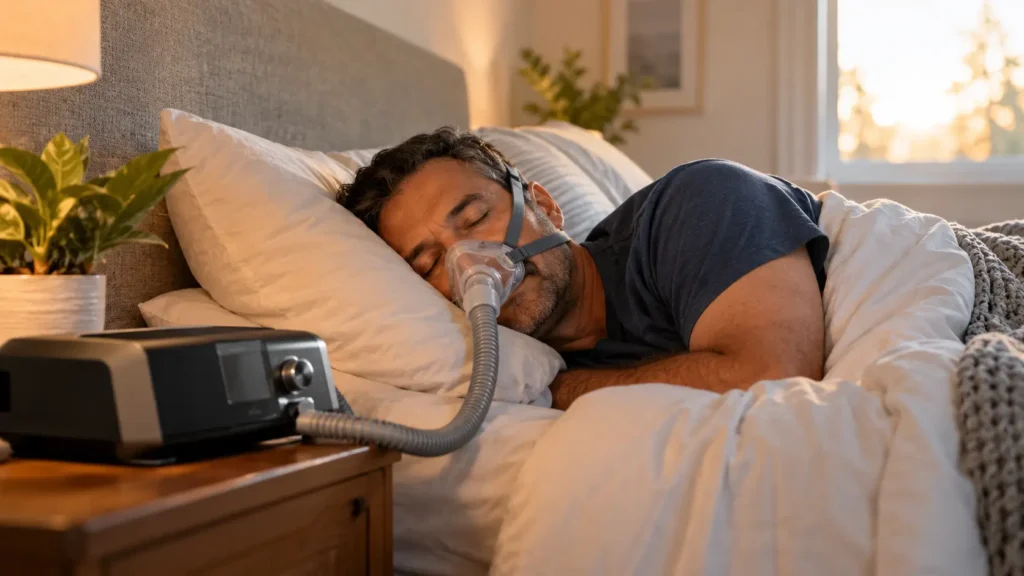
CPAP dry mouth usually happens when air escapes through the mouth during therapy, especially if you use a nasal mask or nasal pillow mask and breathe through your mouth while sleeping. It can also happen because of mask leak, low humidifier setting, nasal blockage, dry room air, high airflow discomfort, medicines, dehydration, or the wrong mask type.
A heated humidifier, better mask fit, treating nasal congestion, using the right mask type, checking for mouth leak, and speaking with a CPAP provider can often help reduce dry mouth. In addition, Mayo Clinic notes that dry mouth is a common CPAP problem and that a chin strap, better mask fit, or heated humidifier may help in some cases.
Introduction
CPAP therapy can be very helpful for obstructive sleep apnea; however, many users face comfort issues in the beginning. One of the most common complaints is waking up with a dry mouth.
You may feel:
- Sticky mouth
- Dry tongue
- Sore throat
- Bad breath
- Cracked lips
- Needing water during the night
- Dryness even after using CPAP all night
This can be frustrating. Some people think CPAP is not suitable for them because of dry mouth. But in many cases, CPAP dry mouth can be improved by finding the real cause and making the right adjustment.
This article explains why CPAP dry mouth happens and what you can do to reduce it.
What Is CPAP Dry Mouth?
CPAP dry mouth means your mouth feels unusually dry during or after CPAP therapy. It may happen occasionally or almost every morning.
It can happen with any CPAP setup, but it is especially common when:
- Air leaks from the mouth
- The mask does not seal properly
- Humidification is too low
- The nose is blocked
- The user breathes through the mouth
- The mask type does not match the user’s breathing style
A little dryness once in a while may not be serious. But regular dry mouth can disturb sleep and make CPAP harder to continue.
Is CPAP Dry Mouth Normal?
CPAP dry mouth is common, especially for beginners. However, it should not be ignored if it happens every night.
Dry mouth may reduce comfort and disturb therapy consistency. If you wake up often to drink water, remove your mask, or feel throat irritation, your CPAP setup may need adjustment.
ResMed notes that severe mask leak can cause dry mouth and may also reduce the effectiveness of sleep apnea therapy.
Common Causes of CPAP Dry Mouth
1. Mouth Breathing During Sleep
Mouth breathing is one of the most common causes of CPAP dry mouth.
If you use a nasal mask or nasal pillow mask, CPAP air enters through the nose. But if your mouth opens during sleep, air may escape through the mouth. This is called mouth leak.
Mouth leak can dry the mouth and throat quickly.
Signs of mouth breathing may include:
- Dry mouth every morning
- Waking with sore throat
- Air escaping from lips
- Partner noticing mouth opening
- CPAP app showing high leak
- Feeling thirsty at night
Mayo Clinic notes that a chin strap may help keep the mouth closed and reduce air leak when using a nasal mask.
2. CPAP Mask Leak
A leaking mask can send dry airflow toward the mouth, nose, or eyes. If the mask seal is poor, the machine may also increase airflow to maintain pressure, which can make dryness worse.
Common reasons for mask leak include:
- Wrong mask size
- Loose straps
- Over-tightened straps
- Worn cushion
- Oily skin
- Facial hair
- Sleeping position
- Old or stretched headgear
A mask should be snug, but not painful. Over-tightening can sometimes worsen leaks because the cushion may bend or lose its natural seal.
3. Low Humidifier Setting
CPAP airflow can feel dry without enough humidification. A humidifier adds moisture to the air before it reaches your airway.
If your humidifier setting is too low, you may wake with dry mouth, dry nose, or sore throat.
ResMed explains that CPAP humidification moistens airflow and may help prevent dry mouth and congestion.
4. Nasal Blockage or Congestion
If your nose is blocked, you may start breathing through your mouth during sleep. This can happen due to:
- Cold
- Allergies
- Sinus congestion
- Deviated septum
- Dust exposure
- Dry air
- Seasonal changes
- AC room dryness
When the nose is blocked, even a good nasal mask may feel uncomfortable. Mouth leak becomes more likely.
Do not ignore nasal congestion if it repeatedly affects CPAP use. Speak with a healthcare provider for safe nasal blockage management.
5. Wrong CPAP Mask Type
The mask type should match your breathing style.
| Mask Type | May Suit | Dry Mouth Risk |
|---|---|---|
| Nasal mask | Nose breathers | Higher if mouth opens |
| Nasal pillow mask | Minimal contact users | Higher if mouth opens |
| Full face mask | Mouth breathers | May help mouth leak |
| Hybrid mask | Some mouth breathers | Depends on fit |
If you breathe through your mouth while using a nasal mask, dry mouth may continue unless mouth leak is managed.
Mayo Clinic notes that some people may benefit from a full-face mask if they breathe through the mouth at night despite trying nasal mask or nasal pillow options with humidification or chin strap support.
6. Dry Room Air or AC Use
Many Indian users sleep in air-conditioned rooms. AC air can reduce room humidity and make CPAP dryness worse.
Dry mouth may be more noticeable during:
- Summer AC use
- Winter dryness
- Dry climate
- Sleeping under a fan
- Low room humidity
In such cases, humidifier adjustment and room comfort may help.
7. Not Drinking Enough Water
Dehydration can make CPAP dry mouth worse. If you drink very little water during the day, consume too much caffeine, or sweat heavily, your mouth may feel dry at night.
However, drinking too much water just before bed may increase bathroom trips. A balanced hydration routine through the day is better.
8. Medicines or Health Conditions
Dry mouth can also happen due to reasons not directly related to CPAP.
Possible causes include:
- Certain blood pressure medicines
- Allergy medicines
- Antidepressants
- Diabetes
- Mouth breathing
- Smoking
- Alcohol
- Salivary gland issues
- Dehydration
If dry mouth started after a new medicine or is severe even without CPAP, discuss it with your doctor.
How to Reduce CPAP Dry Mouth
1. Check for Mouth Leak
First, identify whether air is escaping through your mouth.
Ask yourself:
- Do I use a nasal mask or nasal pillow mask?
- Do I wake up with dry mouth daily?
- Does my mouth open during sleep?
- Does my CPAP app show high leak?
- Does my partner notice mouth breathing?
If yes, mouth leak may be the main reason.
Possible solutions may include:
- Chin strap if advised
- Better nasal breathing support
- Full face mask consideration
- Humidifier adjustment
- Provider review of leak data
2. Improve Mask Fit
A poor mask fit can make dry mouth worse.
Try these steps:
- Fit the mask while lying down
- Turn the CPAP machine on before final adjustment
- Avoid over-tightening
- Check cushion placement
- Clean cushion regularly
- Replace old cushion if needed
- Check whether tubing is pulling the mask
If leak continues, you may need a different mask size or style.
3. Use a Heated Humidifier
A heated humidifier can add moisture to CPAP airflow and reduce dryness. Many users feel more comfortable with humidification, especially in dry weather or AC rooms.
Tips:
- Use humidification as advised
- Adjust gradually
- Use clean water as recommended by your device provider
- Empty and clean the water chamber regularly
- Watch for condensation or “rainout” in the tube
Do not randomly increase settings too high if water collects in the tube or mask. Ask for device guidance.
4. Consider Heated Tubing
Heated tubing helps maintain comfortable air temperature and moisture between the machine and mask. It may help if you experience dry mouth in winter, AC rooms, or with high airflow.
It may also reduce condensation when using humidification.
Ask your CPAP provider whether heated tubing is compatible with your machine.
5. Manage Nasal Congestion
If nasal blockage is causing mouth breathing, dry mouth may not improve until nasal breathing improves.
Helpful steps may include:
- Discuss allergies or sinus issues with a doctor
- Keep the bedroom clean and dust-free
- Avoid strong fragrances near bedtime
- Clean CPAP equipment regularly
- Use humidification if advised
- Avoid smoking exposure
Do not use nasal sprays long-term without medical guidance.
6. Review Mask Type
If you are a mouth breather, a full face mask may be discussed. If you feel claustrophobic, a hybrid mask may be considered.
A mask change may help if:
- You cannot keep your mouth closed
- Chin strap does not help
- Nasal blockage is frequent
- Dry mouth happens every morning
- Leak data remains high
- You remove the mask at night
The right mask is not the same for everyone. Comfort, seal, breathing style, sleeping position, and pressure setting all matter.
7. Keep Your CPAP Equipment Clean
Skin oil, dust, and moisture can affect mask seal and increase leaks. Poor seal can worsen dry mouth.
Basic cleaning habits:
- Wipe mask cushion as advised
- Wash mask parts regularly
- Clean humidifier chamber
- Replace water daily if advised
- Let parts dry fully
- Replace old cushions, tubing, and filters as recommended
Mayo Clinic Health System explains that if a cushion loses its grip on the face, airflow may leak out, and recommends cleaning CPAP cushions with warm, soapy water and allowing them to air dry.
8. Avoid Alcohol Close to Bedtime
Alcohol can relax throat muscles and may worsen snoring, mouth breathing, and sleep apnea symptoms. It may also contribute to dehydration.
Try avoiding alcohol close to bedtime, especially if you already struggle with CPAP dry mouth or mask leak.
9. Practice CPAP While Awake
Some people open their mouth or remove the mask because they are not yet comfortable with CPAP airflow.
Practice can help your body adapt.
Try:
- Wearing the mask while sitting
- Using CPAP while reading
- Practicing nasal breathing
- Using ramp feature if advised
- Relaxing before sleep
Do not force yourself through severe discomfort. Ask for help early.
CPAP Dry Mouth Checklist
Use this quick checklist:
- Is my mouth opening during sleep?
- Is my mask leaking?
- Is the humidifier setting too low?
- Is my nose blocked?
- Am I using the right mask type?
- Is the cushion old or oily?
- Is the mask too loose or too tight?
- Is my room very dry or AC-cooled?
- Am I drinking enough water during the day?
- Did dry mouth start after a new medicine?
This checklist can help you explain the issue clearly to your CPAP provider.
When Should You Ask for CPAP Comfort Guidance?
Ask for help if:
- Dry mouth happens every morning
- You wake up repeatedly for water
- Your throat feels sore daily
- Your CPAP app shows high leak
- You remove the mask during sleep
- Your mask feels uncomfortable
- You feel CPAP is not helping
- You are thinking of stopping CPAP
Many CPAP comfort problems can be improved with the right adjustment.
Get CPAP comfort guidance:
https://slumbersenseglobal.com/contact-us/
FAQs
1. Why does CPAP cause dry mouth?
CPAP dry mouth often happens when air escapes through the mouth or when airflow is not humidified enough. It can also happen due to mask leak, nasal blockage, dry room air, or mouth breathing.
2. Is dry mouth common with CPAP?
Yes. Dry mouth is a common CPAP comfort issue, especially for beginners or people who breathe through the mouth during sleep.
3. Can a humidifier reduce CPAP dry mouth?
Yes, a heated humidifier may help by adding moisture to CPAP airflow. It is especially helpful in dry weather, AC rooms, or when airflow feels too dry.
4. Does mouth breathing cause CPAP dry mouth?
Yes. Mouth breathing is one of the most common causes. If you use a nasal mask and your mouth opens during sleep, air may escape through the mouth and cause dryness.
5. Should I use a chin strap for CPAP dry mouth?
A chin strap may help some nasal mask users keep the mouth closed, but it is not suitable for everyone. Ask your CPAP provider before using one.
6. Is a full face mask better for CPAP dry mouth?
A full face mask may help some mouth breathers because it covers both nose and mouth. However, fit and comfort matter. A full face mask is not automatically best for everyone.
7. Can nasal congestion make CPAP dry mouth worse?
Yes. Nasal blockage may force mouth breathing, which can worsen dry mouth during CPAP therapy.
8. When should I contact a CPAP provider?
Contact a CPAP provider if dry mouth happens often, your mask leaks, your CPAP app shows high leak, you wake frequently, or you feel like stopping therapy.
Medical Disclaimer
This article is for educational purposes only and does not replace medical advice, diagnosis, or treatment. CPAP therapy, pressure settings, mask selection, humidifier settings, and sleep apnea care should be guided by a qualified healthcare provider or trained sleep therapy professional.