Quick Answer
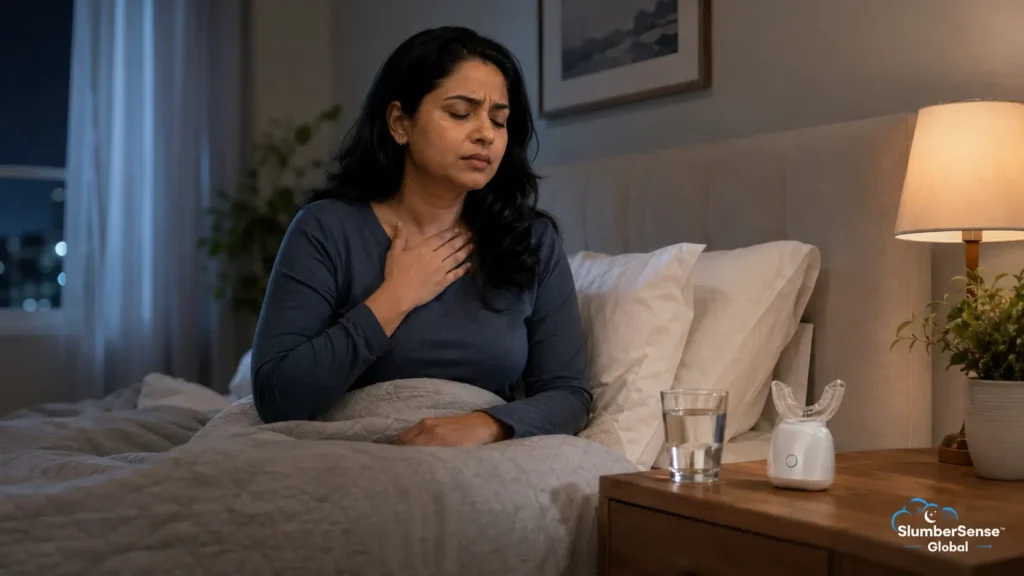
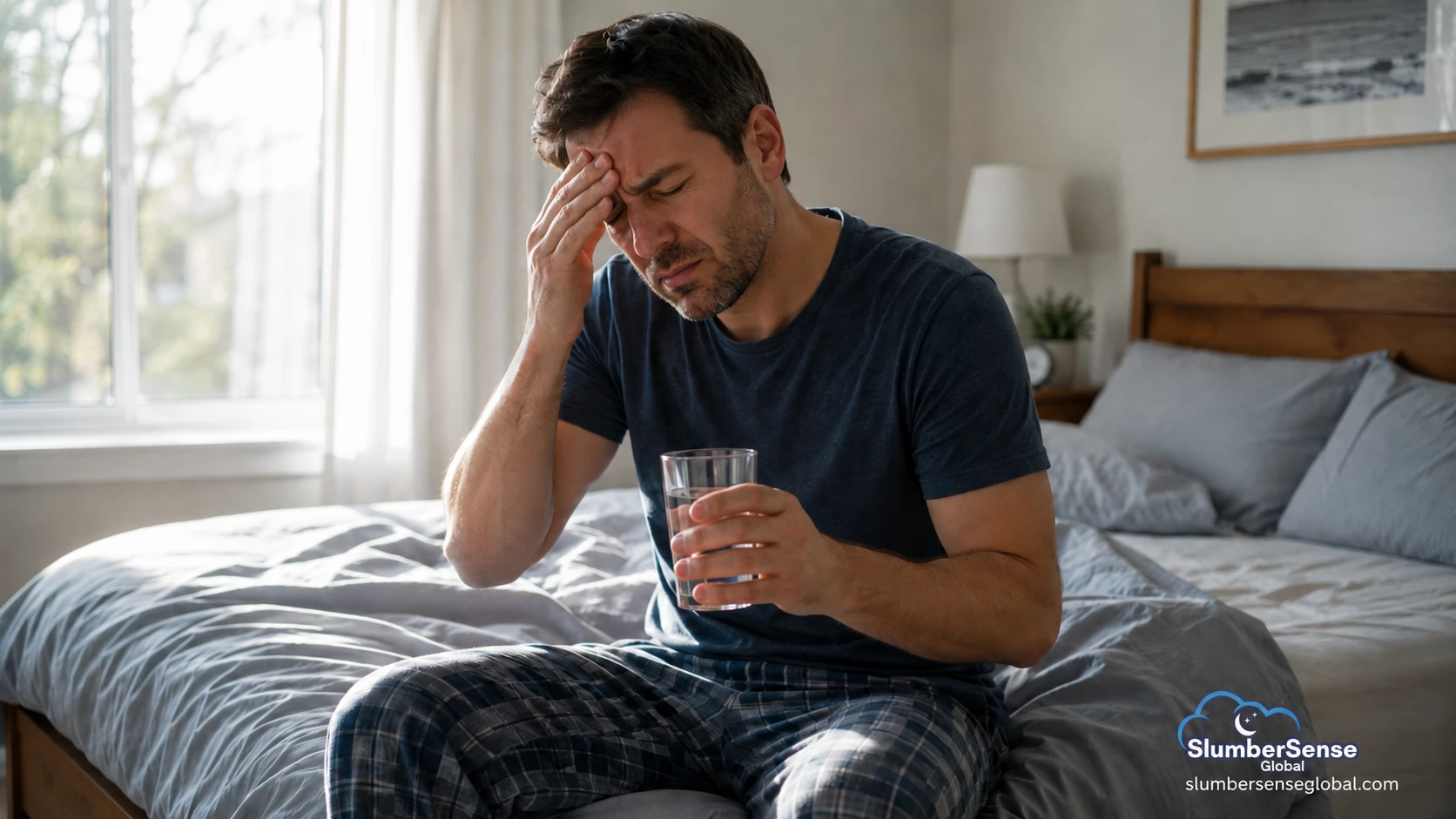
Waking up with a morning headache and dry mouth can happen due to dehydration, mouth breathing, nasal blockage, alcohol, medicines, stress, poor sleep quality, or other health conditions.
However, if these symptoms happen often with loud snoring, gasping, choking, breathing pauses, morning tiredness, or daytime sleepiness, sleep apnea may be one possible cause.
Sleep apnea can disturb breathing during sleep and repeatedly interrupt restful sleep. Because many symptoms happen while you are asleep, you may only notice the effects in the morning, such as headache, dry mouth, fatigue, or brain fog.
Talk to the sleep guidance team:
https://slumbersenseglobal.com/contact-us/
Introduction
Waking up with a headache is frustrating. Waking up with dry mouth every morning can feel uncomfortable and confusing. Many people assume these symptoms are caused by dehydration, stress, late-night screen use, or sleeping with the mouth open.
Sometimes, that may be true.
But when morning headache and dry mouth happen regularly, especially with loud snoring, choking sounds, gasping during sleep, poor sleep, or daytime tiredness, it may be worth checking whether sleep apnea could be involved.
Sleep apnea is a sleep-related breathing disorder where breathing repeatedly pauses or becomes shallow during sleep. These interruptions can reduce sleep quality and cause symptoms that are most noticeable after waking.
What Is a Morning Headache?
A morning headache is a headache present soon after waking up. It may feel like pressure, heaviness, dull pain, tightness, or discomfort around the forehead, temples, or back of the head.
Common features may include:
- Dull pain after waking
- Heavy head in the morning
- Pressure around the forehead or temples
- Headache with dry mouth
- Headache with tiredness
- Headache that improves later in the day
- Headache after restless sleep
- Headache with loud snoring or poor sleep
A morning headache does not automatically mean sleep apnea. It can happen for many reasons. But when it appears with other sleep-related symptoms, it should not be ignored.
What Causes Dry Mouth in the Morning?
Dry mouth in the morning means your mouth feels dry, sticky, rough, or uncomfortable after waking. You may feel thirsty, have bad breath, or need water immediately after getting up.
Common causes include:
- Mouth breathing
- Nasal congestion
- Allergies or sinus blockage
- Dehydration
- Sleeping in a dry room
- Alcohol before bedtime
- Smoking
- Certain medicines
- Diabetes or other health conditions
- Loud snoring
- Sleep-related breathing issues
If dry mouth happens occasionally, it may not be serious. But if you wake up with dry mouth almost every morning, especially with snoring or tiredness, your breathing during sleep may need attention.
Could Morning Headache and Dry Mouth Be Sleep Apnea?
Yes, morning headache and dry mouth can be associated with sleep apnea, especially when they happen together with other warning signs.
In obstructive sleep apnea, the airway may become partly or fully blocked during sleep. Breathing can become shallow or temporarily pause. The brain may briefly wake the body to reopen the airway.
These awakenings can be so short that you may not remember them, but they can happen many times during the night.
Over time, this may lead to:
- Morning tiredness
- Morning headache
- Dry mouth
- Daytime sleepiness
- Poor focus
- Irritability
- Restless sleep
- Low energy
- Waking up unrefreshed
This is why many people with possible sleep apnea say, “I slept all night, but I still feel tired and heavy in the morning.”
Why Sleep Apnea May Cause Morning Headaches
Morning headaches linked with sleep apnea may happen because sleep is repeatedly disturbed by breathing problems. During breathing interruptions, oxygen levels may drop and carbon dioxide levels may change. The body responds by briefly waking up to restore breathing.
These repeated events can reduce sleep quality and may contribute to morning head pressure or headache in some people.
Sleep apnea-related morning headaches may feel like:
- Dull pressure after waking
- Heavy head in the morning
- Pain that improves later in the day
- Headache with tiredness
- Headache with dry mouth
- Headache after loud snoring
- Headache with restless sleep
However, headaches can have many causes, including migraine, sinus problems, dehydration, high blood pressure, teeth grinding, eye strain, stress, and medication effects. That is why symptoms should be assessed in the full context.
A useful question is:
Do I have morning headaches along with snoring, dry mouth, gasping, choking, or daytime sleepiness?
If yes, sleep apnea may be worth checking.
Why Sleep Apnea May Cause Dry Mouth
Dry mouth in sleep apnea is often linked with mouth breathing, snoring, or airway blockage during sleep.
When the airway feels restricted or the nose is blocked, some people breathe through the mouth while sleeping. Mouth breathing can dry the mouth and throat over several hours.
Dry mouth may be more concerning when it happens with:
- Loud snoring
- Waking up thirsty
- Sore throat in the morning
- Bad breath
- Gasping or choking sounds
- Restless sleep
- Morning headache
- Daytime sleepiness
Dry mouth alone does not prove sleep apnea. But dry mouth plus loud snoring and morning tiredness is a pattern that should be taken seriously.
Warning Pattern to Watch
A concerning morning headache sleep apnea pattern may look like this:
Loud snoring → breathing pause → gasping or choking → restless sleep → dry mouth and headache in the morning
You may not notice this pattern yourself because it happens while you are asleep. A spouse, family member, or roommate may notice the signs first.
Ask them:
- Do I snore loudly?
- Do I stop breathing during sleep?
- Do I gasp or choke at night?
- Does my breathing sound irregular?
- Do I toss and turn a lot?
- Do I sleep with my mouth open?
- Do I wake up tired even after enough sleep?
Their observations can help you understand whether your morning symptoms are part of a bigger sleep-related breathing issue.
Other Symptoms That May Point Toward Sleep Apnea
Morning headache and dry mouth become more important when they appear with other sleep apnea symptoms.
Night-time symptoms
- Loud snoring
- Breathing pauses during sleep
- Gasping or choking
- Restless sleep
- Frequent waking
- Mouth breathing
- Waking up to urinate often
Morning symptoms
- Headache after waking
- Dry mouth
- Sore throat
- Heavy head
- Low energy
- Feeling unrefreshed
- Brain fog
Daytime symptoms
- Excessive sleepiness
- Poor concentration
- Memory problems
- Low productivity
- Mood changes
- Fatigue despite enough sleep
- Drowsiness while driving
If you notice several of these symptoms together, it may be time to speak with a sleep guidance team.
Talk to the sleep guidance team:
https://slumbersenseglobal.com/contact-us/
When Morning Headache and Dry Mouth May Not Be Sleep Apnea
Morning headache and dry mouth do not always mean sleep apnea. These symptoms can happen for many other reasons.
Other possible causes of morning headache include:
- Dehydration
- Migraine
- Sinus congestion
- High blood pressure
- Stress or anxiety
- Poor sleep posture
- Teeth grinding
- Alcohol use
- Medication side effects
- Eye strain
- Poor sleep schedule
Other possible causes of dry mouth include:
- Not drinking enough water
- Sleeping with mouth open
- Nasal congestion
- Allergies
- Smoking
- Alcohol
- Dry bedroom air
- Certain medicines
- Diabetes
- Salivary gland issues
This is why self-diagnosis is not recommended. Instead, look at the full symptom pattern.
If morning headache and dry mouth happen only once in a while, lifestyle factors may be involved. But if they happen regularly with snoring, choking, gasping, or daytime sleepiness, sleep apnea should be considered as one possible cause.
How to Know If Your Symptoms Need Attention
You should take morning headache and dry mouth more seriously if:
- They happen most mornings
- You snore loudly
- Your partner notices breathing pauses
- You wake up choking or gasping
- You wake up tired after 7–8 hours of sleep
- You feel sleepy during the day
- You have poor focus or brain fog
- You have high blood pressure with poor sleep
- Your dry mouth is severe or persistent
- Your headaches are frequent or worsening
- Your symptoms affect work, mood, or daily life
One symptom alone may not tell the full story. But a repeated pattern can be a useful warning sign.
What Should You Do Next?
If you wake up with morning headache and dry mouth often, start with these simple steps:
- Track how often symptoms happen for 1–2 weeks.
- Ask your partner or family member about snoring, gasping, choking, or breathing pauses.
- Check whether symptoms are worse after alcohol, late meals, back sleeping, nasal congestion, stress, or screen time.
- Speak with a sleep guidance team if symptoms are regular or concerning.
- Consider a sleep test if advised by a healthcare professional.
Talk to the sleep guidance team:
https://slumbersenseglobal.com/contact-us/
What Happens During Sleep Apnea Evaluation?
A healthcare provider or sleep guidance team may ask about:
- Snoring
- Morning headaches
- Dry mouth
- Daytime sleepiness
- Breathing pauses
- Gasping or choking
- Sleep schedule
- Medical history
- Blood pressure
- Diabetes or heart risk
- Medicines
- Lifestyle habits
Depending on your symptoms, they may suggest a sleep test.
A sleep test may help measure breathing patterns, oxygen levels, heart rate, snoring, breathing pauses, and sleep interruptions. Symptoms alone cannot confirm sleep apnea, so proper evaluation is important.
Can CPAP Help Morning Headaches and Dry Mouth?
If sleep apnea is diagnosed, treatment may help improve sleep quality and reduce sleep apnea-related symptoms. CPAP or other PAP therapy is one common treatment option for obstructive sleep apnea.
However, CPAP should be used only after proper diagnosis and professional guidance.
Some people using CPAP may still experience dry mouth if:
- The mask leaks
- They breathe through the mouth
- Humidification is not adjusted properly
- The mask type is not suitable
- Nasal blockage is present
In such cases, mask fit, humidifier settings, or product guidance may help.
Practical Tips That May Help
These steps may help reduce general morning dry mouth or headaches:
- Drink enough water during the day
- Avoid alcohol close to bedtime
- Keep a regular sleep schedule
- Reduce late-night screen use
- Avoid heavy meals late at night
- Manage nasal congestion with medical guidance
- Keep the bedroom comfortable
- Try side sleeping if back sleeping worsens snoring
- Discuss medication-related dryness with your doctor
- Speak with a doctor if headaches are frequent
If headaches are sudden, severe, worsening, or linked with chest pain, weakness, confusion, fainting, vision loss, or severe shortness of breath, seek urgent medical care.
Simple Self-Checklist
Ask yourself:
- Do I wake up with a headache often?
- Do I wake up with dry mouth most mornings?
- Do I snore loudly?
- Has anyone noticed I stop breathing during sleep?
- Do I wake up choking or gasping?
- Do I feel tired after a full night’s sleep?
- Do I feel sleepy during the day?
- Do I have poor focus or brain fog?
- Do I wake up with a sore throat?
- Do I have high blood pressure with poor sleep?
If you answer “yes” to several questions, especially snoring, breathing pauses, gasping, or daytime sleepiness, it may be time to speak with a sleep guidance team.
Talk to the sleep guidance team:
https://slumbersenseglobal.com/contact-us/
Final Takeaway
Morning headache and dry mouth can happen for many reasons. They may be linked to dehydration, mouth breathing, nasal congestion, alcohol, medicines, stress, or other health conditions.
But when they happen regularly with loud snoring, gasping, choking, breathing pauses, daytime sleepiness, or waking up tired after enough sleep, sleep apnea may be one possible cause.
You do not need to guess. Speak with a sleep guidance team and understand the next step.
Talk to the sleep guidance team:
https://slumbersenseglobal.com/contact-us/
FAQs
1. Can sleep apnea cause morning headaches?
Yes, morning headaches can be one possible symptom of sleep apnea, especially when they happen with loud snoring, breathing pauses, gasping, choking, dry mouth, or daytime sleepiness. However, headaches can have many causes, so medical evaluation is important.
2. Why do I wake up with dry mouth every morning?
You may wake up with dry mouth because of mouth breathing, nasal congestion, dehydration, alcohol, smoking, medicines, or a dry sleep environment. If dry mouth happens with loud snoring or daytime tiredness, sleep apnea may be one possible cause.
3. Is morning headache always a sign of sleep apnea?
No. Morning headache is not always a sign of sleep apnea. It can also happen due to dehydration, migraine, sinus issues, stress, high blood pressure, teeth grinding, or medicine effects.
4. What does a sleep apnea headache feel like?
A sleep apnea-related morning headache may feel like dull pressure, heaviness, or discomfort after waking. It may improve later in the day, but headache type alone cannot diagnose sleep apnea.
5. Can snoring cause dry mouth?
Yes, snoring and mouth breathing can contribute to dry mouth. If snoring is loud, frequent, and linked with breathing pauses or daytime sleepiness, sleep apnea should be considered.
6. When should I talk to a sleep guidance team?
You should talk to a sleep guidance team if you regularly wake with headache or dry mouth and also have loud snoring, gasping, choking, breathing pauses, daytime sleepiness, or poor sleep quality.
7. Does dry mouth mean I need CPAP?
No. Dry mouth alone does not mean you need CPAP. CPAP is used for diagnosed sleep apnea when recommended by a healthcare provider. Dry mouth should be evaluated based on symptoms and possible causes.
8. Where can I get help for morning headache and dry mouth with snoring?
You can speak with the SlumberSense sleep guidance team here:
https://slumbersenseglobal.com/contact-us/
Medical Disclaimer
This article is for educational purposes only and does not replace medical advice, diagnosis, or treatment. Morning headaches, dry mouth, snoring, and tiredness can have many causes. If you have severe symptoms, sudden headache, breathing difficulty, chest pain, or any urgent health concern, please seek medical care immediately.