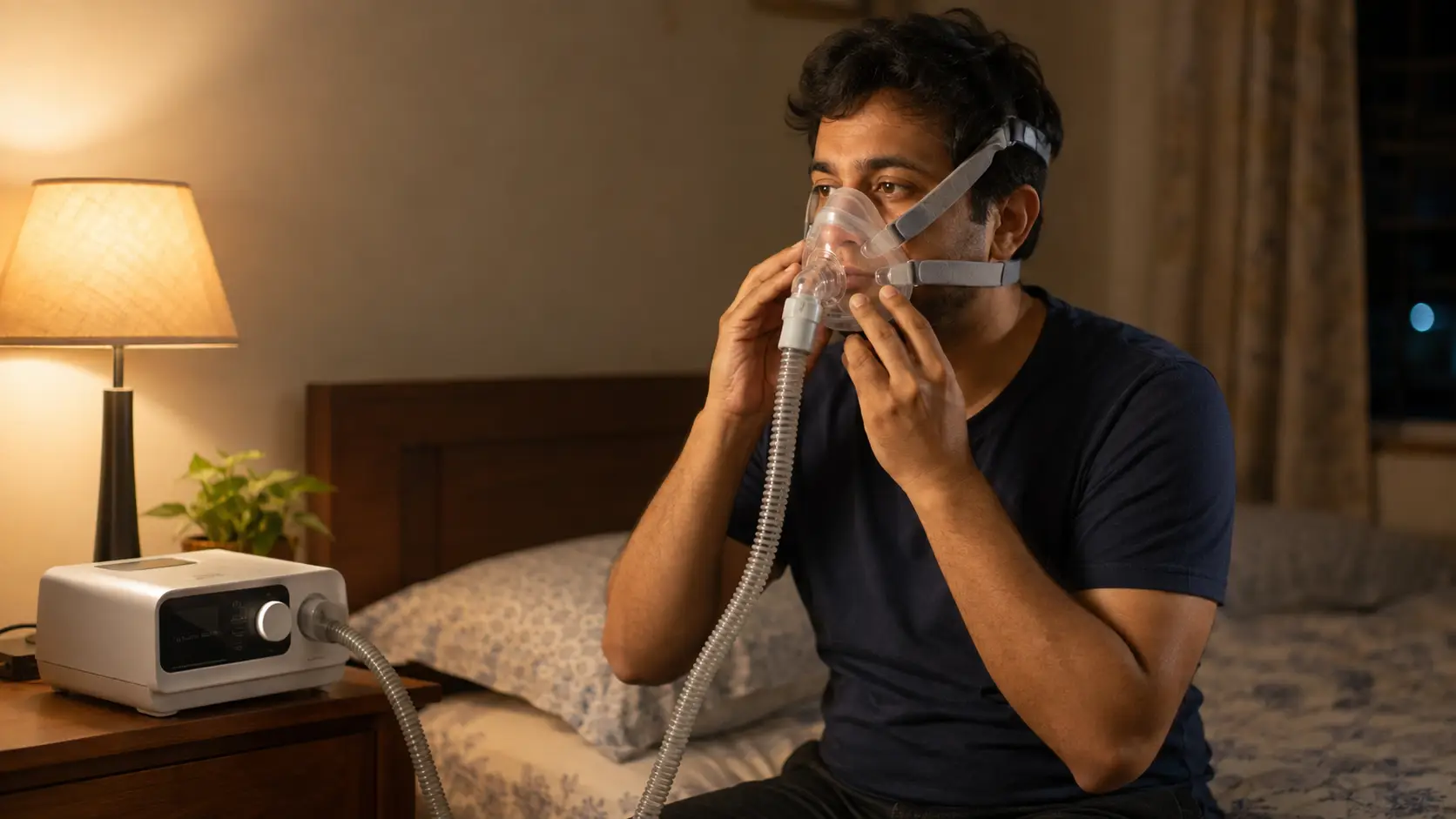
Quick Answer
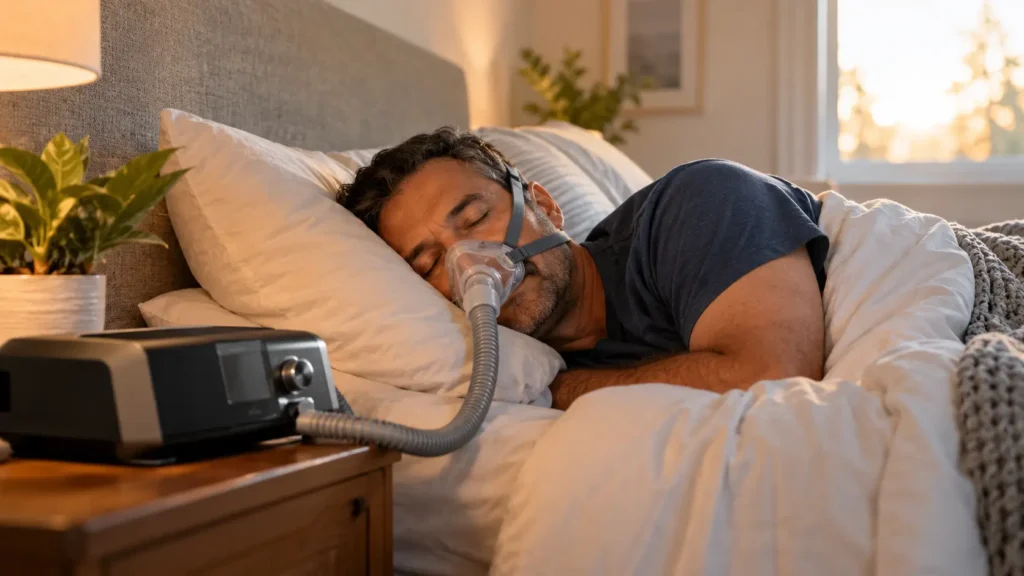
CPAP therapy uses gentle air pressure through a mask to help keep the airway open during sleep. In the first month, many beginners need time to adjust to the mask, airflow, pressure, dryness, and sleeping position. Common CPAP issues include mask leak, dry mouth, nasal dryness, discomfort, and trouble falling asleep, but many can improve with proper mask fitting and support.
Introduction
Starting CPAP therapy can feel strange in the beginning. Many Indian patients worry about sleeping with a mask, using the machine every night, or explaining it to family members.
This is normal.
The first month is an adjustment period. With proper guidance, mask fitting, humidification, and patience, many users become more comfortable over time.
What Is CPAP Therapy?
CPAP stands for Continuous Positive Airway Pressure. It delivers steady air pressure through a mask while you sleep. This helps keep the airway open and reduce breathing interruptions in obstructive sleep apnea.
CPAP is commonly used for obstructive sleep apnea when recommended by a healthcare provider.
What to Expect in Week 1
The first week is mainly about getting used to the setup.
You may notice:
- Mask feels unusual
- Air pressure feels new
- Mild dryness
- Small mask leaks
- Trouble sleeping normally
- Awareness of tube or machine sound
This does not mean CPAP is failing. It means your body is adjusting.
What to Expect in Weeks 2–3
By the second or third week, many users begin understanding what needs adjustment.
You may need help with:
- Mask size
- Strap tightness
- Humidifier setting
- Sleeping position
- Nasal blockage
- Pressure comfort
Do not stop therapy without speaking to your provider. Many CPAP problems can be improved.
What to Expect by the End of Month 1
With regular use, some people may notice:
- Less daytime sleepiness
- Better morning energy
- Reduced snoring
- Fewer morning headaches
- Better focus
Results vary. Some people improve quickly, while others need more time and support.
Common CPAP Problems and Solutions
| Problem | Possible Solution |
| Mask leak | Refit mask, adjust straps, try different size |
| Dry mouth | Check mouth breathing, humidifier, mask type |
| Dry nose | Use humidification as advised |
| Skin marks | Avoid over-tightening, check cushion fit |
| Pressure discomfort | Ask provider about comfort settings |
| Trouble sleeping | Use machine while awake for practice |
Tips for Indian CPAP Beginners
- Keep the machine near your bed on a stable surface
- Use clean water if humidification is advised
- Clean mask and tubing regularly
- Do not over-tighten the mask
- Manage nasal congestion
- Use the machine consistently
- Ask for support early instead of giving up
FAQs
1. Is CPAP difficult to use?
It may feel unusual at first, but many users adjust with practice and support.
2. How long does it take to get used to CPAP?
Some adjust in days, others need a few weeks.
3. What if my mask leaks?
Mask leak is common and often improves with refitting or choosing a better mask.
4. Can I stop CPAP if I feel uncomfortable?
Speak with your provider before stopping. Most problems can be managed.
Medical Disclaimer
This article is educational and does not replace medical advice. CPAP should be used as prescribed by a qualified healthcare provider.