Quick Answer
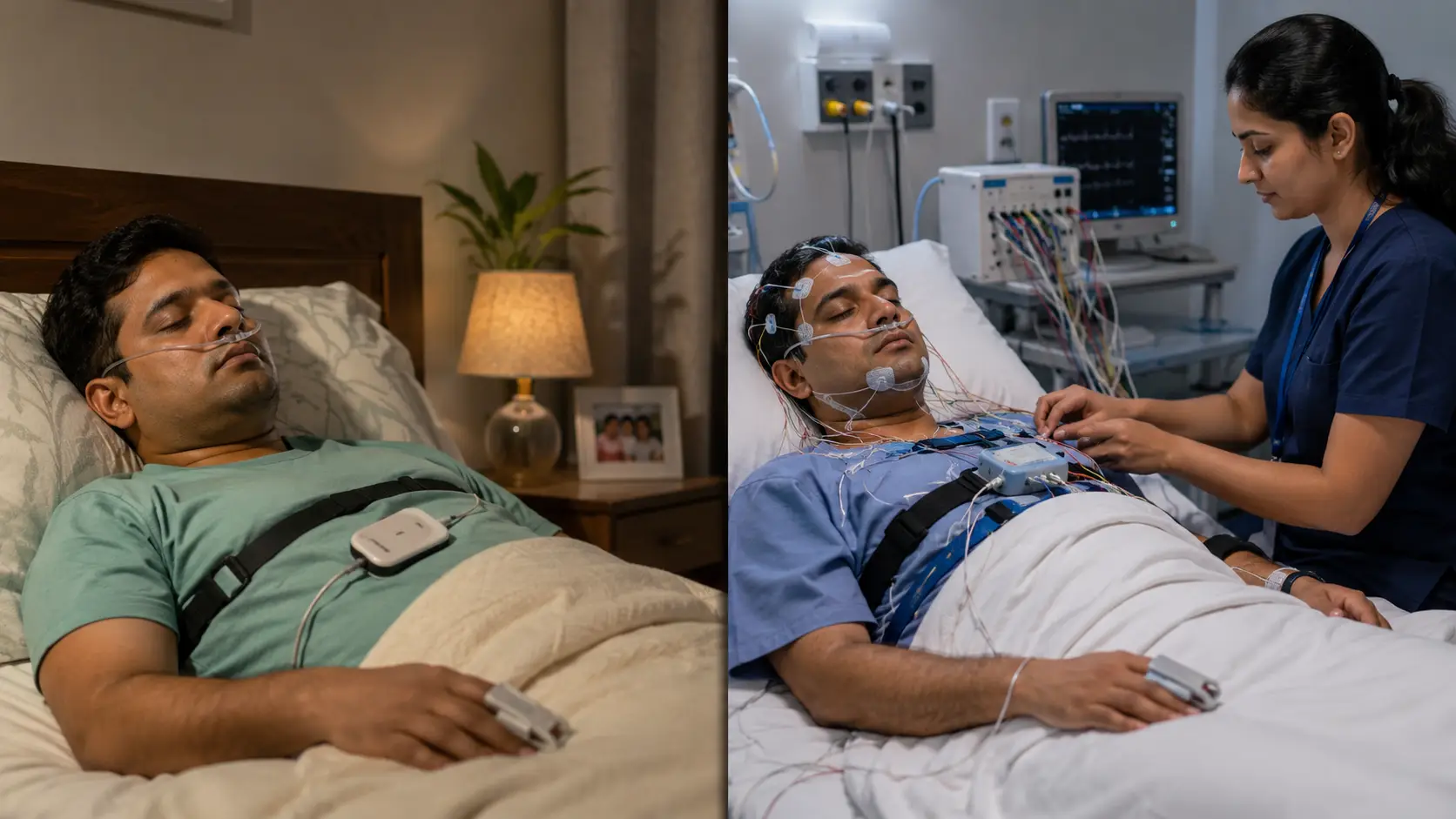
The primary difference in a home sleep test vs lab sleep study is the depth of monitoring. A home sleep test focuses on respiratory airflow, oxygen levels, and heart rate in your own bed to detect obstructive sleep apnea. An in-lab sleep study (polysomnography) is conducted overnight in a medical sleep center to monitor brain waves, sleep stages, limb movements, and cardiac rhythms. For clear, uncomplicated sleep apnea symptoms, a home test is convenient and cost-effective, while complex symptoms require a lab study.
A home sleep test may be suitable for selected adults with suspected obstructive sleep apnea, while a lab sleep study may be better for complex symptoms or unclear results. Home sleep apnea testing should be part of a complete sleep evaluation and interpreted by a qualified medical provider.
Introduction
Many Indian patients delay sleep testing because they feel a sleep study will be complicated, uncomfortable, or expensive. But sleep testing has become more accessible. Today, some people can do a sleep test at home, while others may need a detailed overnight lab sleep study.
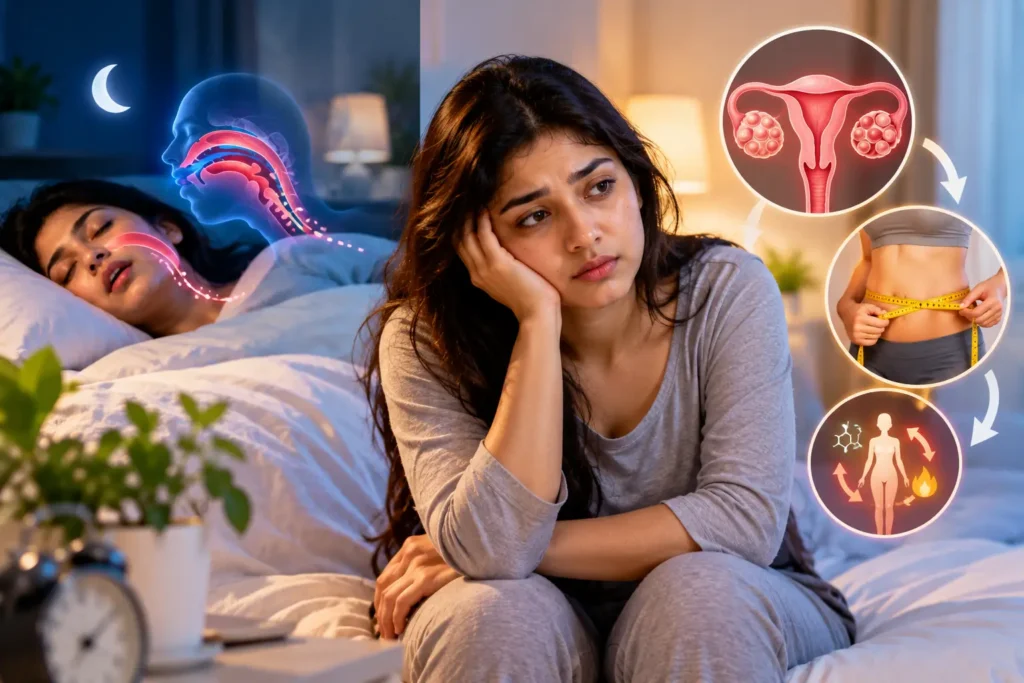
Both tests can help evaluate sleep apnea symptoms such as loud snoring, breathing pauses, gasping, choking, morning headaches, dry mouth, daytime sleepiness, and waking up tired after a full night’s sleep.
The right test depends on your symptoms, health condition, and doctor’s advice.
What Is a Home Sleep Test?
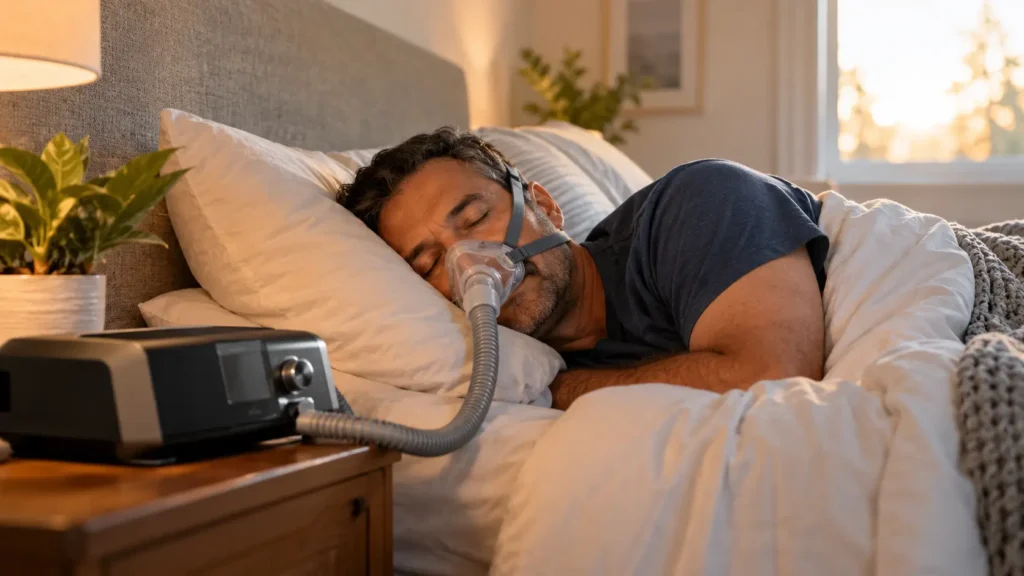
A home sleep test, also called a home sleep apnea test, is done in your own bed using a portable device. It is usually used to check for obstructive sleep apnea.
A home sleep test may measure:
- Airflow
- Breathing effort
- Oxygen levels
- Heart rate
- Snoring
- Sleep position
It is usually more comfortable because you sleep in your own home. It may be useful for people who have clear symptoms of obstructive sleep apnea and no major complex medical concerns.
What Is a Lab Sleep Study?
A lab sleep study, also called polysomnography, is done overnight in a sleep center or hospital. It is more detailed than a home test.
A lab sleep study may measure:
- Brain waves
- Sleep stages
- Eye movement
- Muscle activity
- Breathing pattern
- Oxygen levels
- Heart rate
- Snoring
- Leg movements
- Body position
A lab sleep study may be preferred if your symptoms are complex, if another sleep disorder is suspected, or if a home test result is normal but symptoms continue.
Home Sleep Test vs Lab Sleep Study: Comparison
| Feature | Home Sleep Test | Lab Sleep Study |
| Location | At home | Sleep center or hospital |
| Comfort | More familiar | More supervised |
| Detail level | Breathing-focused | Full sleep evaluation |
| Measures oxygen | Yes | Yes |
| Measures sleep stages | Usually no | Yes |
| Measures brain activity | Usually no | Yes |
| Best for | Selected suspected OSA cases | Complex cases or unclear results |
| Supervision | Usually self-applied | Monitored by technician |
| Report review | Medical review needed | Medical review needed |
Which One Is Better?
There is no single “best” test for everyone.
A home sleep test may be better if:
- You have loud snoring and daytime sleepiness
- Your symptoms strongly suggest obstructive sleep apnea
- You prefer sleeping at home
- Your case is not medically complex
A lab sleep study may be better if:
- Your symptoms are complex
- You have heart, lung, neurological, or other medical concerns
- A home test result was unclear
- Another sleep disorder is suspected
- You need more detailed sleep-stage data
Mayo Clinic notes that home sleep apnea tests can sometimes miss sleep apnea, so a healthcare professional may still recommend polysomnography if symptoms continue.
When Should You Ask About Sleep Testing?
You should ask about sleep testing if you often have:
- Loud snoring
- Breathing pauses noticed by a partner
- Gasping or choking during sleep
- Morning headaches
- Dry mouth after waking
- Daytime sleepiness
- Poor focus or brain fog
- Waking up tired after enough sleep
- High blood pressure with poor sleep
These symptoms do not confirm sleep apnea, but they should not be ignored if they happen repeatedly.
FAQs
1. Is a home sleep test accurate?
It can be useful for selected adults with suspected obstructive sleep apnea, but it may not be suitable for everyone.
2. Is a lab sleep study better than a home test?
A lab sleep study is more detailed because it can measure sleep stages, brain activity, movement, breathing, and oxygen levels.
3. Can a home sleep test miss sleep apnea?
Yes, in some cases. If symptoms continue despite a normal home test, a lab sleep study may be recommended.
4. Which test should I choose?
A healthcare provider can guide you based on your symptoms and medical history.
Medical Disclaimer
This article is for educational purposes only and does not replace medical advice, diagnosis, or treatment. Sleep testing and treatment decisions should be guided by a qualified healthcare provider.