Quick Answer
If CPAP pressure feels too high, do not change the pressure setting yourself. First check common comfort issues such as mask leak, poor mask fit, wrong mask type, blocked nose, dry mouth, anxiety, or difficulty breathing out against pressure.
In addition, many CPAP machines include comfort features such as ramp, auto ramp, auto ramp, pressure relief, or expiratory pressure relief. These features may help some users adjust more comfortably by starting therapy at a lower pressure or making exhalation easier.
Therefore, if the pressure feels too strong every night, your CPAP provider or sleep specialist should review your mask fit, leak data, comfort settings, and prescribed pressure.
Introduction
However, starting CPAP therapy can feel unusual in the beginning. Some users feel that the air pressure is too strong, especially when they first put on the mask at night.
You may feel:
- “Too much air is coming.”
- “I cannot breathe out properly.”
- “The mask feels like it is pushing air too hard.”
- “I feel bloated after using CPAP.”
- “I panic when the pressure rises.”
- “I remove the mask during sleep.”
This does not always mean your CPAP pressure is wrong. Sometimes the real problem is mask leak, poor mask fit, mouth breathing, nasal blockage, dryness, or missing comfort settings.
Furthermore, this article explains why CPAP pressure may feel too high and what you should do safely.
Why CPAP Pressure Matters
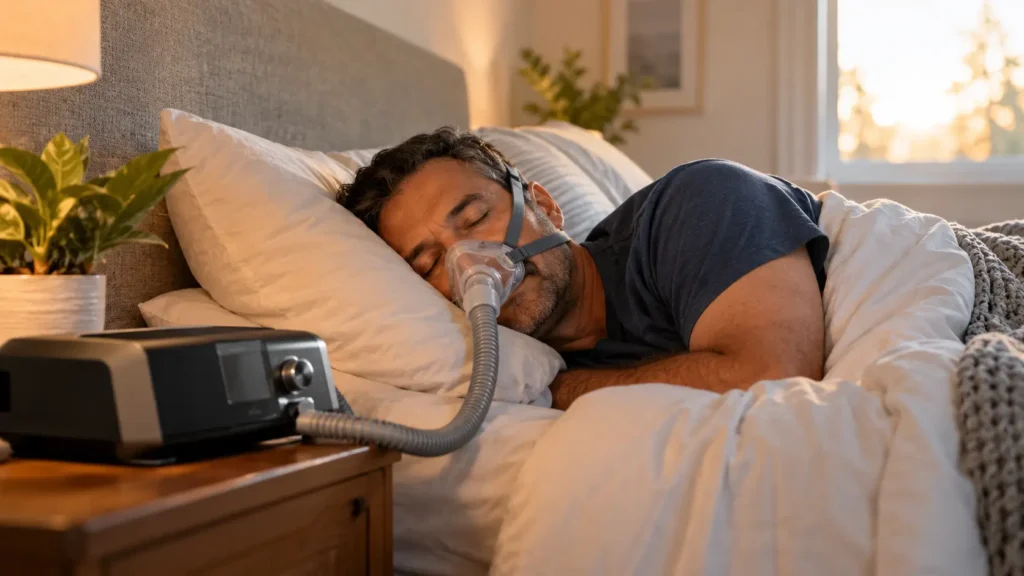
CPAP stands for Continuous Positive Airway Pressure. It sends air through a mask to help keep the airway open during sleep.
The pressure is not meant to force breathing. It is meant to prevent the upper airway from collapsing during sleep.
In fact, the right CPAP pressure depends on your sleep study, breathing events, oxygen levels, symptoms, body position, mask type, and provider recommendation.
Consequently, CPAP pressure should not be changed casually or without professional guidance.
Is It Normal for CPAP Pressure to Feel High?
Yes, CPAP pressure can feel high in the beginning.
Many users need time to adjust because CPAP airflow feels different from normal breathing. The mask, tubing, pressure, humidifier, and machine sound may all feel new during the first few nights.
This is especially common during:
- First few nights of CPAP use
- Starting therapy at bedtime
- Higher prescribed pressure
- Mask leak
- Nasal congestion
- Anxiety or claustrophobia
- Mouth breathing
- Dry mouth or throat discomfort
However, if pressure discomfort continues, it should not be ignored. CPAP therapy should feel manageable with the right setup, mask fit, and support.
Common Reasons CPAP Pressure Feels Too High
1. Ramp Feature Is Not On
The ramp feature starts therapy at a lower pressure and gradually increases to the prescribed pressure level. This can help users fall asleep more comfortably.
If ramp is off, the machine may start at full pressure immediately. For beginners, this can feel intense.
What to do:
- Check whether your machine has a ramp feature.
- Ask your provider to help set ramp properly.
- Use ramp if pressure feels strong at bedtime.
- Do not change clinical pressure settings yourself.
Ramp does not replace the prescribed pressure; instead, it simply helps you ease into therapy.
2. Difficulty Breathing Out Against Pressure
Some users can breathe in comfortably but feel it is hard to breathe out. This can make CPAP pressure feel stronger than it actually is.
Many CPAP machines have pressure relief features. These features slightly reduce pressure during exhalation, depending on the machine and settings.
What to do:
- Tell your provider if breathing out feels difficult.
- Ask about pressure relief, expiratory relief, Flex, or similar comfort features.
- Review whether your machine supports exhalation comfort settings.
- Do not reduce pressure yourself.
A small comfort adjustment may make breathing feel more natural.
3. Mask Leak Makes Pressure Feel Stronger
A mask leak can make CPAP therapy uncomfortable. If air escapes around the mask, the machine may try to maintain pressure, and the airflow may feel stronger or noisy.
Mask leak may also cause:
- Air blowing into eyes
- Loud mask noise
- Dry mouth
- Dry nose
- Waking up often
- Pressure discomfort
- Poor sleep quality
What to do:
- Refit your mask while lying down.
- Turn the machine on before final fitting.
- Do not overtighten the straps.
- Check if the cushion is old or damaged.
- Ask for a different mask size or style if the leak continues.
A better mask seal can make the same pressure feel much more comfortable.
4. Wrong Mask Type
The wrong mask type can make pressure feel uncomfortable.
| Mask Type | Possible Pressure Issue |
|---|---|
| Nasal pillow mask | May feel direct or intense at higher pressure |
| Nasal mask | May leak if the nose is blocked or the mouth opens |
| Full face mask | May feel bulky if not fitted well |
| Hybrid mask | May need careful fitting to prevent leaks |
If the mask does not suit your breathing style, pressure may feel harder to tolerate.
What to do:
- Ask whether your mask matches your breathing style.
- Consider nasal blockage, mouth breathing, side sleeping, and comfort.
- Try a different mask only with proper guidance.
- Do not continue with a painful or badly leaking mask.
The best CPAP mask is the one that seals well and feels comfortable enough to use consistently.
5. Nose Is Blocked
If your nose is blocked, CPAP airflow may feel uncomfortable. You may start breathing through your mouth, causing leak, dryness, and pressure discomfort.
Nasal congestion can happen due to:
- Cold
- Allergies
- Sinus issues
- Dust
- Dry air
- AC room dryness
- Deviated septum
- Seasonal changes
If you use a nasal mask and your nose is blocked, pressure may feel too strong or difficult to manage.
What to do:
- Speak with a healthcare provider about nasal congestion.
- Use humidification if advised.
- Keep the bedroom clean and dust-free.
- Avoid smoke or strong fragrances.
- Ask whether your mask type is suitable.
Improving nasal breathing can make CPAP therapy feel easier.
6. Humidity Setting Is Too Low
Dry airflow can make pressure feel harsher. A dry nose, throat, or mouth can make CPAP uncomfortable even if the pressure is correct.
A heated humidifier may help some users by adding moisture to the airflow.
What to do:
- Check humidifier settings with your provider.
- Use clean water as advised.
- Ask about heated tubing if dryness continues.
- Do not increase humidity too much if water collects in the tube or mask.
Comfortable humidity can reduce dryness and make airflow feel smoother.
7. Anxiety or Claustrophobia
Some users feel anxious when wearing a CPAP mask. The pressure may feel high because the brain is reacting to the mask, airflow, and enclosed feeling.
This can happen especially in the first week.
What to do:
- Practice wearing the mask while awake.
- Use CPAP while reading or watching TV.
- Try short practice sessions before bedtime.
- Use ramp if advised.
- Ask for a less bulky mask if claustrophobia continues.
Getting used to CPAP gradually can make therapy less stressful.
8. Pressure Setting May Need Professional Review
Sometimes pressure discomfort may mean your settings need review. This is especially true if pressure feels too high every night, you are removing the mask, or you feel bloated.
However, pressure should only be changed by a qualified healthcare provider or trained sleep therapy professional.
What to do:
- Share your symptoms with your provider.
- Ask them to review pressure, leak, AHI, usage hours, and comfort data.
- Do not change settings based on online advice.
- Ask whether auto CPAP, pressure relief, or another PAP option may be suitable.
Therefore, pressure review should be based on your report, symptoms, and therapy data.
Symptoms That May Mean Pressure Comfort Needs Review
Ask for help if you notice:
- Pressure feels too strong every night
- You cannot breathe out comfortably
- You remove the mask during sleep
- You wake up panicked
- You have frequent mask leak
- Your mouth is very dry
- You feel bloated or gassy
- Your nose feels blocked
- You wake up often
- You feel therapy is not helping
- Your CPAP app shows high leak or high AHI
These symptoms do not always mean the pressure is wrong, but they should be reviewed.
What to Do When CPAP Pressure Feels Too High
Avoid these mistakes:
- Do not change CPAP pressure yourself.
- Do not stop CPAP without speaking to your provider.
- Do not overtighten the mask.
- Do not block mask vent holes.
- Do not ignore repeated mask leak.
- Do not assume discomfort means CPAP cannot work for you.
- Do not use someone else’s machine settings.
- Do not buy a new machine before checking mask fit and comfort settings.
Your CPAP pressure is part of your treatment plan. Changing it without guidance may reduce therapy effectiveness.
Simple CPAP Pressure Comfort Checklist
Before giving up, check:
- Is ramp turned on?
- Is pressure relief available?
- Is the mask leaking?
- Is the mask too tight?
- Is the cushion old?
- Is the nose blocked?
- Is the humidifier setting comfortable?
- Is the tubing pulling the mask?
- Am I breathing through my mouth?
- Am I using the right mask type?
- Have I practiced with CPAP while awake?
- Have I asked my provider to review therapy data?
This checklist can help your CPAP provider identify the real cause.
When Should You Contact a CPAP Provider?
Contact your CPAP provider or sleep therapy team if:
- Pressure feels too high for more than a few nights
- You cannot fall asleep with CPAP
- You feel like stopping therapy
- You wake up gasping or panicked
- You have severe dry mouth
- You feel bloated or uncomfortable
- Mask leak continues
- Your sleep apnea symptoms continue
- Your machine data looks abnormal
Get CPAP comfort guidance:
https://slumbersenseglobal.com/contact-us/
FAQs
1. Why does my CPAP pressure feel too high?
CPAP pressure may feel too high because ramp is off, breathing out feels difficult, the mask leaks, the mask type is not suitable, the nose is blocked, or you are still adjusting to therapy.
2. Can I lower my CPAP pressure myself?
No. Do not change CPAP pressure yourself. Pressure settings should be adjusted only by a qualified healthcare provider or trained sleep therapy professional.
3. What is the CPAP ramp feature?
Ramp starts the machine at a lower pressure and gradually increases to the prescribed pressure. It may make CPAP more comfortable when falling asleep.
4. What helps if I cannot breathe out with CPAP?
Ask your provider about pressure relief or expiratory pressure relief features. These may reduce pressure during exhalation and make breathing out easier.
5. Can mask leak make pressure feel too high?
Yes. Mask leak can make airflow feel stronger and more uncomfortable. It can also cause noise, dry mouth, dry eyes, and poor sleep.
6. Should I stop CPAP if pressure feels too high?
Do not stop therapy without speaking to your provider. Many CPAP pressure comfort problems can be fixed with the right adjustments.
7. Can auto CPAP help with high pressure discomfort?
Auto CPAP may help selected users because it adjusts pressure during sleep within a prescribed range. Suitability should be decided by a healthcare provider.
8. When should I ask for help?
Ask for help if pressure discomfort continues, you remove the mask, you cannot sleep, you feel bloated, or you are thinking of stopping CPAP.
Medical Disclaimer
This article is for educational purposes only and does not replace medical advice, diagnosis, treatment, or device instructions. CPAP pressure settings, comfort features, mask selection, and sleep apnea treatment should be guided by a qualified healthcare provider or trained sleep therapy professional.