Quick Answer
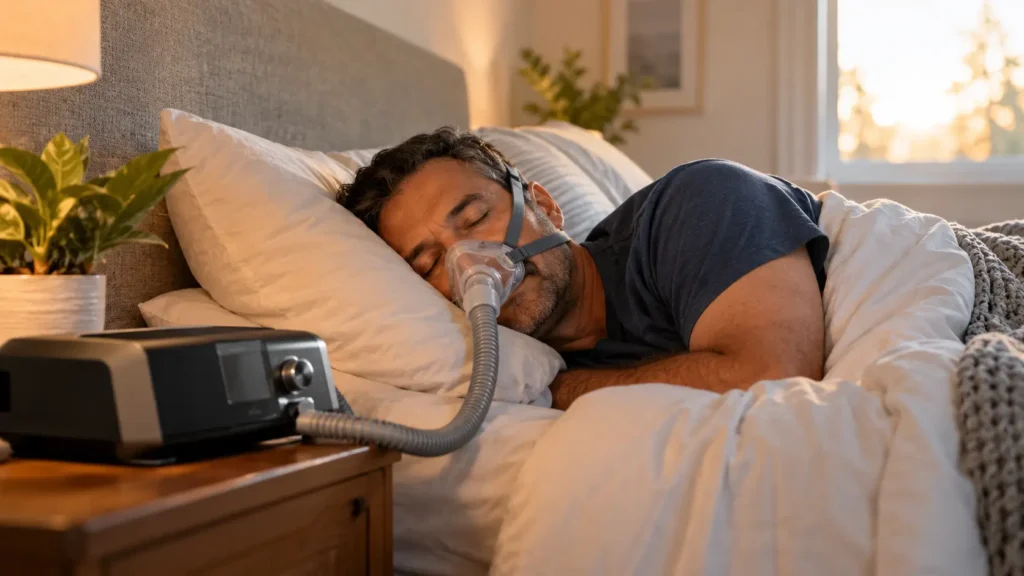
If you notice your CPAP mask leaking air into your eyes or making noise, it is usually because the mask is the wrong size, the straps are too loose or too tight, the cushion is worn out, facial oils affect the seal, or you breathe through your mouth while using a nasal mask.
For example, a small amount of intentional air venting from the mask is normal because CPAP masks are designed to release exhaled air. However, frequent air leakage around the eyes, loud noise, or dry mouth indicates that your mask needs adjustment, thorough cleaning, or a fresh replacement cushion. Therefore, fixing the seal early ensures you get comfortable sleep.
Introduction
CPAP therapy can help many people with obstructive sleep apnea sleep better by keeping the airway open during sleep. But one common problem beginners face is this:
“Why is air leaking from my CPAP mask?”
In addition, mask leak can feel irritating. Air may blow into your eyes, the mask may make noise, your mouth may feel dry, or you may wake up repeatedly to adjust the straps.
The good news is that CPAP mask leak is usually fixable. Most leaks happen because of mask fit, mask size, cushion condition, mouth breathing, or sleeping position.
This guide explains the common causes of CPAP mask leaking and practical steps that may help.
What Is CPAP Mask Leak?
CPAP mask leak means air is escaping from the mask in a way that affects comfort or therapy.
There are two types of airflow to understand:
Normal venting: CPAP masks have small vent holes to release exhaled air. This is expected and should not be blocked.
Problem leak: Air escapes from the cushion area, sides of the mask, mouth, or near the eyes. This may disturb sleep or reduce pressure delivery.
In addition, problem leaks are commonly linked with incorrect adjustment, incorrect assembly, wrong mask size, worn cushion, mouth breathing, or wrong mask type.
Common Signs Your CPAP Mask Is Leaking
You may have a CPAP mask leak if you notice:
- Air blowing into your eyes
- Dry eyes in the morning
- Loud mask noise
- Dry mouth after waking
- Mask moving during sleep
- Red marks from overtightening
- Waking up to adjust the mask
- CPAP machine showing high leak
- Feeling that therapy is not comfortable
- Partner noticing air noise at night
A mask leak does not always mean your CPAP machine is faulty. In many cases, the issue is with fitting, cushion seal, mask style, or mouth breathing.
Why Is My CPAP Mask Leaking?
1. Wrong Mask Size
One of the most common causes of CPAP mask leaking is incorrect mask size.
For instance, a mask that is too large may leave gaps. Similarly, a mask that is too small may press into the face and fail to seal properly.
This can happen when users buy a mask online without proper sizing or continue using a mask that never fitted well from the beginning.
Fix:
- Check the mask size guide
- Ask for mask fitting support
- Try a different cushion size
- Do not assume all brands fit the same
- Recheck size if your weight or facial shape has changed
Therefore, a properly sized mask should feel secure without needing excessive strap pressure.
2. Straps Are Too Loose
If the headgear is too loose, the mask may move during sleep. This can cause air to escape from the sides, bridge of the nose, or under the cushion.
Fix:
- Adjust straps while lying in your normal sleeping position
- Turn the CPAP machine on before final adjustment
- Tighten gradually and evenly
- Check whether the cushion sits flat on the face
Mask fitting should be done with airflow on because the cushion may inflate slightly during use.
3. Straps Are Too Tight
Many users think tightening the mask will stop the leak. Sometimes it does the opposite.
As a result, overtightening can crush the cushion, create gaps, cause skin marks, and make the mask uncomfortable.
Fix:
- Loosen the straps slightly
- Let the cushion sit naturally
- Refit the mask gently
- Avoid pulling the mask hard against the face
A CPAP mask should be snug, not painful.
4. Worn-Out Mask Cushion
CPAP cushions do not last forever. Over time, skin oil, sweat, cleaning, and daily use can make the cushion soft, stiff, cracked, or less effective at sealing.
Consequently, when the cushion loses its shape, leaks become more common.
Fix:
- Inspect the cushion for cracks or stiffness
- Replace worn cushions as advised
- Clean the cushion regularly
- Avoid using harsh chemicals
- Replace old headgear if it has stretched
In addition, a fresh cushion can sometimes solve a leak immediately.
5. Mask Is Not Assembled Correctly
Sometimes the mask itself is fine, but one part is not connected properly.
A loose elbow, twisted cushion, incorrect frame position, folded cushion edge, or poorly attached tubing can cause air leakage.
Fix:
- Remove and reassemble the mask
- Check the cushion is seated correctly
- Make sure the elbow or connector is secure
- Check tubing connection
- Read the mask manual or ask for product guidance
Consequently, a small assembly mistake can create a large leak.
6. Mouth Breathing With a Nasal Mask
Mouth leak is common when someone uses a nasal mask or nasal pillow mask but breathes through the mouth during sleep.
In this case, the mask may fit well, but air escapes through the mouth. As a result, this can cause dry mouth, reduced comfort, and poor sleep.
Fix:
- Discuss mouth breathing with your provider
- Consider a chin strap if appropriate
- Treat nasal congestion with medical guidance
- Consider a full face mask if mouth breathing continues
- Check humidifier settings if dry mouth is present
Do not change mask type only based on guesswork. Get guidance if leak continues.
7. Sleeping Position Changes
Your mask may fit well when you fall asleep, but leak later when you turn to the side, press your face into the pillow, or sleep on your stomach.
For example, side sleepers often experience mask movement when the pillow pushes the mask frame.
Fix:
- Adjust mask while lying in your sleep position
- Try a CPAP-friendly pillow
- Use a compact mask if suitable
- Check whether tubing is pulling the mask
- Place the tube so it does not drag during sleep
However, the best mask for a back sleeper may not be the best mask for a side sleeper.
8. Facial Hair or Skin Oil
Beards, moustaches, oily skin, sweat, and skincare products can reduce the mask seal.
This does not mean you cannot use CPAP, but it may require the right mask style and careful cleaning.
Fix:
- Wash your face before wearing the mask
- Clean the cushion regularly
- Avoid oily creams before sleep
- Trim facial hair if leak is severe
- Try a mask type that seals better with facial hair
Nasal pillow masks may work better for some people with facial hair because they have less contact with the face.
9. Wrong Mask Type for Your Breathing Style
There are different CPAP mask types, and each one suits different users.
| Mask Type | Usually Best For |
|---|---|
| Nasal mask | Nose breathers |
| Nasal pillow mask | Minimal contact users and some side sleepers |
| Full face mask | Mouth breathers or people with nasal blockage |
| Hybrid mask | Some mouth breathers wanting less bulk |
If you breathe through the mouth but use a nasal mask, leak may continue. If you feel claustrophobic in a full face mask, you may remove it during sleep.
Fix:
- Match mask type to breathing style
- Check if nasal blockage is present
- Ask for mask trial options
- Consider comfort, sleep position, and leak pattern
The best CPAP mask is not the most expensive one. It is the one you can use comfortably and consistently.
10. Pressure Feels Too High
Sometimes users feel the air pressure is forcing the mask to leak. This may happen if the mask fit is weak, the pressure requirement is higher, or the user is not comfortable with the pressure.
Do not change pressure settings yourself.
Fix:
- Ask your provider about comfort settings
- Check ramp feature
- Recheck mask fit at therapy pressure
- Ask whether the mask type suits your pressure level
- Review leak data with your sleep therapy provider
Pressure settings should be handled by a trained professional.
CPAP Mask Leak Fix Checklist
Use this simple checklist before giving up on your mask:
- Is the cushion clean?
- Is the cushion old or damaged?
- Is the mask the right size?
- Are the straps too tight?
- Are the straps too loose?
- Is the mask assembled correctly?
- Is tubing pulling the mask?
- Are you breathing through your mouth?
- Do you have nasal blockage?
- Does the leak happen only when sleeping on your side?
- Is facial hair affecting the seal?
- Is the mask type suitable for your breathing style?
If the leak continues after these steps, ask for professional mask guidance.
What Not to Do When Your CPAP Mask Leaks
Avoid these common mistakes:
- Do not overtighten the mask
- Do not block the mask vent holes
- Do not ignore air blowing into the eyes
- Do not keep using a cracked cushion
- Do not change CPAP pressure yourself
- Do not stop therapy without speaking to your provider
- Do not assume the machine is faulty before checking the mask
Stopping CPAP because of a leak may bring back sleep apnea symptoms such as snoring, gasping, choking, morning headaches, dry mouth, daytime sleepiness, and poor focus.
When Should You Ask for CPAP Mask Guidance?
You should ask for help if:
- Leak happens every night
- Your eyes feel dry or irritated
- You wake often because of air noise
- You have dry mouth every morning
- Your CPAP app shows high leak
- You remove the mask during sleep
- Your mask leaves painful marks
- You feel CPAP is not helping
- You are thinking of stopping therapy
Many CPAP problems can be solved with proper mask fitting, cushion replacement, humidification adjustment, or a different mask style.
Get CPAP mask guidance:
https://slumbersenseglobal.com/contact-us/
Final Takeaway
CPAP mask leaking is common, but it is usually manageable.
For instance, the leak may be caused by wrong mask size, loose straps, overtightening, worn cushion, incorrect assembly, mouth breathing, sleeping position, facial hair, skin oil, wrong mask type, or pressure discomfort.
A small vent flow is normal, but repeated air leakage around the eyes, mouth, or cushion should be corrected. With proper fitting, cleaning, replacement parts, and professional support, CPAP therapy can become much more comfortable.
FAQs
1. Is a little CPAP mask leak normal?
A small amount of air from the mask vent is normal. But air leaking around the cushion, into the eyes, or from the mouth may need correction.
2. Why does my CPAP mask leak into my eyes?
This may happen when the mask is too high, too loose, too tight, the cushion is worn, or the mask size is not correct.
3. Can mouth breathing cause CPAP leak?
Yes. Mouth breathing can cause air to escape when using a nasal mask or nasal pillow mask. A chin strap or full face mask may be discussed with your provider.
4. Should I tighten my CPAP mask to stop leaks?
Not always. Overtightening can worsen leaks and cause discomfort. The mask should be snug but not painful.
5. How often should I replace my CPAP mask cushion?
Replacement timing depends on the mask type, usage, cleaning routine, and manufacturer guidance. If the cushion is cracked, stiff, oily, or leaking often, it may need replacement.
6. Can a CPAP mask leak reduce therapy effectiveness?
Yes. A significant leak may reduce comfort and may affect pressure delivery. If your CPAP machine or app shows frequent high leak, ask for guidance.
7. Which CPAP mask is best for mouth leak?
A full face mask is often considered for mouth breathers, but the right choice depends on facial fit, comfort, pressure needs, nasal blockage, and professional advice.
8. What should I do if my CPAP mask still leaks after adjustment?
Ask your CPAP provider or sleep therapy team to check mask size, cushion condition, headgear, mouth breathing, pressure comfort, and mask type.
Medical Disclaimer
This article is for educational purposes only and does not replace medical advice, diagnosis, or treatment. CPAP mask selection, pressure settings, and sleep apnea treatment should be guided by a qualified healthcare provider or trained sleep therapy professional.