Quick Answer
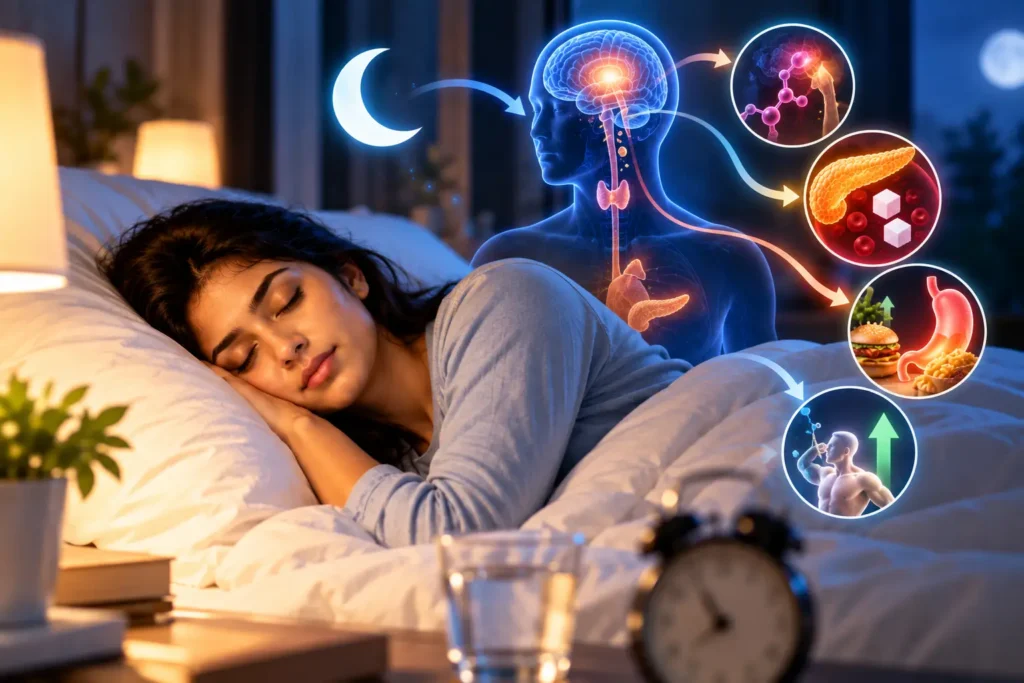
Late-night eating vs sleep means understanding how eating close to bedtime affects digestion, insulin response, blood sugar, reflux, body temperature, snoring, and deep sleep. A heavy late dinner may keep the body active when it should be recovering, which can disturb sleep quality, increase cravings, and make weight control harder.
A late meal once in a while may not cause major harm. However, regularly eating large, oily, sugary, or spicy meals near bedtime can affect how refreshed you feel the next morning.
For people with diabetes risk, acidity, obesity, snoring, or suspected sleep apnea, dinner timing becomes even more important.
Introduction
Many people focus on what they eat but forget when they eat. However, dinner timing can affect sleep quality, insulin response, digestion, reflux, and overnight recovery.
The topic of late-night eating vs sleep matters because the body follows a natural rhythm. During the day, the body is more prepared to digest food, use glucose, move, and stay alert. At night, it should slowly shift toward repair, deep sleep, and hormone regulation.
When dinner is too late or too heavy, the body may stay busy with digestion. As a result, you may feel bloated, acidic, restless, thirsty, or uncomfortable while lying down.
This guide explains how dinner timing affects insulin, deep sleep, snoring, cravings, and metabolic health.
Why Dinner Timing Matters for Sleep
Dinner timing matters because sleep is not controlled only by tiredness. It is also affected by digestion, body temperature, hormones, blood sugar, and breathing comfort.
A well-timed dinner gives your stomach enough time to digest before you lie down. This may support better sleep comfort and reduce nighttime disturbance.
However, eating late may cause:
- Heaviness in the stomach
- Acidity or reflux
- Restless sleep
- Delayed sleep
- Increased thirst
- Night waking
- Snoring discomfort
- Blood sugar changes
- Morning tiredness
This does not mean everyone must stop eating early evening. Instead, the goal is simple: avoid heavy meals close to bedtime.
For many people, finishing dinner 2–3 hours before sleep works better.
Comparison Table: Early Dinner vs Late-Night Eating
| Factor | Early, Balanced Dinner | Late-Night Heavy Eating |
|---|---|---|
| Digestion | Gives the body more time to digest before sleep | Digestion continues while you are trying to sleep |
| Insulin Response | May support steadier blood sugar overnight | May increase late-night blood sugar and insulin demand |
| Deep Sleep | Supports better comfort and overnight recovery | May disturb deep sleep due to heaviness or reflux |
| Reflux Risk | Lower risk when dinner is finished 2–3 hours before bed | Higher risk, especially after spicy, oily, or heavy meals |
| Snoring Comfort | May reduce stomach pressure and throat irritation | May worsen snoring discomfort in some people |
| Morning Freshness | Better chance of waking lighter and more refreshed | May cause morning heaviness, acidity, or tiredness |
| Weight Management | Helps reduce late-night snacking and excess calories | Can increase extra calorie intake and cravings |
| Best Approach | Eat earlier, keep dinner balanced, and wind down calmly | Avoid making heavy late dinners a regular habit |
Late-Night Eating vs Sleep: How Insulin Gets Affected
Insulin is the hormone that helps move glucose from the blood into the cells. After a meal, especially one rich in sugar or refined carbohydrates, the body releases insulin to manage blood sugar.
The problem with late-night eating vs sleep is that late meals often happen when the body should be preparing for rest. Many late meals are also heavier than planned.
Common late-night foods include:
- Biryani
- Rice-heavy dinners
- Fried snacks
- Sweets
- Biscuits
- Bakery items
- Sugary tea or coffee
- Late-night delivery food
- Spicy or oily leftovers
When this becomes a habit, it may affect blood sugar balance, appetite control, and sleep quality.
If you eat late and sleep soon after, your body may still be digesting food and managing glucose while you are trying to enter deep sleep. Consequently, sleep may feel lighter and less refreshing.
This matters more for people with:
- Prediabetes
- Type 2 diabetes
- PCOS
- Belly fat
- Family history of diabetes
- Fatty liver risk
- Strong sugar cravings
- Weight gain despite effort
A lighter and earlier dinner may support better overnight glucose stability.
Late-Night Eating vs Sleep: Why Deep Sleep May Reduce
Deep sleep is the stage of sleep where the body focuses on repair, recovery, immune support, and hormone balance. It helps you wake up feeling fresh.
The link between late-night eating vs sleep becomes important because heavy food close to bedtime may disturb this recovery window.
A late heavy meal can affect deep sleep through:
- Active digestion
- Higher body temperature
- Stomach discomfort
- Reflux symptoms
- Blood sugar changes
- Increased awakenings
- Breathing discomfort while lying down
If the body is busy digesting food, it may not shift smoothly into deeper sleep. Therefore, you may spend enough hours in bed but still wake up tired.
This is especially common when dinner is late, oily, spicy, heavy, or followed by dessert.
You may notice:
- Waking in the middle of the night
- Morning heaviness
- Acidic burps
- Bad taste in the mouth
- Dry mouth
- Poor freshness after sleep
- Daytime sleepiness
- Cravings the next day
Better dinner timing can support better deep sleep and morning energy.
Heavy Dinner, Reflux, and Snoring
Late-night eating can worsen reflux, especially when you lie down soon after eating. A full stomach can make it easier for acid or food contents to move upward.
Reflux may cause:
- Burning in the chest
- Sour taste
- Throat irritation
- Night cough
- Frequent swallowing
- Disturbed sleep
- Morning throat discomfort
In some people, reflux and poor sleep can also worsen snoring. A heavy stomach may increase pressure on the diaphragm and make breathing feel less comfortable while lying down.
This is more likely when late dinner includes:
- Fried food
- Spicy food
- Large rice portions
- Sweets
- Carbonated drinks
- Tea or coffee late at night
- Heavy non-vegetarian meals
- Fast food
If you already snore or suspect sleep apnea, late heavy meals may make sleep more disturbed.
Late-Night Eating and Sleep Apnea Symptoms
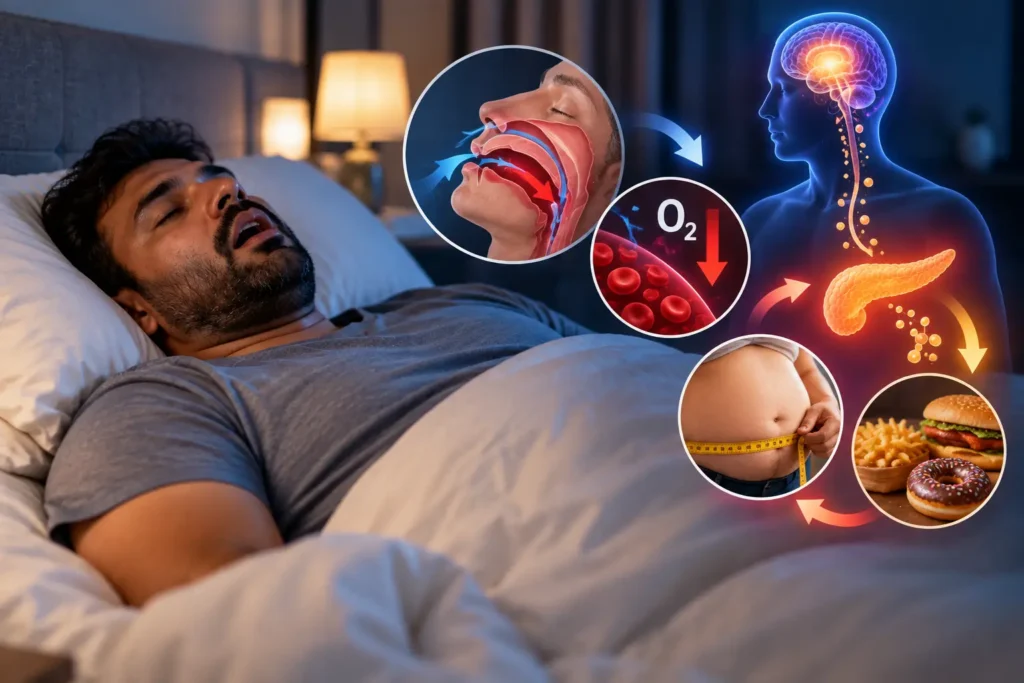
Late-night eating does not directly cause sleep apnea in every person. However, it can worsen sleep comfort in people who already have snoring, reflux, obesity, nasal blockage, or suspected sleep apnea.
Sleep apnea happens when breathing repeatedly slows or pauses during sleep. These pauses can disturb oxygen levels and sleep quality.
Late heavy meals may worsen the night by increasing:
- Reflux
- Throat irritation
- Mouth breathing
- Restlessness
- Snoring discomfort
- Sleep fragmentation
- Morning tiredness
If you wake tired after 7–8 hours, snore loudly, gasp during sleep, or have morning headaches, do not blame dinner timing alone. A sleep evaluation may be needed.
Internal Link Placeholder:
Learn more here: [Sleep Apnea Guidance — Internal Link Placeholder]
Why Late-Night Cravings Happen
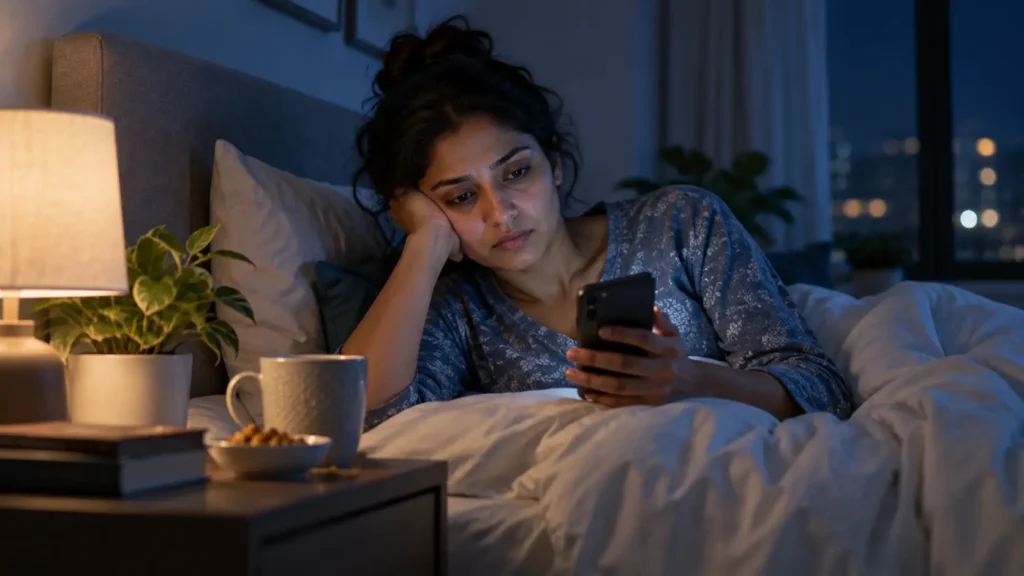
Many people do not eat late because they are truly hungry. They eat late because of stress, habit, boredom, long screen time, or poor sleep routine.
Late-night cravings may happen due to:
- Skipping breakfast
- Long gap between lunch and dinner
- Low protein intake
- Stressful workday
- Phone scrolling
- Poor sleep from the previous night
- Emotional eating
- Habit of tea and snacks
- Staying awake too long
The issue with late-night eating vs sleep is that one problem can feed the other.
Poor sleep increases cravings. Late-night eating then disturbs sleep. The next day, tiredness again increases cravings.
This cycle can make weight management harder.
Best Dinner Timing for Better Sleep
There is no one perfect dinner time for everyone. However, most people sleep better when they finish dinner 2–3 hours before bedtime.
| Your Usual Bedtime | Better Dinner Window | Best Practice |
|---|---|---|
| 10:00 p.m. | 7:00–8:00 p.m. | Keep dinner light and avoid dessert close to bed |
| 10:30 p.m. | 7:30–8:30 p.m. | Finish eating before your screen wind-down |
| 11:00 p.m. | 8:00–9:00 p.m. | Avoid tea, coffee, and fried snacks after dinner |
| 11:30 p.m. | 8:30–9:30 p.m. | Take a short gentle walk after dinner if possible |
| 12:00 a.m. | 9:00–10:00 p.m. | Keep late dinner lighter and easier to digest |
| After 12:00 a.m. | At least 2 hours before sleep | Avoid heavy meals, sugar, and lying down immediately |
The goal is not strict dieting. The goal is to give your body enough time to digest before sleep.
If you return home late from work, keep dinner lighter and easier to digest.
What to Eat at Dinner for Better Sleep
A balanced dinner should support fullness without causing heaviness.
Good dinner options may include:
- Dal with vegetables
- Khichdi with curd
- Vegetable soup with protein
- Paneer or tofu with vegetables
- Eggs with salad
- Grilled fish or chicken with vegetables
- Roti with dal and sabzi
- Sprouts or chana in controlled portions
- Small portion of curd rice if suitable
Try to include protein and fibre. These help reduce late-night hunger and support blood sugar balance.
Avoid making dinner mostly refined carbohydrates, fried foods, or sweets.
What to Avoid Close to Bedtime
To improve sleep, reduce these close to bedtime:
- Heavy fried meals
- Very spicy food
- Large rice portions
- Sugary desserts
- Packaged snacks
- Carbonated drinks
- Tea or coffee
- Alcohol
- Large amounts of water immediately before bed
- Late-night food delivery
Also avoid eating while scrolling on your phone. Distracted eating often leads to overeating.
What If You Feel Hungry Before Bed?
Sometimes hunger before bed is genuine. In that case, do not ignore severe hunger. Instead, choose a small and light option.
Better choices may include:
- Warm milk if tolerated
- Plain curd
- A small handful of nuts
- A boiled egg
- Small fruit portion
- Light soup
- Small protein-rich snack
Avoid large meals, sweets, fried snacks, and spicy leftovers at bedtime.
If you feel hungry every night, check whether your daytime meals are too low in protein, fibre, or total calories.
Practical Steps to Improve Late-Night Eating vs Sleep
You can improve late-night eating vs sleep with small daily changes.
1. Fix Your Dinner Time First
Choose a realistic dinner time and follow it for one week. Do not aim for perfection. Aim for consistency.
2. Add Protein to Dinner
Protein helps reduce late-night hunger. Add dal, paneer, eggs, curd, fish, chicken, tofu, sprouts, or pulses depending on your diet.
3. Reduce Late Screen Time
Screen scrolling often leads to late snacking. Keep a phone cut-off time, especially after dinner.
4. Keep Trigger Snacks Away
Do not keep sweets, chips, biscuits, or fried snacks beside the bed. Make the healthier choice easier.
5. Walk Lightly After Dinner
A gentle 10–15 minute walk after dinner can support digestion. Avoid intense workouts close to bedtime if they disturb your sleep.
6. Avoid Lying Down Immediately
Try not to lie down right after dinner, especially if you have reflux or snoring.
7. Track Symptoms
For 7 days, track dinner timing, sleep quality, reflux, snoring, morning freshness, and late-night cravings. This simple record can show patterns clearly.
8. Ask for Help if Sleep Still Feels Poor
If sleep remains poor despite better dinner timing, look deeper. Snoring, sleep apnea, stress, thyroid issues, PCOS, diabetes risk, reflux, or medication timing may also affect sleep.
When Should You Contact SlumberSense Global?
You can contact SlumberSense Global if:
- You eat early but still wake tired
- You snore loudly
- You wake with dry mouth
- You have morning headaches
- You feel sleepy during the day
- You suspect sleep apnea
- You have reflux with snoring
- You struggle with weight despite effort
- You need help understanding sleep symptoms
- You want guidance on sleep testing or therapy options
Get sleep health guidance:
https://slumbersenseglobal.com/contact-us/
Final Takeaway
Late-night eating vs sleep is not only about digestion. It also affects insulin response, deep sleep, reflux, snoring, cravings, and weight management.
A heavy dinner close to bedtime may keep the body active when it should be recovering. As a result, sleep may become lighter, digestion may feel uncomfortable, and morning energy may suffer.
Try finishing dinner 2–3 hours before sleep, keep late meals lighter, reduce sugar and fried foods at night, and build a calm bedtime routine.
If you still wake tired, snore loudly, or feel sleepy during the day, do not ignore possible sleep apnea. Proper sleep guidance can help you understand the real cause.
Frequently Asked Questions
1. Does late-night eating affect sleep?
Yes. Late-night eating can affect sleep by increasing digestion load, reflux, body temperature, blood sugar changes, and nighttime discomfort. Heavy meals close to bedtime may reduce sleep quality.
2. How long before sleep should I eat dinner?
Many people do better when they finish dinner 2–3 hours before bedtime. However, the right timing may vary based on work schedule, digestion, reflux, diabetes risk, and sleep quality.
3. Can late dinner affect insulin?
Yes. A late heavy dinner, especially high in sugar or refined carbohydrates, may affect blood sugar and insulin response. This matters more for people with diabetes, prediabetes, PCOS, or belly fat.
4. Can eating late worsen snoring?
Eating late may worsen snoring indirectly by increasing reflux, throat irritation, stomach pressure, and disturbed sleep. If snoring is loud or frequent, sleep apnea should be checked.
5. What should I eat if I am hungry before bed?
Choose a small, light option such as plain curd, warm milk if tolerated, a boiled egg, a few nuts, light soup, or a small fruit portion. Avoid fried, spicy, sugary, or heavy foods.
6. Should I worry if I wake tired after eating late?
One late dinner may not be a major issue. However, if you regularly wake tired, snore loudly, have dry mouth, morning headaches, or daytime sleepiness, ask for sleep guidance.
Medical Disclaimer
This article is for educational purposes only and does not replace medical advice, diagnosis, or treatment. If you have diabetes, reflux, loud snoring, breathing pauses, severe fatigue, unexplained weight changes, or suspected sleep apnea, consult a qualified healthcare provider or sleep specialist.