Quick Answer
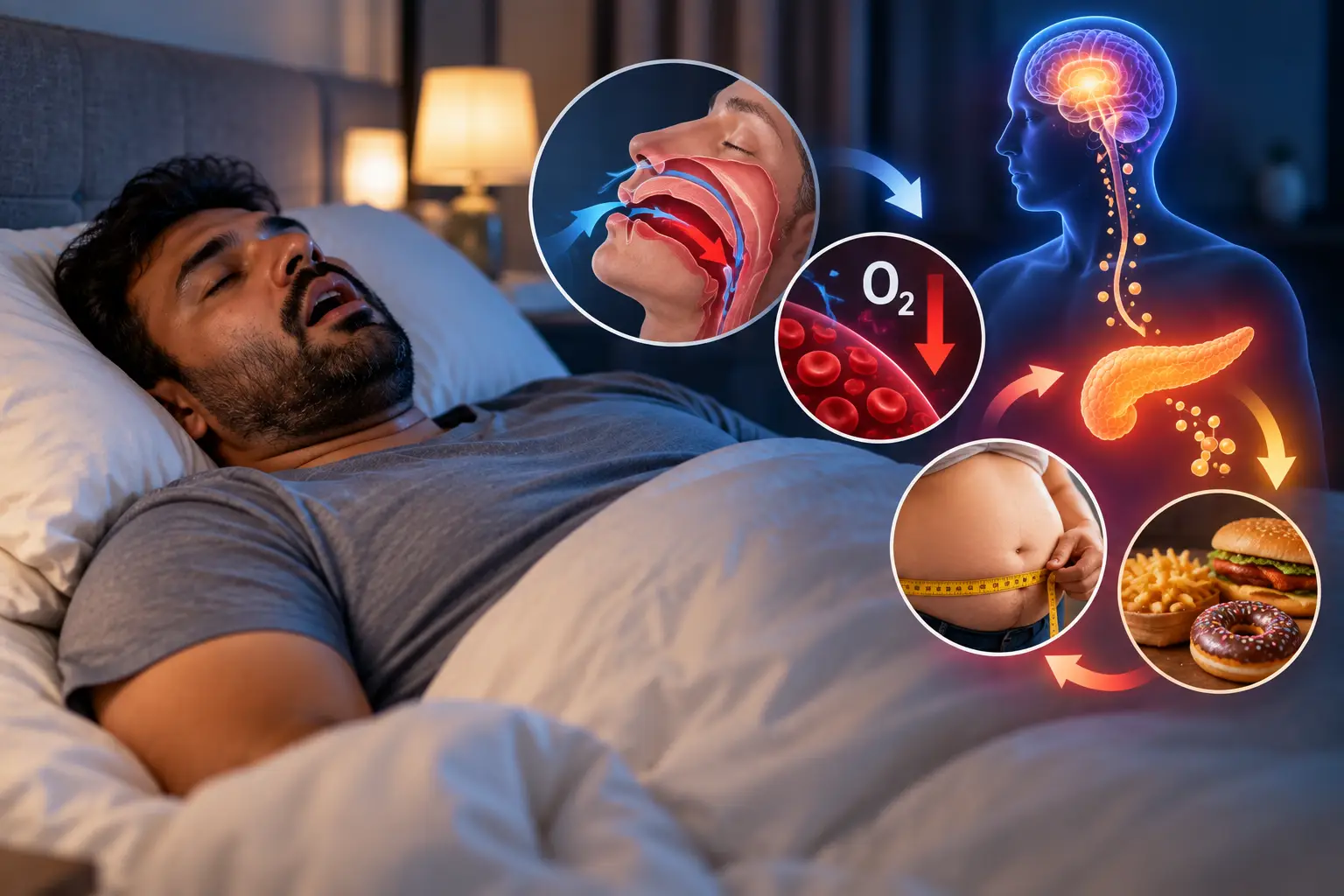
Sleep apnea and metabolism are connected because repeated breathing pauses during sleep can lower oxygen levels, disturb deep sleep, increase stress signals, affect insulin response, change hunger hormones, reduce daytime energy, and make weight control harder. Proper diagnosis and treatment may support better sleep quality, metabolic balance, and long-term health.
Sleep apnea is not only a snoring problem. It can affect how the body uses energy, manages blood sugar, controls appetite, stores fat, and recovers overnight.
Therefore, if you snore loudly, wake tired, crave sugar, or struggle with weight despite effort, sleep apnea may be one hidden reason.
Introduction
The connection between sleep apnea and metabolism is important for people dealing with snoring, belly fat, fatigue, diabetes risk, high blood pressure, sugar cravings, or unexplained weight gain.
Many people think metabolism depends only on diet and exercise. However, sleep quality also plays a major role. When breathing repeatedly stops or becomes shallow during sleep, the body may not get stable oxygen or proper deep rest.
As a result, the body can enter a stress cycle. You may wake tired, move less, crave more food, feel mentally foggy, and find it harder to lose weight.
Sleep apnea is not just a nighttime breathing issue. When ignored, it may affect energy, hormones, appetite, and metabolic health.
What Happens During Sleep Apnea?
Sleep apnea is a sleep-related breathing disorder where breathing repeatedly pauses or becomes shallow during sleep. In obstructive sleep apnea, the upper airway relaxes, narrows, or closes again and again.
When this happens, oxygen levels may fall. Then the brain briefly wakes the body enough to reopen the airway. These awakenings are often so short that the person does not remember them.
However, the body still loses restorative sleep.
Common signs of sleep apnea include:
- Loud snoring
- Breathing pauses noticed by a partner
- Gasping or choking during sleep
- Morning headaches
- Dry mouth after waking
- Daytime sleepiness
- Poor focus
- Irritability
- Waking tired after 7–8 hours
- High blood pressure with poor sleep
This is why someone may say, “I slept the whole night, but I still feel exhausted.”
Sleep Apnea and Metabolism: Why Oxygen Drops Matter
To understand sleep apnea and metabolism, you must understand the effect of oxygen drops.
Your body needs steady oxygen during sleep for recovery, repair, and stable hormone function. When oxygen repeatedly drops, the body treats it like a stress signal.
The nervous system becomes more alert. Heart rate may fluctuate. Blood pressure may rise temporarily. Sleep may become lighter and more disturbed.
This can affect metabolism in several ways:
- Blood sugar control may become harder
- Stress hormones may become more active
- Hunger signals may increase
- Fullness signals may weaken
- Deep sleep may reduce
- Daytime energy may drop
- Exercise consistency may suffer
- Late-night and next-day cravings may increase
Over time, these changes may make weight management more difficult.
This does not mean sleep apnea is the only cause of weight gain. However, it can become an important missing factor when diet and exercise are not giving expected results.
Comparison Table: Healthy Breathing vs Sleep Apnea at Night
| Factor | Healthy Sleep Breathing | Sleep Apnea Breathing |
|---|---|---|
| Oxygen Level | Usually stays more stable through the night | May drop repeatedly during breathing pauses |
| Sleep Quality | Supports deeper, more restorative sleep | Sleep may become fragmented by micro-awakenings |
| Stress Response | Body remains more relaxed during sleep | Body may activate stress signals repeatedly |
| Morning Energy | Better chance of waking refreshed | Waking tired, heavy, or foggy is common |
| Blood Sugar | Supports healthier metabolic rhythm | Insulin response may become harder to manage |
| Appetite | Hunger and fullness signals stay more balanced | Cravings and hunger may increase |
| Weight Control | More energy for healthy routine | Fat loss may feel slower due to fatigue and cravings |
| Warning Signs | Quiet or stable breathing | Loud snoring, gasping, choking, dry mouth, headache |
This table is only a guide. A sleep test is the right way to confirm whether sleep apnea is present and how severe it is.
How Sleep Apnea Affects Insulin and Blood Sugar
Insulin is the hormone that helps move glucose from the blood into the body’s cells. When insulin works well, blood sugar stays more stable. When the body becomes less responsive to insulin, blood sugar may rise more easily.
Sleep apnea may disturb insulin response through poor sleep, repeated oxygen drops, and stress activation.
This matters because insulin resistance is linked with:
- Belly fat
- Prediabetes
- Type 2 diabetes risk
- Fatty liver risk
- Energy crashes
- Strong sugar cravings
- Weight gain around the waist
- Difficulty losing fat
The connection between sleep apnea and metabolism becomes especially important for people who already have diabetes risk, PCOS, thyroid concerns, obesity, or family history of metabolic disease.
After a poor night of sleep, many people also choose quick-energy foods. They may drink sweet tea, eat biscuits, crave fried snacks, order late-night food, or skip exercise.
Consequently, sleep apnea can affect metabolism both directly through body stress and indirectly through daily habits.
Hunger Hormones: Why Sleep Apnea Can Increase Cravings
Hunger is not controlled only by willpower. Hormones also play a major role.
Ghrelin increases hunger. Leptin helps signal fullness. When sleep is short, broken, or poor in quality, hunger signals may become stronger while fullness signals may feel weaker.
This can make you feel hungry even when your body does not truly need extra calories.
Sleep apnea can worsen this because the person may spend the whole night in fragmented sleep without realising it.
You may notice:
- Strong morning hunger
- Evening sugar cravings
- More tea or coffee with sugar
- Cravings for biscuits, sweets, namkeen, or fried snacks
- Larger dinner portions
- Late-night eating
- Poor control around comfort foods
- Hunger soon after meals
This is not always a discipline problem. Sometimes the body is under-rested and asking for quick energy.
Therefore, improving sleep quality may make food control easier.
Stress Hormones, Cortisol, and Belly Fat
Repeated oxygen drops can activate the body’s stress response. When the body senses breathing trouble during sleep, it briefly becomes alert to restart breathing.
This response protects you in the moment. However, when it happens repeatedly throughout the night, the body may stay in a higher stress state.
Stress hormone disruption may affect:
- Blood pressure
- Blood sugar control
- Appetite
- Mood
- Sleep depth
- Fat storage pattern
- Energy levels
- Cravings
Many people with untreated sleep apnea wake up feeling heavy, foggy, hungry, and irritable. Then they struggle to exercise or follow a healthy meal plan.
This can create a frustrating belly fat cycle:
- Sleep apnea fragments sleep.
- Oxygen drops trigger stress signals.
- The body wakes tired and hungry.
- Cravings and caffeine increase.
- Exercise and movement reduce.
- Weight management becomes harder.
- Weight gain may worsen sleep apnea.
Breaking this cycle often needs proper sleep evaluation, not only dieting.
Deep Sleep, Growth Hormone, and Recovery
Good metabolism depends on recovery. Deep sleep helps the body repair tissues, support immune balance, regulate hormones, and restore energy.
Sleep apnea can reduce restorative sleep because breathing interruptions pull the body out of deeper sleep stages again and again.
Poor deep sleep may affect:
- Muscle recovery
- Exercise performance
- Tissue repair
- Growth hormone rhythm
- Mood stability
- Appetite control
- Daytime energy
- Motivation
You may spend enough hours in bed but still miss quality sleep.
This is why people with sleep apnea often feel tired even after a full night. Their sleep duration may look normal, but their sleep quality is poor.
When recovery is poor, fat loss becomes harder. You may skip morning walks, avoid workouts, eat more comfort food, and depend on caffeine to function.
Sleep Apnea and Weight Gain: The Two-Way Cycle
Sleep apnea and weight can influence each other.
Extra weight around the neck and upper body may increase airway narrowing during sleep. At the same time, untreated sleep apnea may make weight loss harder by increasing fatigue, cravings, stress, and poor recovery.
This creates a two-way cycle:
| Cycle Step | What Happens |
|---|---|
| Weight gain | Neck and upper-body fat may increase airway pressure |
| Airway narrowing | Snoring and breathing pauses may worsen |
| Oxygen drops | Body stress response increases during sleep |
| Poor sleep | Deep sleep and recovery reduce |
| Daytime fatigue | Activity and exercise become harder |
| Cravings | Sugar and high-calorie foods become more tempting |
| More weight difficulty | Fat loss becomes slower and sleep apnea may worsen |
This cycle can feel discouraging. However, it can often be improved with the right combination of sleep care, food habits, movement, and medical support.
Symptoms That Suggest Sleep Apnea May Be Affecting Metabolism
You should consider sleep apnea screening if poor sleep signs and metabolic problems appear together.
Watch for:
- Loud snoring
- Gasping or choking during sleep
- Breathing pauses noticed by family
- Waking tired after full sleep
- Morning headaches
- Dry mouth after waking
- Daytime sleepiness
- High blood pressure
- Weight gain around the waist
- Sugar cravings
- Poor exercise energy
- Diabetes or prediabetes risk
- Difficulty losing weight despite effort
- Brain fog or poor concentration
These symptoms do not confirm sleep apnea. However, they are strong reasons to ask for guidance.
Internal Link:
Learn more here: What Is Sleep Apnea?
Practical Steps to Support Sleep Apnea and Metabolism
Improving sleep apnea and metabolism needs both sleep support and metabolic care.
1. Do Not Ignore Loud Snoring
Occasional light snoring may happen. However, loud, frequent snoring with choking, gasping, morning headache, dry mouth, or daytime sleepiness should be checked.
Snoring can be an early sign of airway obstruction.
2. Ask About a Sleep Test
A sleep test can measure breathing pauses, oxygen drops, AHI or REI score, and sleep-related breathing patterns.
Do not guess severity only by snoring sound. Some people with serious sleep apnea do not realise how often oxygen drops happen.
3. Improve Dinner Timing
Try to finish dinner 2–3 hours before bedtime when possible. Heavy late meals can worsen reflux, disturb sleep, and make breathing uncomfortable.
Choose a balanced dinner with protein, vegetables, fibre, and healthy fats.
4. Reduce Late-Night Sugar and Screens
Late-night scrolling keeps the brain alert and increases snacking opportunities. Try a simple wind-down routine with dim lights, no work calls, and reduced screen use before sleep.
Avoid making sweets, biscuits, fried snacks, and late-night food delivery a daily habit.
5. Move Daily
Walking, cycling, yoga, swimming, or strength training can support insulin response, weight management, mood, and sleep quality.
Start small. A daily walk can help build consistency.
6. Manage Nasal Blockage
Nasal congestion can worsen mouth breathing and sleep disruption. If you regularly sleep with a blocked nose, ask a healthcare provider for safe treatment guidance.
7. Follow Treatment Advice
If sleep apnea is diagnosed, treatment may include CPAP, Auto CPAP, oral appliance therapy, positional therapy, weight management, nasal care, or other options depending on the case.
Do not stop or change treatment without medical guidance.
When Should You Contact SlumberSense Global?
You can contact SlumberSense Global if:
- You snore loudly
- You wake tired despite enough sleep
- You suspect oxygen drops during sleep
- You have morning headaches or dry mouth
- You feel sleepy during the day
- You are gaining weight despite effort
- You have diabetes, BP, or metabolic risk
- You need help understanding a sleep report
- You want guidance on sleep testing
- You want support choosing therapy options
Get sleep apnea guidance:
https://slumbersenseglobal.com/contact-us/
Frequently Asked Questions
1. Can sleep apnea affect metabolism?
Yes. Sleep apnea can affect metabolism by causing oxygen drops, fragmented sleep, stress activation, poor insulin response, appetite changes, and reduced daytime energy.
2. Can sleep apnea cause weight gain?
Sleep apnea may contribute to weight gain indirectly by increasing fatigue, cravings, late-night eating, and difficulty staying active. Weight gain can also worsen sleep apnea.
3. How does sleep apnea affect hormones?
Sleep apnea can disturb hormones linked with stress, hunger, fullness, blood sugar control, and recovery. Repeated oxygen drops and poor sleep quality can disrupt normal hormone rhythm.
4. Can treating sleep apnea help with weight loss?
Treating sleep apnea may improve sleep quality, daytime energy, and consistency with healthy habits. However, weight loss usually also needs nutrition, activity, medical guidance, and long-term routine changes.
5. Do oxygen drops during sleep affect blood sugar?
Repeated oxygen drops and fragmented sleep may affect how the body responds to insulin. This can make blood sugar control harder in some people.
6. Should I get tested if I snore and cannot lose weight?
Yes, especially if you also have daytime sleepiness, morning headaches, dry mouth, gasping, choking, high blood pressure, or diabetes risk. A sleep test can help identify whether sleep apnea is present.
Medical Disclaimer
This article is for educational purposes only and does not replace medical advice, diagnosis, or treatment. If you have loud snoring, breathing pauses, oxygen drops, diabetes, high blood pressure, severe fatigue, or unexplained weight changes, consult a qualified healthcare provider or sleep specialist.