Author: Nadiya Shaikh, Co-founder, Slumber Sense Global Pvt. Ltd.
Four years of broken sleep, if nothing else will definitely make you curious. It will send you down internet searches looking for research papers, books, podcasts, and late-night conversations with anyone who seems to know something about why the human body refuses to rest. That is exactly the journey I have been on, and what I have discovered has genuinely changed how I think about health itself.
Here is the most striking thing I have come to understand:
Sleep is not just about feeling rested. Every single system in your body, be it your heart, your hormones, your immune response, your brain, is quietly depending on those hours you spend unconscious each night. When sleep breaks down, nothing works quite right. Your mood, your memory, your metabolism, just about everything goes into a disruption mode.
More Than 80 Ways Sleep Can Go Wrong:
What surprised me early in my research was sheer scale of the problem. There are over 80 recognized sleep disorders, conditions that interfere with your ability to fall asleep, stay asleep, get restorative sleep, or stay awake during the day. That is not a small niche medical category. That is an entire landscape of suffering that most of us know almost nothing about.
And yet, when I look around, talk to friends, family, colleagues, I see signs of sleep trouble everywhere. The difference is that we rarely name it for what it is. Like so many other medical conditions we just blame sleepless nights on stress, anxiety or call it “just being over worked.” We reach for another coffee and push through.
I did that too, for a long time.
The question I wish I had asked myself sooner is a simple one:
Is this a pattern? Not just a rough week, not just stressful situation to reach for deadlines, but a consistent, recurring experience of poor sleep that leaves you dragging through your days? That is the question worth sitting with honestly.
The Third Pillar We Keep Ignoring:
As we grew up in times when there were no digital devices taking up our night hours, the conversations around health revolved around two things i.e. eating well and physical exercises. Sleep was always considered a natural phenomenonand thus was always the quieter third member of the trio, something that was acknowledged but rarely given equal weightage.
I see that changing now. Researchers are building an increasingly clear picture of what chronic sleep loss actually costs us. The associations are sobering: elevated blood pressure, higher risk of diabetes, weight gain, stroke, depression, and particularly relevant as we think about ageing cognitive decline. Scientists studying sleep and brain health have observed significant shifts in how we sleep as we grow older, and are beginning to connect those shifts to broader changes in our physical and mental well-being over time. I have even read that diseases such as Alzheimer could also be a cause of lesser sleep.
In short, how well you sleep in your thirties and forties may quietly be shaping how healthy you are in your sixties and seventies. That thought alone was enough to make me take this seriously.
The Cycle That Feels Impossible to Break:
If you have lived with a sleep disorder, even a mild one, you will recognise this cycle immediately.
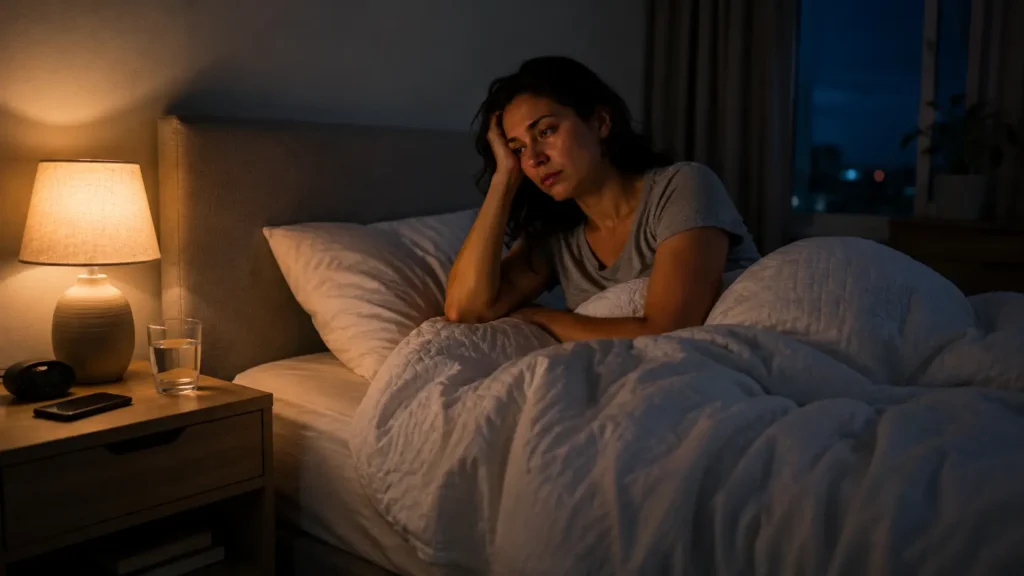
Try and understand this pattern – you sleep poorly, you wake up exhausted, you drag yourself through the day, running on fumes, counting down to bedtime. And then night comes, and despite the exhaustion that has been sitting on your chest all day, sleep just doesn’t come. Or it comes and then leaves at 2 a.m. and does not return. And the next day begins exactly the same way.
Believe me when I say this, it is frustrating in a way that is hard to describe to people who sleep easily. It is also, I want to say clearly, not something you simply have to accept.
How Do You Know When It Is More Than Just a Bad Night?
This is a question I asked myself repeatedly before I started taking my own sleep troubles seriously. Everyone has bad nights. So when does a pattern of poor sleep cross into something worth paying attention to?
For me, the turning point was recognising how many of the following were consistently true:
- I felt irritable and unreasonably tired during the day, even after hours in bed
- Sitting still reading, watching something would pull me toward sleep almost immediately
- Concentrating on work felt like pushing through fog
- My reactions felt slower, my emotions harder to manage
- People around me kept commenting that I looked tired
- I was relying on caffeine not as a pleasure but as a survival mechanism
If several of this sound familiar and if they sound familiar regularly, not just occasionally, it is worth paying attention. The more of these that apply, the more likely it is that something beyond ordinary tiredness is at play.
The Sleep Diary: A Small Act With Real Returns
As the psychologist say, write down your troubles and then see the magic unfold,, taking a cue from that advice, one of the most practical things I have done in this journey was that I started keeping a sleep diary, well it requires no expertise nor does it cost anything.
Every morning, I note what time I went to bed, roughly how long it took to fall asleep, whether I woke during the night and for how long, and how I felt upon waking. I track mood and energy during the day. Over weeks, I have started to see a picture emerging, one that is far more useful than memory alone, which tends to flatten everything into a vague sense of “I’ve been sleeping badly.”
Psychologists often recommend journaling as a tool for self-understanding, and a sleep diary works on that same principle. It turns something that feels chaotic and uncontrollable into data you can actually look at. Patterns reveal themselves. Triggers become visible. And sometimes, the act of paying close, compassionate attention to your own experience is itself a step toward changing it.
If you have reached this far in the article, and If you are struggling with sleep and are not sure where to begin, my simple advice is to get started, try keeping the sleep diary for a few months, and like journaling be honest with it. After doing this for a period of three months, if what you find reflects a persistent, troubling pattern please do not hesitate to seek proper help. There is no virtue in suffering quietly through something that is affecting your health, your relationships, and your quality of life.
What Comes Next:
My research continues. The more I learn, the more I realise how much there is to understand and how underserved most of us are when it comes to honest, accessible information about sleep.
In my next piece, I want to explore sleep apnea specifically: what it is, how it shows up, and the range of ways it can be addressed. It is a condition that affects far more people than realise it, and one that I suspect many of my readers may recognise in themselves or someone they love.
Until then rest well. And if you cannot, know that you are not alone, and that there are answers worth looking for.
Nadiya Shaikh is the Co-founder of Slumber Sense Global Pvt. Ltd., and writes about sleep health from the perspective of someone living the questions she is researching.